






Arts and Crafts Container
These arts and crafts container pieces handle heavy fireside duty and indoor planting with hammered metal surfaces.
Arts and Crafts Container
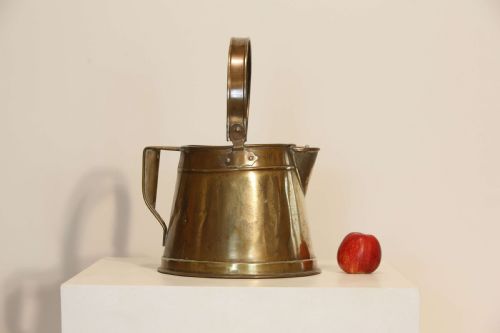
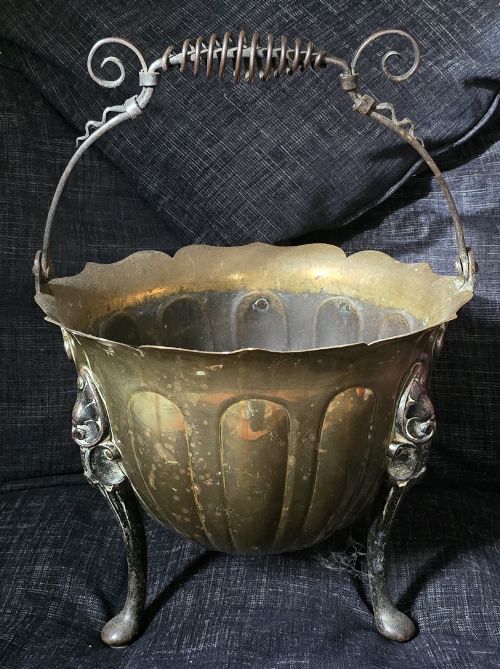
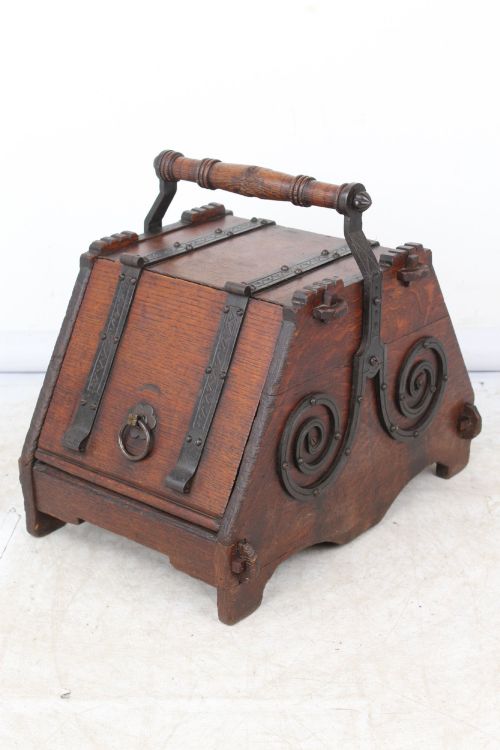
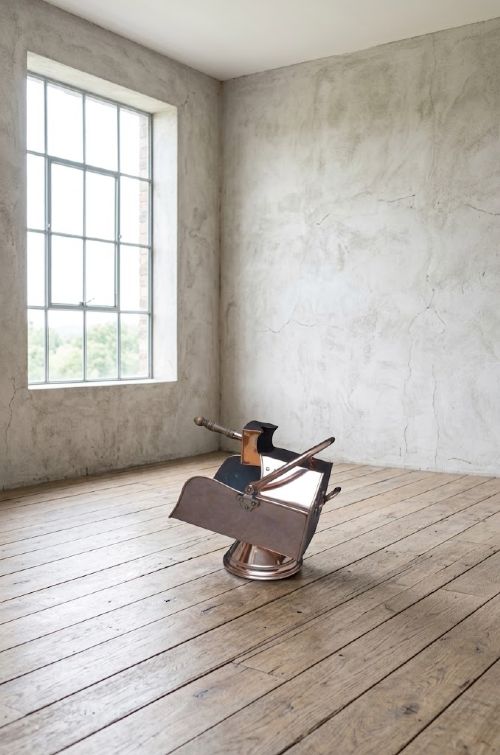
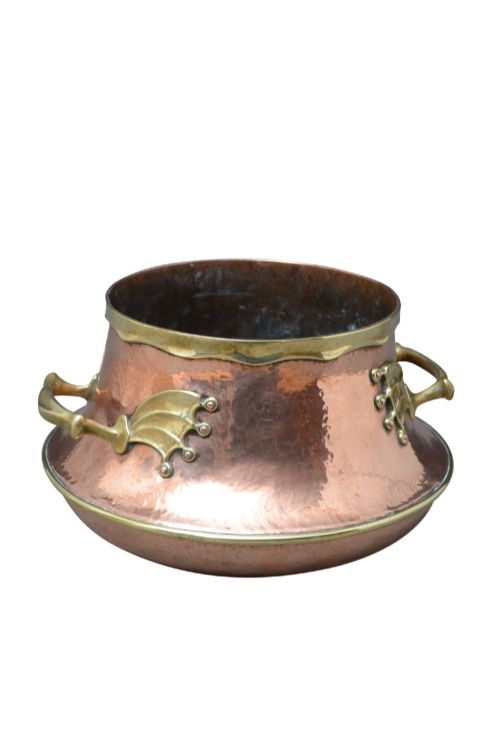
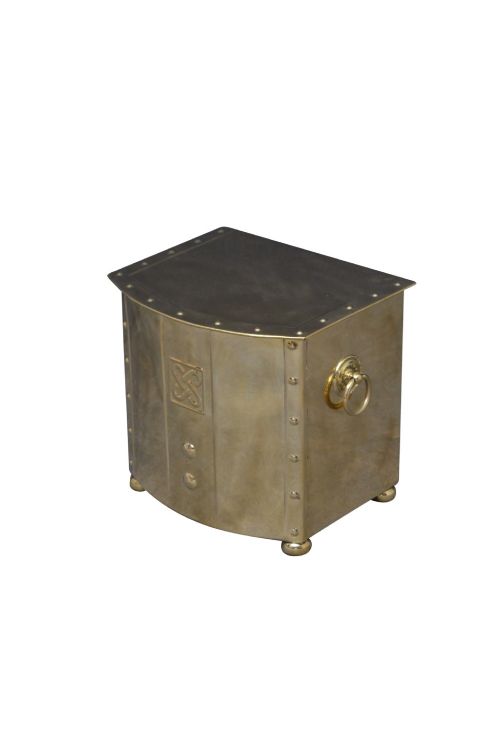
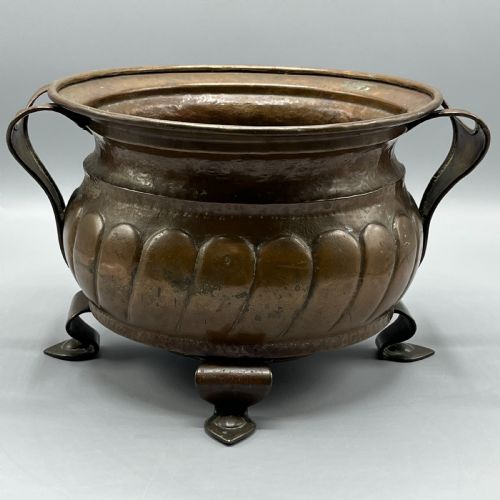
When you search for arts and crafts container options, you encounter utilitarian vessels built for domestic fuel storage and interior planting. The selection on this page consists predominantly of coal scuttles, log bins, jardinières, and small trinket or tobacco boxes from the late nineteenth and early twentieth centuries. These objects reflect the domestic interior priorities of the period, combining robust iron and copper construction with decorative hand-worked finishes.
Makers shaped sheet copper and brass into coal buckets, helmets, and planters designed to sit beside the hearth or within the reception room. Alongside fuel containers, the grouping encompasses umbrella stands and silver boxes showing gothic revival or art nouveau influence. The forms range from plain industrial coal boxes to large vessels with lion mask handles and tavern scene embossing.
How they were made
Craftsmen built these vessels primarily from sheet copper and brass, frequently mounting them in original wrought iron frames or pairing them with iron handles and fixings. Workers shaped the metal bodies through hand-hammering and spot-hammering techniques that left distinct tool marks across the surface. Oak and other woods occasionally provided structural frames or lining for larger log boxes and boxes.
Makers utilised riveting and seaming to join heavy metal plates, ensuring durability for holding coal and logs. Surface decoration relied upon repoussé work, chased tavern scenes, or plain polished finishes that highlighted the natural tone of the copper and brass.
Arts and Crafts Container Retail Price Guide 2026
Typical asking prices for arts and crafts container among the pieces listed under this phrase on Sellingantiques today, from the lower quarter to the upper quarter. They describe what is for sale here now, not the wider market.
The selection includes utilitarian coal boxes alongside decorative jardinières and umbrella stands.
What varies in quality
The standard of metalwork and the crispness of surface decoration separate standard utility items from finer workshop pieces. Superior examples display deliberate, even spot-hammering and strong structural integration between the copper body and iron framing. Inferior items rely on thin sheet metal that buckles easily under the weight of fuel or water.
Signatures and attributed maker marks elevate certain boxes and jardinières, whereas unmarked production pieces show simpler construction details. The preservation of original patination and unpolished surfaces also dictates the desirability of copper and brass vessels.
Henry Loveridge·Christopher Dresser·Nathan and Hayes·Omar Ramsden·H F Fearncombe and Co
The Arts and Crafts Container Glossary
- Jardinière
- An ornamental pot or stand for holding indoor plants or flowers. These vessels often sit on floors or tabletops and appear in copper, brass, or ceramic.
- Coal Scuttle
- A bucket or box specifically designed to hold coal for a fireplace. Scuttles frequently take helmet shapes or include hinged lids and swing handles.
- Spot-Hammered
- A surface finish where a craftsman applies rhythmic hammer blows to create a textured pattern across sheet metal. This technique defines much of the metalwork from the period.
- Repoussé
- A metalworking technique where the artisan hammers the design from the reverse side to form a raised pattern on the front. It appears on decorative panels and coal bin bodies.
- Log Bin
- A large container used to store firewood beside a hearth. They often incorporate iron frames or heavy wooden bases to withstand rough timber.
Arts and Crafts Container: Frequently Asked Questions
What is an arts and crafts container?
An arts and crafts container is a functional metal or wood vessel made during the late nineteenth or early twentieth century. These pieces include coal buckets, log bins, jardinières, and small boxes designed with hand-worked surfaces.
They served practical domestic roles while reflecting the design principles of the movement through exposed rivets, hammered textures, and honest material use.
How were coal scuttles used?
Coal scuttles sat beside domestic fireplaces to hold and transport fuel from storage areas to the hearth. Their hinged lids, helmets, and sturdy handles allowed homeowners to tip coal cleanly onto open fires.
Over time, many of these metal vessels transitioned from utility items to decorative plant holders or umbrella stands within reception rooms.
How do I care for copper and brass?
Copper and brass containers require gentle dusting and occasional cleaning with appropriate non-abrasive metal cleaners if you wish to maintain a bright shine. Many collectors prefer to leave the natural darkened patina undisturbed.
Keep metal planters lined with waterproof inserts to prevent moisture from damaging the interior seams and causing corrosion over time.
How can I tell the period?
Period identification relies on examining construction methods, material choices, and stylistic markers such as gothic revival or art nouveau motifs. Pieces from the nineteenth century often feature heavier iron frames and hand-beaten copper panels.
Maker marks, stamped registry numbers, and hallmarks on silver boxes provide definitive dates and workshop origins.