



Arts and Crafts Console Table
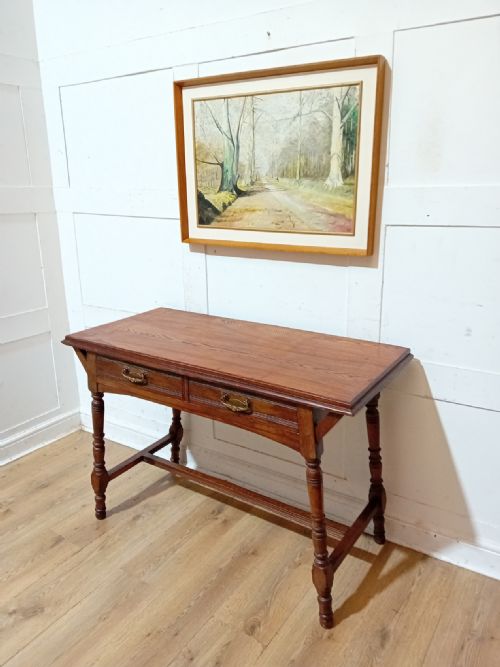
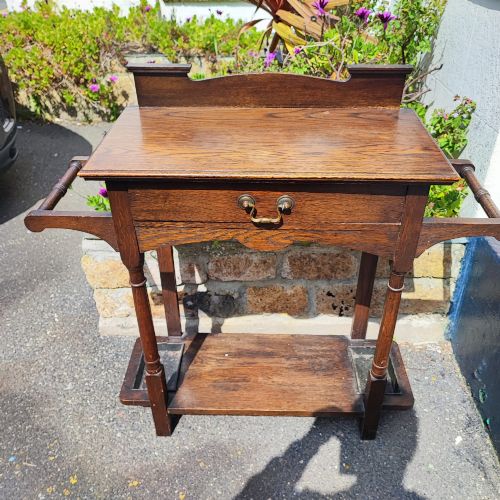
An arts and crafts console table brings honest construction and solid timber into an entrance hall or living space.
Arts and Crafts Console Table
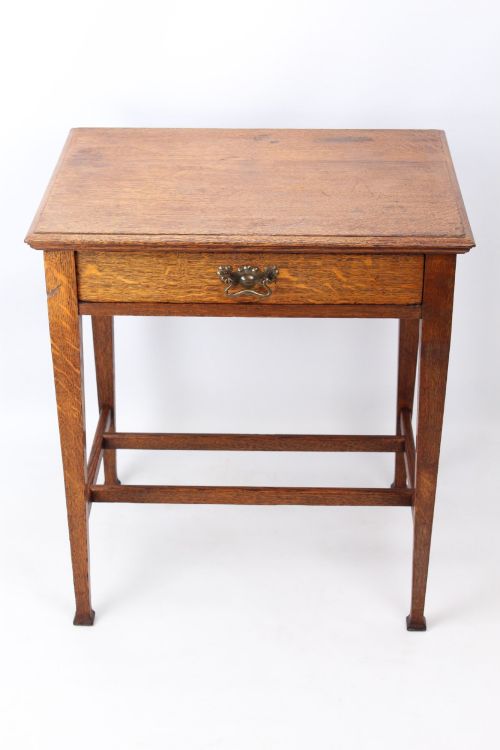
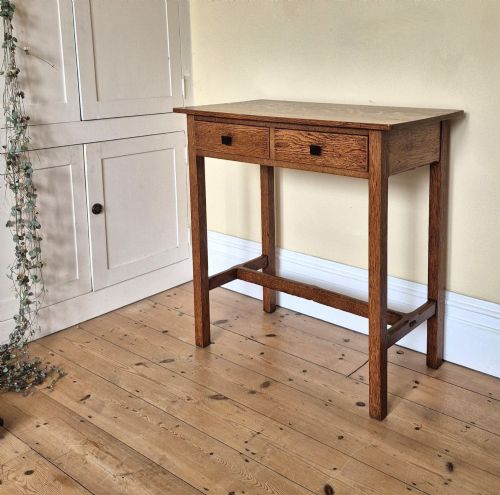
When you search for an arts and crafts console table, you are looking at sturdy hallway and side furniture spanning the late nineteenth century through to the nineteen thirties. These pieces often overlap with side tables, desks, and lowboy designs intended for practical utility against a wall. Oak remains the predominant material, frequently shaped with straightforward joinery and clean structural lines.
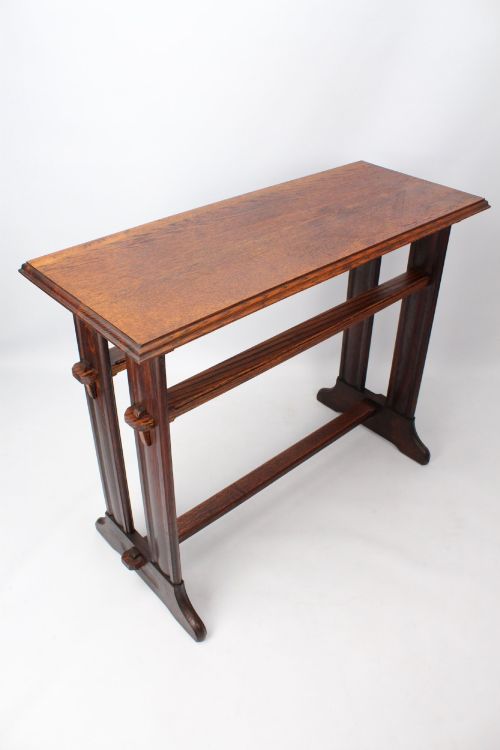
The version you are most likely to meet on this page is an oak side or console table dating around nineteen hundred, sometimes featuring two tiers or a narrow profile. Alongside standard console forms, related pieces appear as hall stands, writing desks, and occasional tables carrying Arts and Crafts, Art Nouveau, or Cotswold School influences.
Judging quality in design and execution
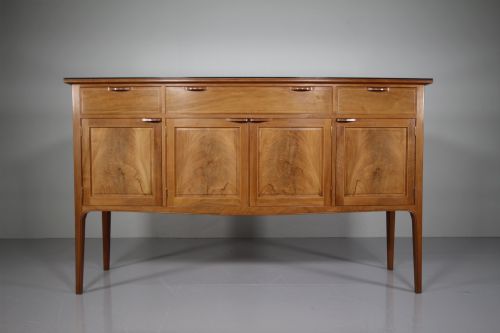
Quality separates through the selection of timber and the integrity of the joinery rather than surface embellishment. Pieces utilising figured walnut, quarter-sawn oak, or ash with strong natural grain stand apart from plain utilitarian builds.
Makers' stamps, attribution to known workshops, and thoughtful details like integrated mirrors or stamped brass mounts elevate a piece above standard production. The weight of the timber and the rigidity of the cross-bracing or base structure determine the enduring stability of the table.
Design influences across the inventory range from Reformed Gothic and Art Nouveau to the Cotswold School.
Edward Barnsley·Hubert Simpson of Kendal·James Shoolbred·Ellen E. Houghton of Minton
The Arts and Crafts Console Table Glossary
- Console table
- A table designed to stand against a wall, frequently used in hallways or reception spaces. These pieces often feature narrow depths to fit compact circulation areas.
- Lowboy
- A traditional small dressing table or side table with drawers, which heavily influenced early twentieth-century console designs. They typically feature elegant legs and clean rectangular proportions.
- Quarter-sawn oak
- A method of milling timber that produces distinctive medullary ray figuring across the grain. This cut provides both visual decoration and superior dimensional stability.
Arts and Crafts Console Table: Frequently Asked Questions
Where should I place an arts and crafts console table?
These tables suit entrance halls, narrow corridors, or living room walls where a shallow surface is required for keys or lighting.
Because many examples incorporate lower shelves or two tiers, they also provide practical storage for small baskets or books.
How do I date an arts and crafts console table?
Dating relies on examining the timber preparation, joinery methods, and stylistic crossover into Art Nouveau or Gothic Revival.
Pieces originating from the late nineteenth century often display darker finishes and hand-carved details, while nineteen-thirties examples favour paler walnut and cleaner modernist lines.
Are these tables suitable for daily use?
Solid timber construction and sturdy pegged joints make these pieces exceptionally resilient for everyday household demands.
Routine maintenance involves simple dusting and occasional waxing to protect the natural oak or walnut surfaces from moisture.
What distinguishes an arts and crafts table from a Victorian table?
Arts and Crafts pieces reject heavy machine-moulded Victorian ornamentation in favour of visible construction, exposed tenons, and simpler geometric forms.
The aesthetic values functional integrity and natural material finishes above applied decorative flourishes.