
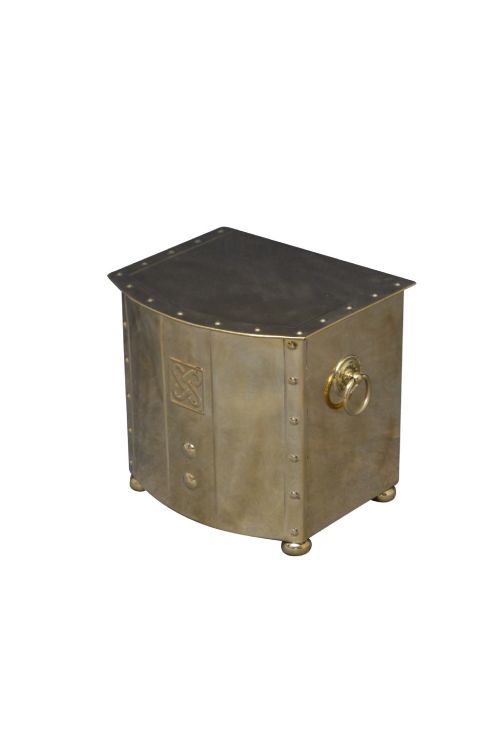


Arts and Crafts Brass Planter
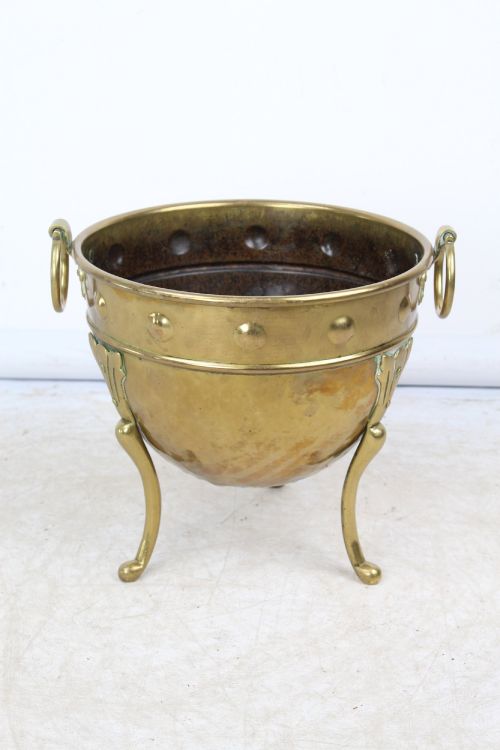
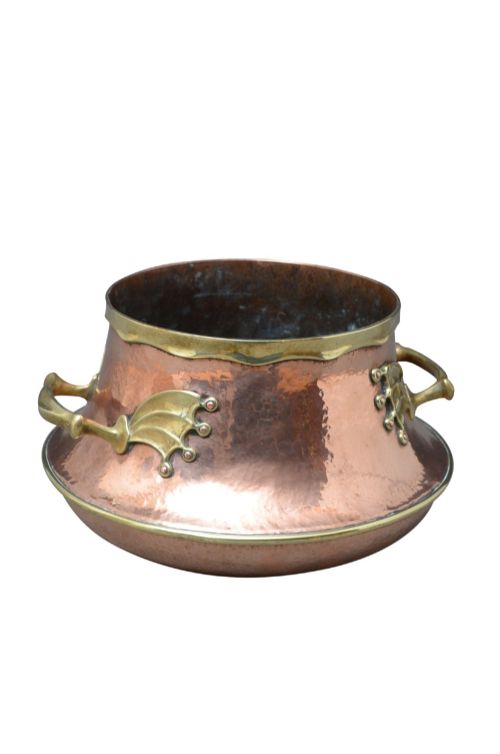
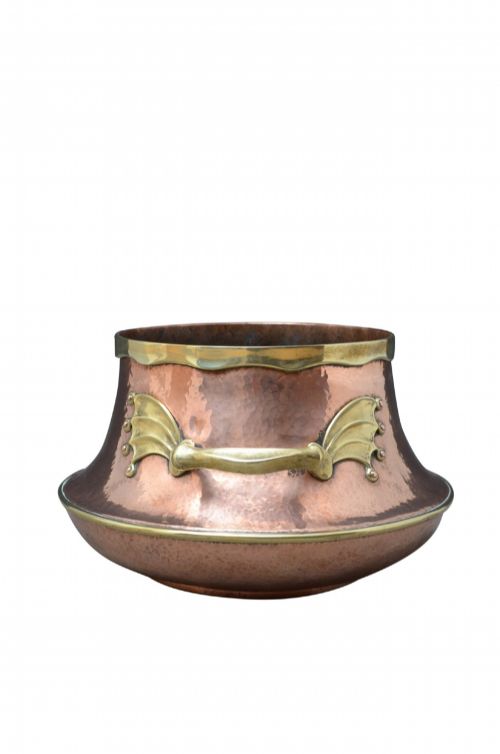
These arts and crafts brass planter pieces bring hand-beaten metalwork and riveted construction directly into your interior.
Arts and Crafts Brass Planter
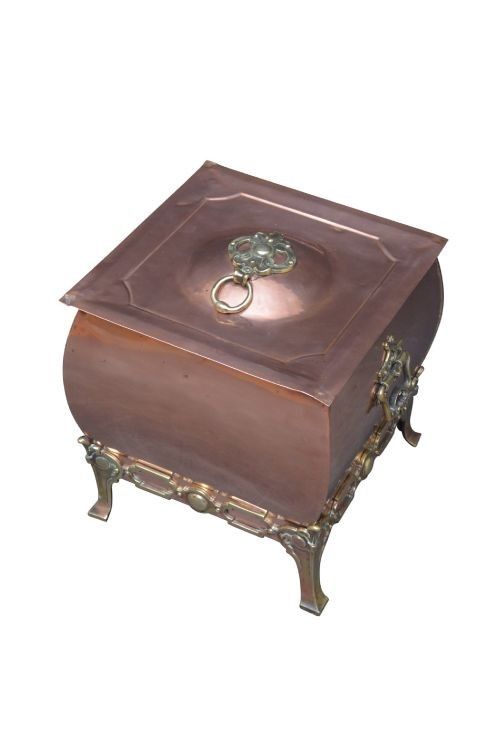
When you search for arts and crafts brass planter, you are looking at metal vessels designed to hold potted plants, often crossing over in form with coal bins, log buckets, and jardinières. The examples you meet here span the Victorian era, the late nineteenth century, and the early decades of the twentieth century, styled in the distinct Arts and Crafts and Art Nouveau manner.
The dominant forms on this page include cylindrical brass and copper vessels, heavy brass bound oak tubs, and square plant stands. Many pieces incorporate iron, zinc, or galvanised steel elements to provide internal structure and durability for everyday domestic use.
Materials and construction
Maker's workshops built these vessels primarily from sheet brass and copper, frequently hammering the metal surfaces by hand to create rich, light-catching textures. Solid oak timber appears alongside the metalwork, held together with brass bands and rivets.
Structural reinforcement often involved wrought iron and galvanised steel liners or components, ensuring the containers could withstand damp soil and heavy loads without buckling.
Listings feature items spanning the Victorian era through to the nineteen-thirties, incorporating brass, copper, oak, and wrought iron.
Judging quality
Quality in these vessels reveals itself in the weight of the metal and the deliberateness of the hand-beaten finish rather than machine precision. Heavier gauge brass and thick copper hold their structural integrity better over time.
Detailing on handles and mountings distinguishes standard production from superior workshop output, particularly where cast elements like lion mask handles are integrated cleanly into the body.
Henry Loveridge
The Arts and Crafts Brass Planter Glossary
- Jardiniere
- A large ornamental pot or stand for holding plants or flowers. These vessels often sit directly on the floor or a hearth rather than a tabletop.
- Arts and Crafts
- A design movement valuing handcraftsmanship, simple forms, and traditional material use over industrial mass production. It heavily influences the decorative motifs seen on these metal objects.
- Art Nouveau
- A style characterised by flowing, organic lines and stylised floral or natural forms. Pieces carrying this influence frequently display sinuous handles and sweeping body contours.
- Beaten brass
- Metal that has been worked by hand with hammers to create a textured, light-diffusing surface. This technique leaves subtle individual marks from the maker's tools.
Arts and Crafts Brass Planter: Frequently Asked Questions
How do I clean an old brass planter?
Cleaning depends entirely on the patination you prefer to maintain on the metal surface. Warm soapy water and a soft cloth will remove accumulated dust without disturbing the aged character.
Avoid harsh chemical metal polishes that strip away the dark oxidation built up over decades, as this aged finish is integral to the piece's history.
Were these planters used indoors?
Victorian and Edwardian households placed these vessels primarily inside domestic reception rooms, hallways, and conservatories. They stood on hearths, plant stands, or directly on the floor.
Their robust metal and oak construction made them practical for handling heavy potted vegetation or domestic fuel like coal and logs.
How can I tell the period of a planter?
Dating relies on examining the construction methods, handle designs, and material combinations present in the piece. Victorian examples often feature heavy cast brass mounts and hand-hammered surfaces.
Later pieces from the early twentieth century introduce stylistic Art Nouveau motifs or simpler geometric forms associated with the broader Arts and Crafts movement.