



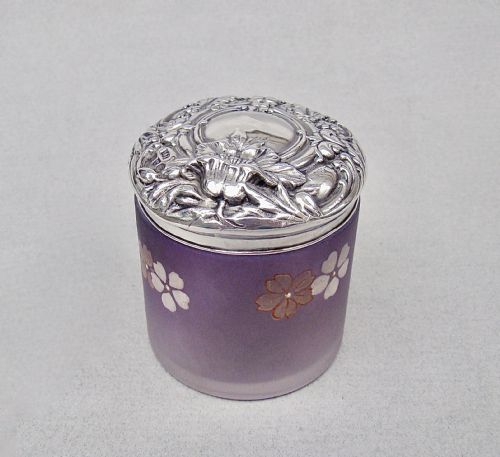

Art Nouveau Silver Vanity
Art nouveau silver vanity items combine sinuous organic lines with sterling silver, glass and enamel for a dressing table.
Art Nouveau Silver Vanity
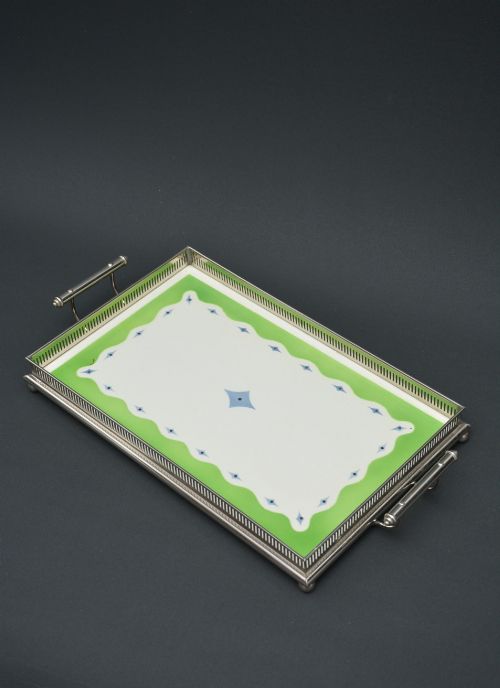
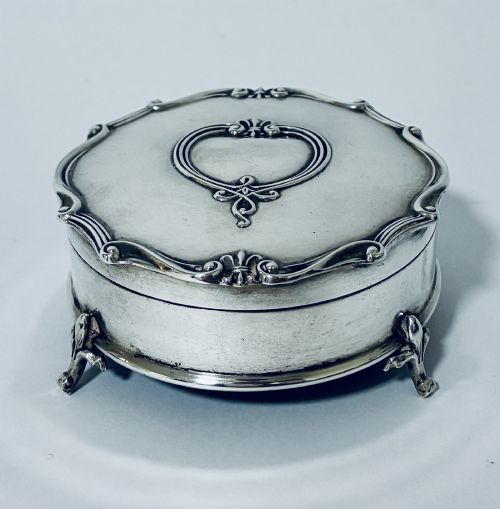
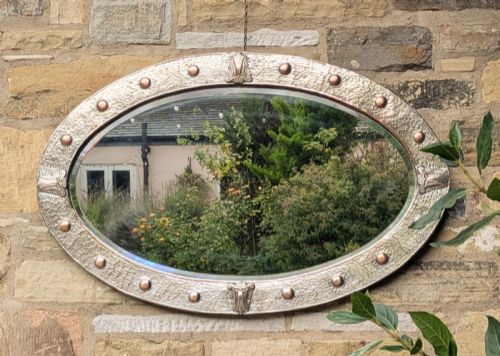
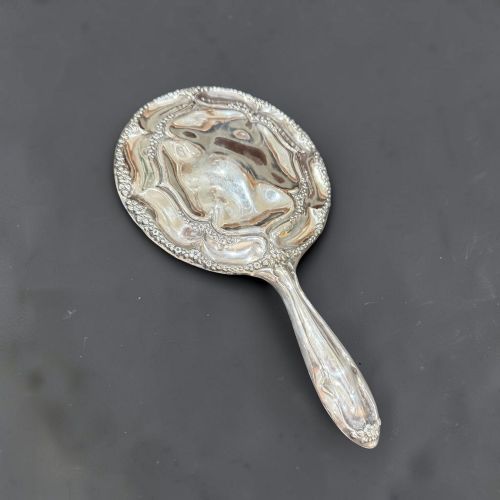
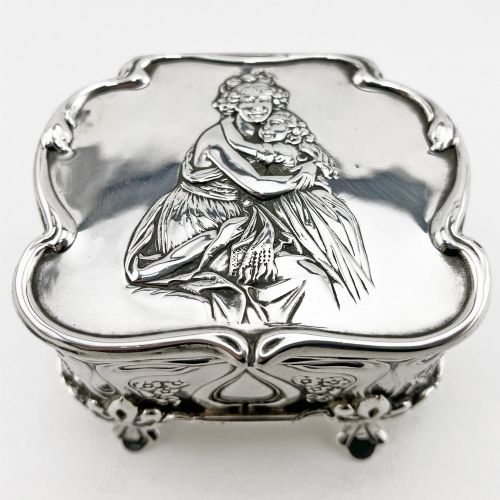
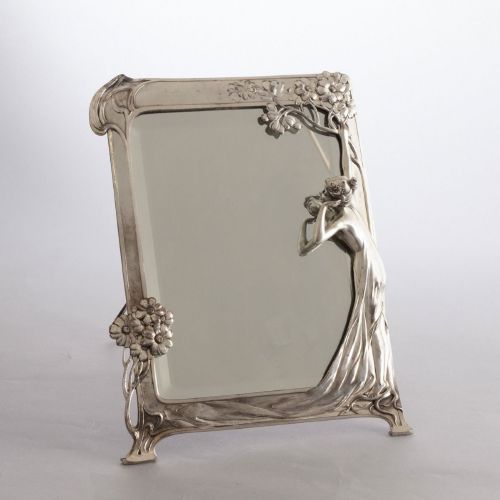
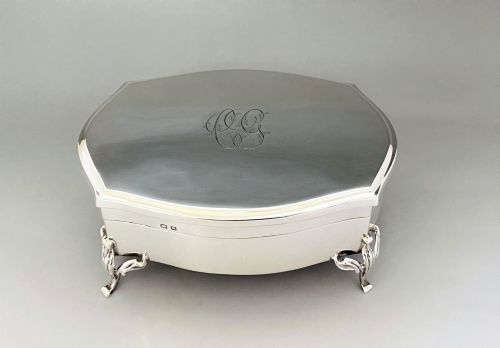
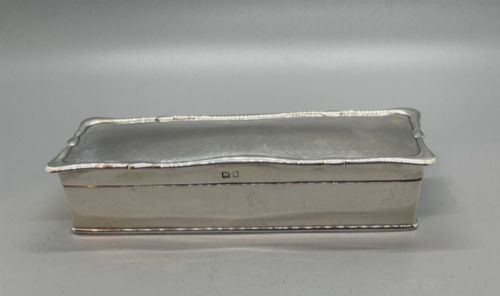
When you search for art nouveau silver vanity, you encounter dressing table accessories designed in the fluid, organic style popular around the turn of the twentieth century. These items include trinket and jewellery boxes, hand and table mirrors, scent and perfume bottles, lidded jars and trays.
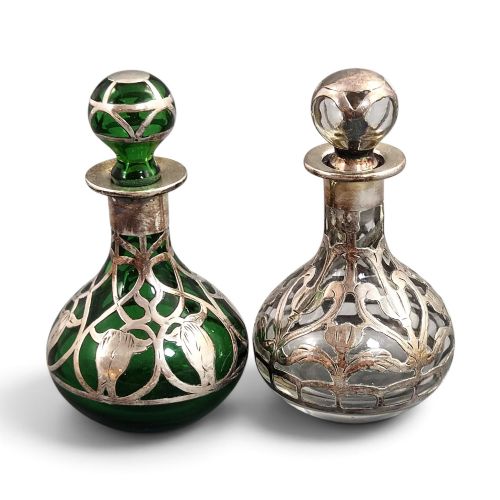
The pieces appearing on this page span the Victorian, Edwardian and early twentieth century periods, reflecting both British manufacturing centres like Birmingham and Chester, and continental European output from Germany and Austria. The most common forms are silver-mounted glass perfume bottles and hallmarked sterling silver trinket boxes bearing floral or figural repousse decoration.
How they were made
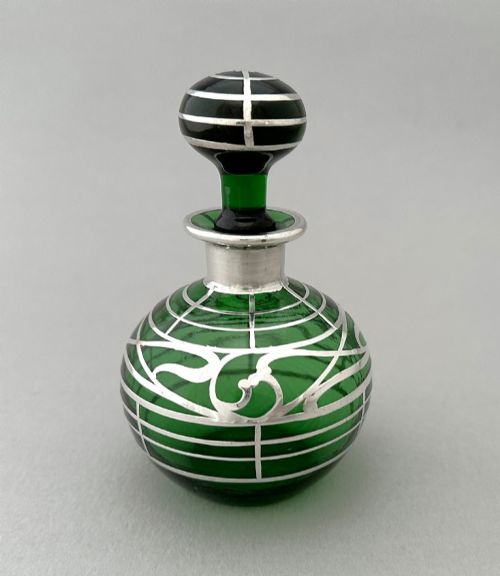
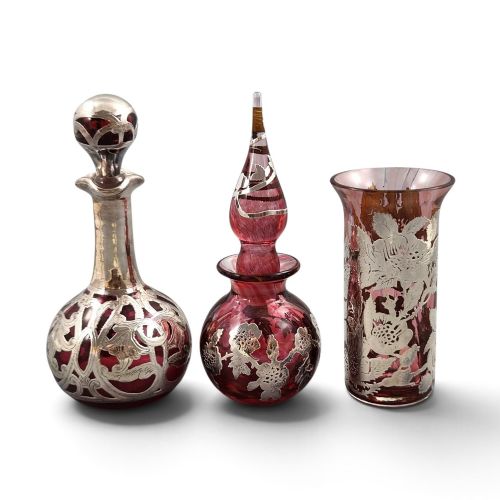
Makers utilised sterling silver, silver plate and pewter to form the mounts, frames and lids, often shaping the metal through repousse work, piercing and stamping. Many items incorporate glass components such as cut glass, ruby glass, green glass and frosted glass, which were sometimes wrapped in silver overlay.
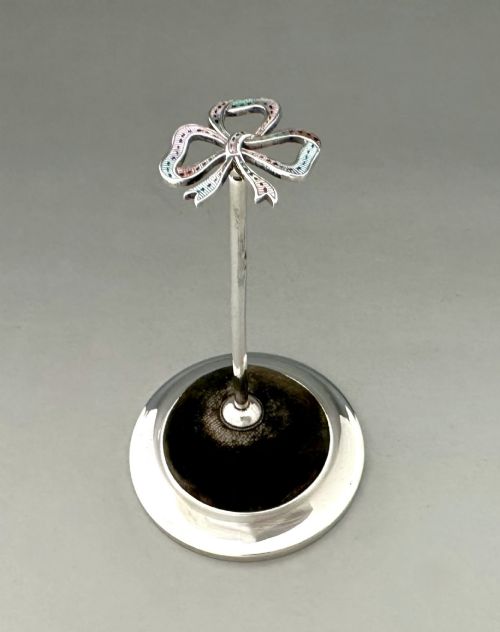
Enamel work, including guilloche enamel, added colour to compacts and scent bottles, while backing materials like wood and textiles provided structural support for table mirrors and jewellery caskets.
Art Nouveau Silver Vanity Retail Price Guide 2026
Typical asking prices for art nouveau silver vanity among the pieces listed under this phrase on Sellingantiques today, from the lower quarter to the upper quarter. They describe what is for sale here now, not the wider market.
Materials span sterling silver, silver plate, pewter, and various coloured glasses including ruby and green.
What varies in quality
Quality in these items depends on the crispness of the organic casting and the depth of the repousse relief work on the silver mounts. Pieces with sharp, well-defined motifs and substantial silver weight sit at the upper end of the scale.
The integration between the glass bodies and their metal mounts dictates overall execution, alongside the survival of delicate elements such as guilloche enamel and pierced silver panels without distortion or repair.
WMF·Gorham·George Adam Scheid·William Hutton·Josef Margold·William Comyns
The Art Nouveau Silver Vanity Glossary
- Repousse
- A metalworking technique where the metal is hammered from the reverse side to form a raised design on the front. This method created the flowing floral and figural reliefs seen on dressing table boxes and mirror backs.
- Guilloche enamel
- A decorative technique involving precise, intricate patterns engraved beneath translucent enamel layers. It provides a coloured, geometric background on items like scent bottles and pill boxes.
- Sterling silver
- An alloy consisting of silver and other metals, typically copper, standardising at a purity proportion of ninety-two point five percent. British pieces carry hallmarks confirming this standard.
- Silver overlay
- A process where molten silver or silver sheets are fused onto a glass or ceramic body in decorative patterns. Perfume bottles frequently display this technique in plant and floral motifs.
- Secessionist
- An artistic movement originating in central Europe that ran parallel to the British Art Nouveau style. It favoured geometric forms alongside organic lines, appearing on metalwork from German and Austrian makers.
Art Nouveau Silver Vanity: Frequently Asked Questions
How do I date an art nouveau silver vanity piece?
British pieces carry hallmarks that indicate the assay office, standard mark and date letter for the year of manufacture. Continental items often bear stamped manufacturer marks or registry numbers that help place them around nineteen hundred.
Stylistic cues also assist with dating, as pure organic art nouveau designs transition into Edwardian neoclassical revivals and later Secessionist geometric patterns.
Were these vanity items used every day?
Dressing table sets and accessories formed part of daily upper and middle-class grooming routines on the vanity. Perfume bottles held scents, while trinket boxes stored rings, pins and small daily jewellery.
Mirrors served both hand-held and standing functions on dressing chests, combining utility with decorative display in the bedroom.
How do I care for silver and glass vanity pieces?
Silver components require gentle cleaning with appropriate non-abrasive polishes to maintain the metal surface without wearing down the raised repousse details. Glass bodies can be washed separately with warm soapy water, taking care to keep moisture away from glued joints or fabric linings.
Enamel sections need particular caution, as harsh chemicals or soaking will damage the coloured glass surface.
What is the difference between sterling silver and silver plate?
Sterling silver is a solid precious metal alloy regulated by purity standards and stamped with official assay office hallmarks. Silver plate consists of a base metal, such as pewter, copper or white metal, coated with a thin layer of silver.
Plated items, such as some easel mirrors and stands, offer the visual appearance of solid silver at a different material composition.