
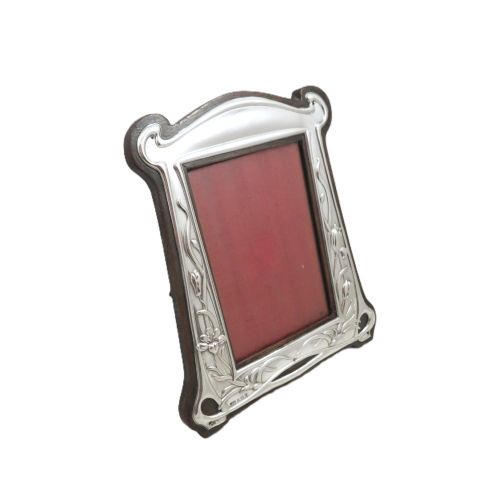
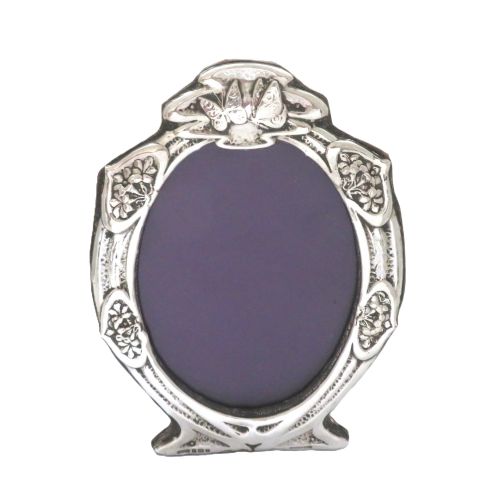
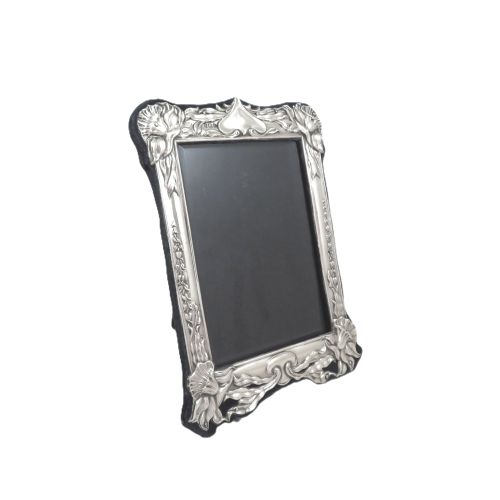
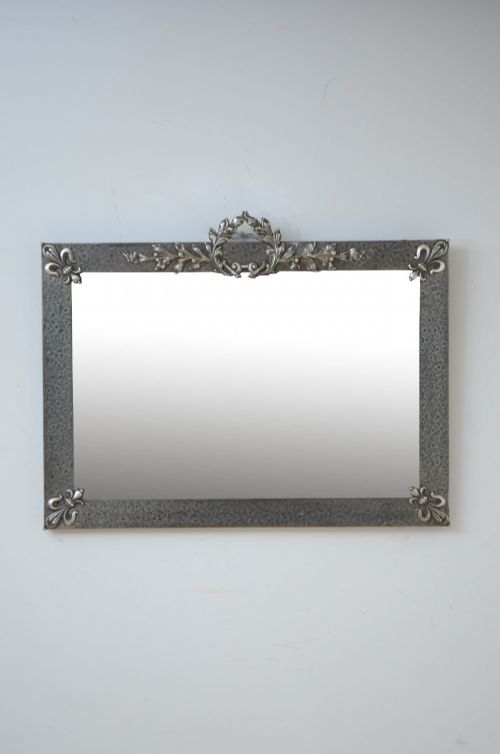

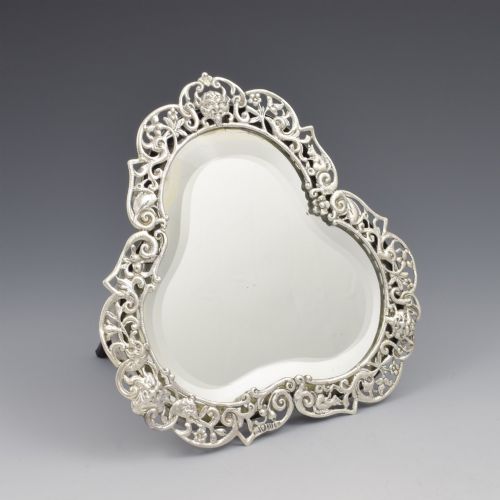


Art Nouveau Silver Frame
An art nouveau silver frame brings fluid, organic lines and floral motifs to your desk or mantelpiece, holding cherished photographs within precious metal.
Understanding art nouveau silver frame pieces
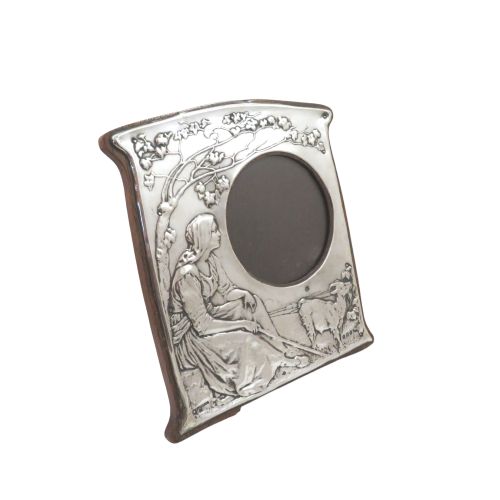
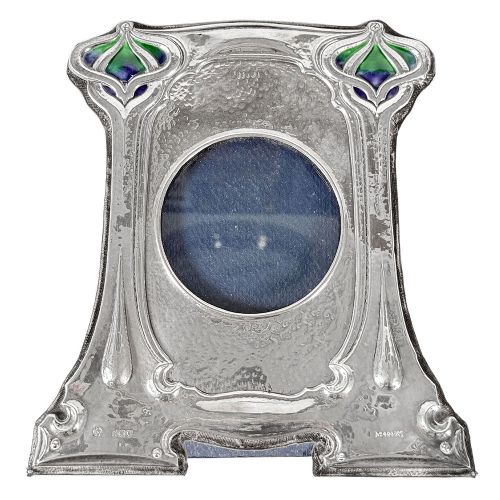
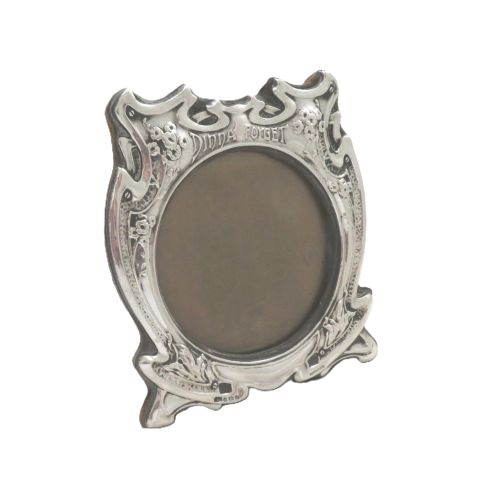
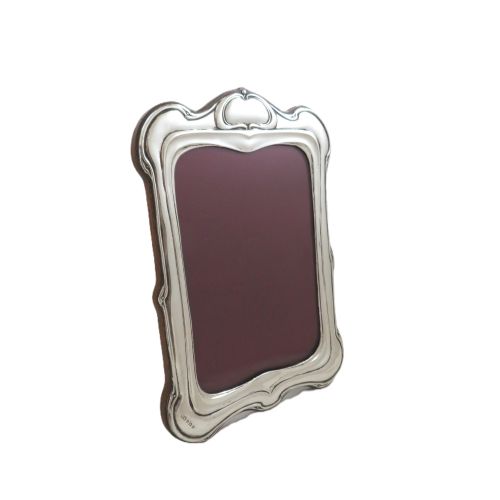
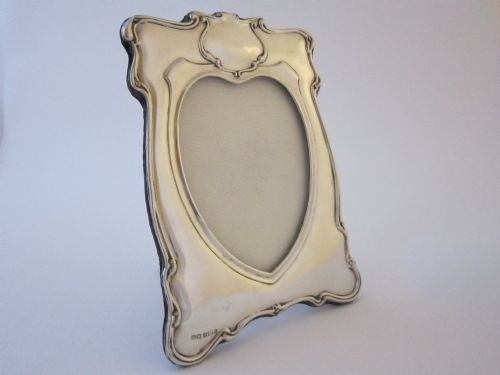
When searching for an art nouveau silver frame, collectors look for pieces defined by WH Wallace-inspired whiplash curves, stylised flora, and fauna motifs. These objects primarily function as photo frames and picture frames designed to display portraits or domestic scenes.
The pieces appearing on this page originate predominantly from the Edwardian and Victorian periods, with dates clustering tightly around the early nineteen hundreds. Many incorporate pictorial elements, featuring embossed designs of birds, squirrels, pheasants, and rabbits alongside figurative subjects like girls with goats.
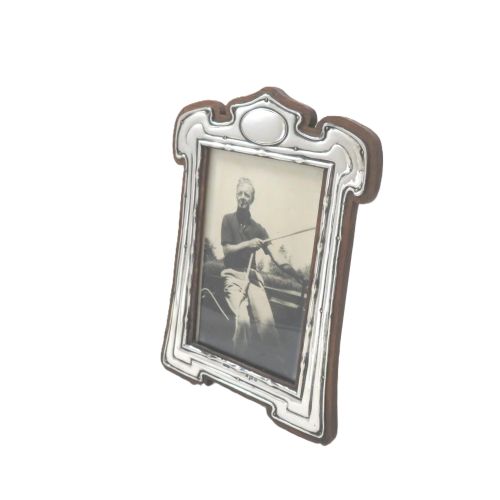
Most examples take the form of sterling silver photo frames in various sizes, ranging from small desk accessories to large display pieces. Formats span standard rectangular shapes to unusual silhouettes, double-hinged folding designs, and variants combining silver mounts with wooden backs.
Materials and manufacture
Artisans constructed these items using sterling silver, frequently employing repoussé and embossing techniques to raise dynamic motifs from the metal sheet. Planished surfaces appear alongside smooth polished finishes, while colourful enamel provides vibrant contrast on specific workshop pieces.
Backings and internal supports utilise supportive materials such as wood, leather, velvet, and fabric to give the metal structure rigidity and protect the enclosed glass and photographs. Folding iterations rely on sturdy metal hinges to join multiple panels together seamlessly.
Retail Price Guide 2026
Typical UK retail prices for art nouveau silver frame, calculated from the Sellingantiques database of over a million retail prices indexed since 2003. This retail price guide relies exclusively on Sellingantiques data; no external sources or auction records are used, so the figures do not describe the wider market.
Listings feature sterling silver, wood, velvet, glass, and enamel across Victorian and Edwardian periods.
Assessing quality and distinction
The distinction between standard commercial output and superior craftsmanship rests upon the gauge of the silver and the depth of the repoussé work. Heavier gauge metal retains its structural integrity better over time and resists distortion around the aperture.
Design complexity also separates pieces, with finely chased figural details such as birds or animal subjects demanding greater skill than repetitive geometric entrelac borders. The integration of complementary materials, including high-grade wood backs and intact original glass, elevates an example's overall integrity.
William Hutton and Sons·A and J Zimmerman·Henry Matthews·Laurence Emanuel
The Art Nouveau Silver Frame Glossary
- Sterling silver
- A silver alloy containing ninety-two point five percent pure silver and seven point five percent other metals, typically copper, chosen for durability in decorative items.
- Repoussé
- A metalworking technique where a silversmith hammers the metal from the reverse side to form a raised design in relief on the front.
- Planished
- A metal surface finish achieved by hammering with a polished tool, leaving subtle, rhythmic facets across the silver.
- Entrelac
- A decorative border pattern consisting of interlaced bands or ribbons, frequently seen running around the outer edge of a picture aperture.
- Double-hinged
- A construction method allowing two separate frames to fold together neatly while maintaining independent movement on their connecting pins.
Frequently Asked Questions
How do I date an art nouveau silver frame?
Dating relies primarily on the Birmingham assay office hallmarks stamped directly onto the silver mount, which indicate the exact year of manufacture.
Stylistic cues such as Edwardian stylistic integration or specific animal motifs also help place the object within the early twentieth-century period.
What glass should be in these frames?
Original pieces typically house thin, slightly irregular sheet glass that may display minor bubbles or surface variations consistent with period production methods.
Replacements occur frequently, so collectors examine the fit and clarity relative to the age of the silver mount.
How were these frames displayed originally?
Makers designed these objects to stand upright on writing desks, mantelpieces, or side tables using built-in easel struts attached to the wooden or leather backs.
Some multi-panel versions functioned as folding table pieces intended to display several family portraits simultaneously.
Are wooden backs usually original?
Many pieces retain their original oak, fabric-covered, or leather-backed supports, complete with sliding pins or turn-buttons to secure the photograph.
Replacement backs are common due to the perishable nature of wood and fabric over more than a century of domestic use.