



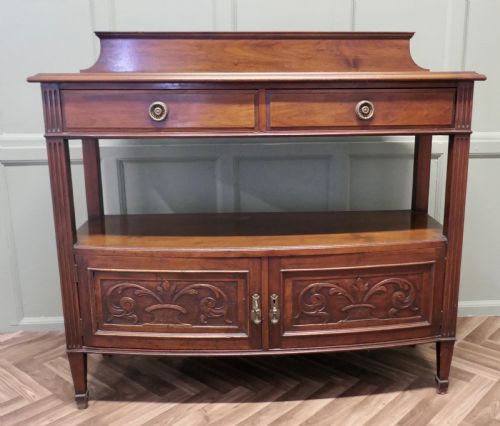


Art Nouveau Sideboard
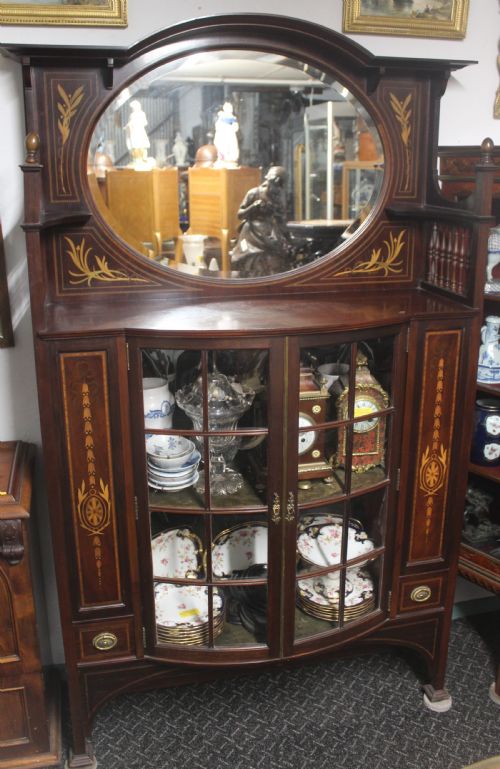
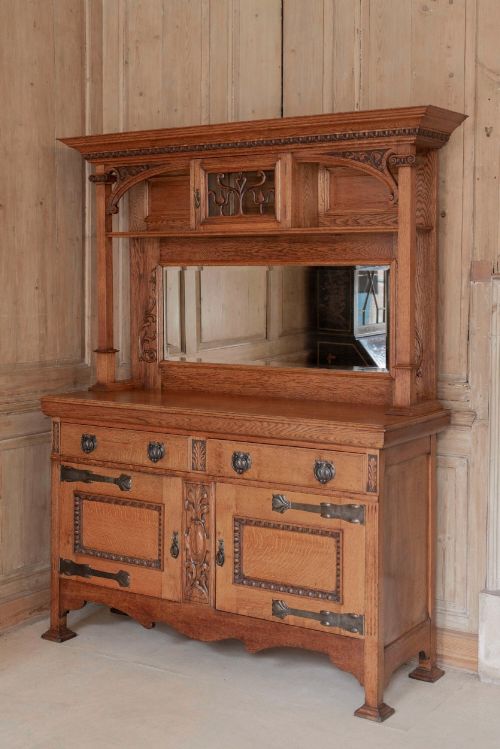
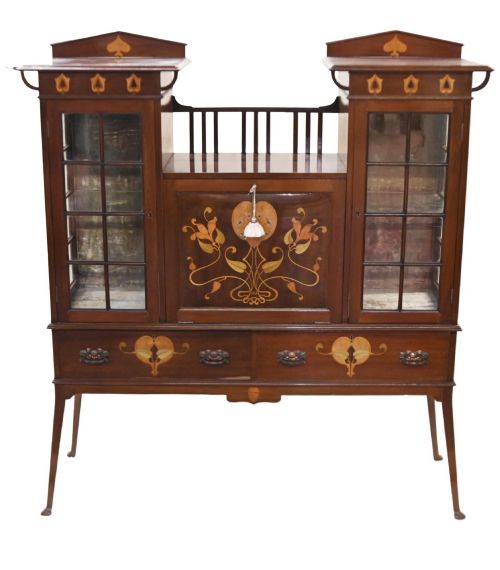
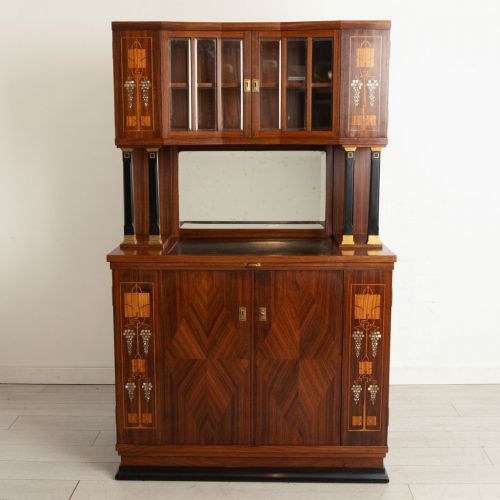
An art nouveau sideboard brings fluid organic lines and expert timber work into a dining room or hall.
Art Nouveau Sideboard
An art nouveau sideboard serves as a principal dining room storage piece, combining cupboards and drawers with display surfaces. The pieces seen here span from the late nineteenth century into the twentieth century, bridging Victorian and Edwardian periods.
Oak forms the majority of these pieces, appearing in golden, stripped, and bleached finishes alongside rich mahogany and walnut. Many examples incorporate mirror backs, raised display shelves, and substantial proportions suited to period interiors.
Regional variations emerge across the selection, ranging from British Arts and Crafts interpretations to continental Viennese Secessionist and French designs. Makers and workshops from Britain to Austria left distinct signatures in their choice of timber and structural proportion.
Materials and Construction
Solid and veneered timbers form the structural core, with oak and walnut providing durability while mahogany offers a smoother surface for fine polishing. Ebonised wood and Swedish birch also appear among the selections.
Art Nouveau Sideboard Retail Price Guide 2026
Typical asking prices for art nouveau sideboard among the pieces listed under this phrase on Sellingantiques today, from the lower quarter to the upper quarter. They describe what is for sale here now, not the wider market.
Listings feature pieces from Victorian, Edwardian, and nineteenth-century periods, constructed in oak, walnut, mahogany, and birch.
Distinctions in Quality and Execution
The degree of hand-carved detail and the integration of metal fittings separate standard production from superior workshop pieces. Original copper and brass hardware substantially elevates the integrity of an example.
Timber selection and joinery execution dictate the structural longevity of each piece. Elaborate mirror backs, marquetry work, and integrated display cabinets demonstrate the technical ambition of the cabinetmaker.
August Ungethüm·Shapland and Petter·Maple and Co
The Art Nouveau Sideboard Glossary
- Mirrorback
- A sideboard superstructure incorporating a bevelled mirror plate above the main serving surface. This element reflects light and displays decorative ceramics.
- Marquetry
- The art of applying small pieces of veneer to a structure to form decorative patterns. Craftsmen utilise various coloured woods to achieve floral and organic motifs.
- Secessionist
- A style associated with the movement of artists and designers who broke from traditional academic institutions. Austrian and continental pieces often display these geometric and linear tendencies.
- Chiffonier
- A low sideboard or cabinet featuring cupboards and drawers beneath a raised shelf. This form offers compact storage compared to taller mirrorback dressers.
Art Nouveau Sideboard: Frequently Asked Questions
How do I identify an art nouveau sideboard?
Look for asymmetrical plant motifs, whiplash curves, and stylised natural forms carved into the timber or expressed through metal hardware. These aesthetic markers distinguish the movement from heavier Victorian revivals.
Hardware provides another strong indicator, as original brass or copper handles often feature organic, flowing silhouettes that match the overall design of the cabinetry.
Were these sideboards used only in dining rooms?
Dining rooms formed the primary destination for these large storage pieces, serving to house silverware, linen, and glassware. Their substantial proportions and surface display areas suited the formal hospitality of the period.
Some smaller formats and mirrorback cabinets also functioned in grand entrance halls or drawing rooms as general display and storage furniture.
What is the difference between Arts and Crafts and Art Nouveau?
Arts and Crafts design prioritises visible handcraftsmanship, structural honesty, and simple medieval or vernacular forms, predominantly utilising solid oak. Art Nouveau embraces sinuous, flowing lines and naturalistic ornamentation derived from plant stems and floral patterns.
Many pieces on this page bridge both movements, combining the solid joinery of the English workshop tradition with organic decorative details.
How should I care for the timber and metal fittings?
Maintain the timber surfaces using traditional beeswax applied sparingly with a soft cloth to nourish the grain. Avoid modern silicone sprays that can penetrate the pores and damage the historic finish.
Leave original copper and brass fittings unpolished unless active corrosion threatens the metal, as the natural patina contributes to the historical character of the piece.