



Art Nouveau Pendant Shade
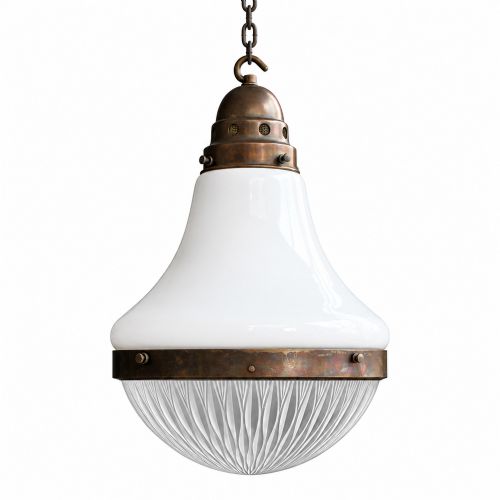
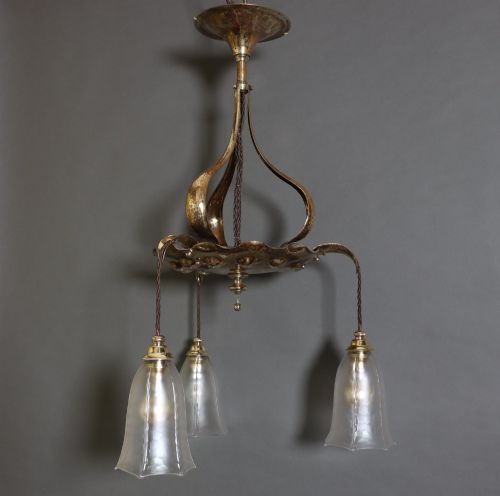
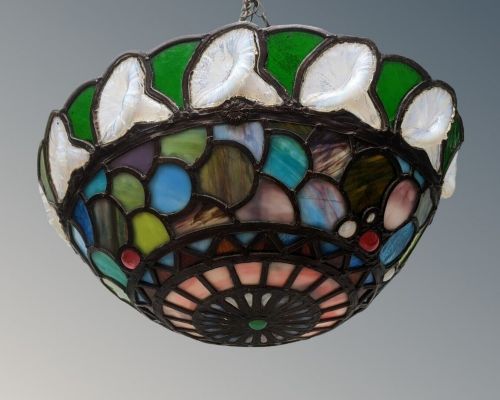
These art nouveau pendant shade examples offer distinctive decorative lighting shaped by turn-of-the-century craftsmanship.
Art Nouveau Pendant Shade
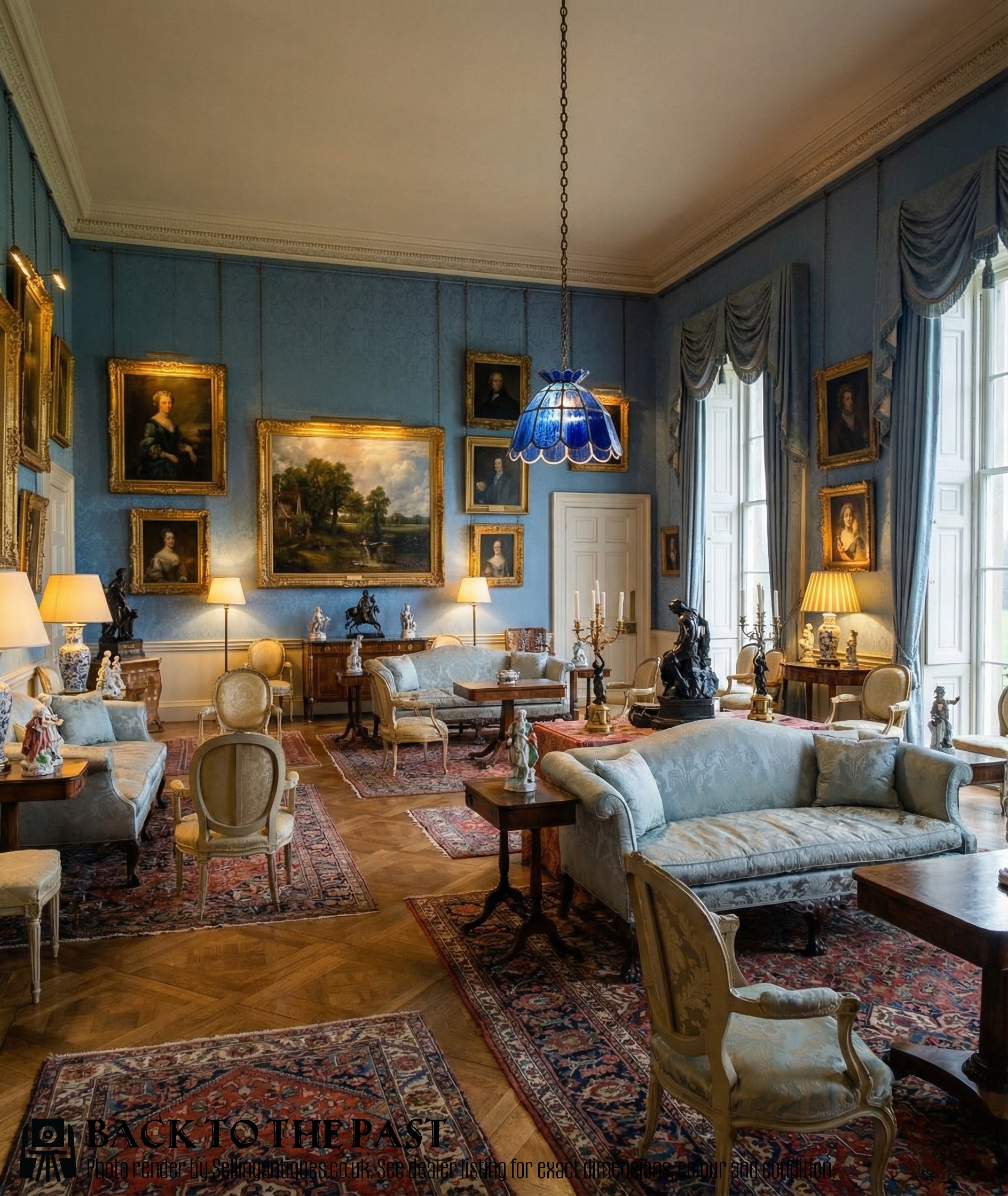
An art nouveau pendant shade brings period character to interior lighting through organic forms and expressive glasswork. Buyers seeking these fixtures encounter ceiling lights, chandeliers, and individual hanging shades.
The selections available here span the 1880s through the 1930s, encompassing Edwardian variations, Arts and Crafts influences, and French country designs. Most examples pair metal mountings with decorative glass components.
Common configurations include rise and fall fittings, bowl chandeliers, and single pendant lamps suspended on fabric cords. The glass elements range from frosted and etched finishes to cobalt blue, cranberry, and iridescent surfaces.
Materials and construction methods
Makers utilised brass, copper, and bronze for the structural metal components of each art nouveau pendant shade. Copper fixtures often display beaten surfaces, whilst brass fittings frequently support rise and fall mechanisms.
The glass elements were produced using diverse techniques, resulting in frosted, etched, leaded, and iridescent finishes. Specialised glasshouses also created frilly margins, cranberry colouration, and vaseline glass effects.
Materials across these listings concentrate on brass, copper, and diverse glass types including frosted, etched, and crystal.
Judging the quality of an art nouveau pendant shade
Quality in an art nouveau pendant shade rests on the depth of hand-working in the metal and the complexity of the glass. Superior examples show purposeful finishing in beaten copper work and refined manipulation of molten glass.
Artistic execution distinguishes the finer pieces from standard production, particularly in the fluid transitions of metalwork and the optical richness of iridescent or coloured glass bowls.
Verrerie Des Vosge
The Art Nouveau Pendant Shade Glossary
- Rise and fall
- A mechanical pulley system allowing the hanging height of the pendant light to be adjusted easily.
- Vaseline glass
- A type of glass containing uranium dioxide that produces a characteristic yellow-green fluorescence under ultraviolet light.
- Iridescent glass
- Glass treated with metallic salts to create a rainbow-like sheen on the surface.
- Leaded glass
- Glass pieces joined together with lead cames to form a patterned panel or shade.
- Beaten copper
- Metal shaped by hand-hammering to create a textured, light-reflecting surface.
Art Nouveau Pendant Shade: Frequently Asked Questions
How do I hang a pendant shade safely?
These fixtures require secure attachment to ceiling joists using appropriate hooks or mounting plates suited to the weight of the metal and glass.
Professional electrical installation ensures that period wiring or modern cords connect safely to your mains supply.
Can I use modern bulbs in these lights?
Most antique fittings accommodate standard modern LED or incandescent bulbs provided the wattage matches the capacity of the original lampholder.
Care should be taken with enclosed shades to select bulbs that do not generate excessive heat.
How do I clean antique glass shades?
Wash the glass gently in lukewarm water with mild soap, avoiding harsh chemical cleaners that can damage iridescent or etched surfaces.
Dry thoroughly with a soft cloth before rehanging the shade on its metal fitting.
What is the difference between Arts and Crafts and Art Nouveau?
Arts and Crafts design emphasises visible hand-craftsmanship, beaten metal textures, and sturdy construction derived from medieval traditions.
Art Nouveau favours flowing, organic lines inspired by natural plant forms and asymmetrical curves.