

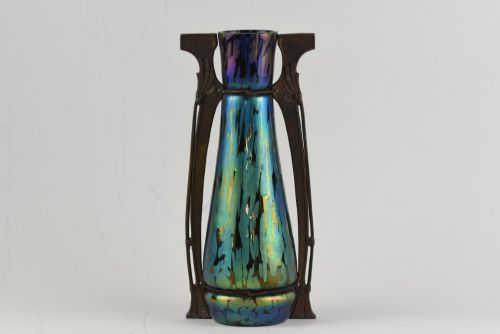
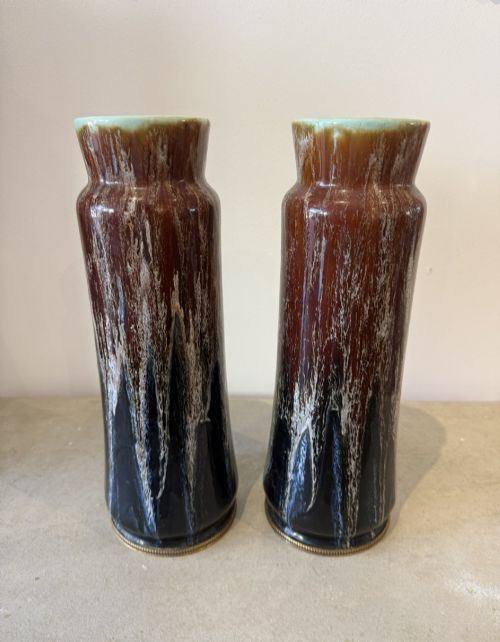
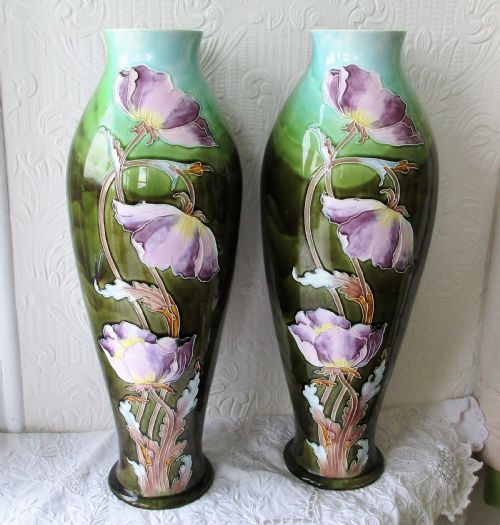
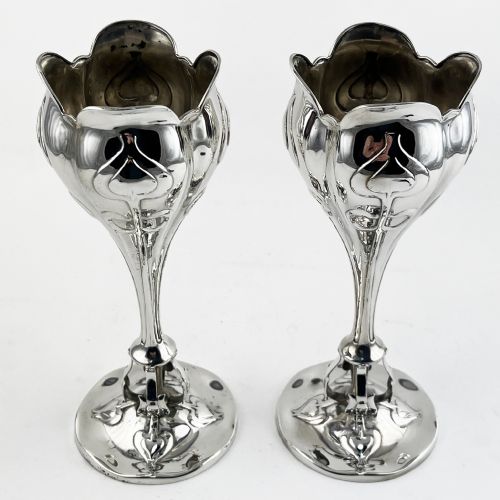


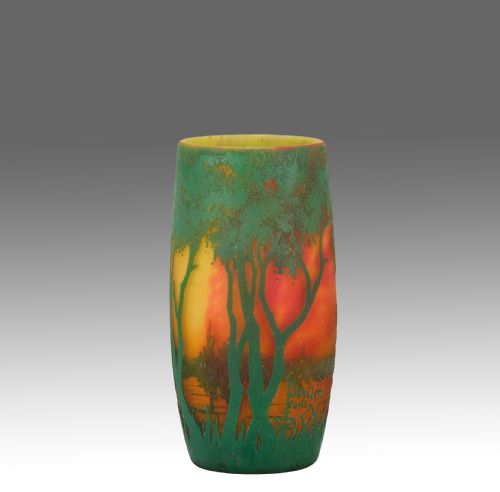

Art Nouveau Mantel Vase
An art nouveau mantel vase brings organic curves and floral grace straight to your fireplace, offering a striking centrepiece that transforms a room.
Art Nouveau Mantel Vase
When you search for an art nouveau mantel vase, you encounter decorative vessels shaped by natural forms, winding stems and botanical motifs. These pieces span the late nineteenth century through to the early decades of the twentieth century, capturing a distinct period of design history.
The selections available here include ceramic, stoneware and glazed earthenware alongside metalwork in brass, bronze and sterling silver. Makers embraced fluid silhouettes, often pairing functional vessels with sculptural figures or stylised leaf patterns designed to command attention on a shelf or mantel.
Most examples hail from British potteries and continental European workshops, reflecting the widespread enthusiasm for organic ornament during the Edwardian era. You meet pairs as well as individual statement pieces, each demonstrating the characteristic asymmetry and sinuous lines of the movement.
How they were made
Potters shaped these vessels using traditional ceramic techniques, moulding glazed earthenware and stoneware to achieve swelling, plant-like profiles. Artisans applied rich glazes to accentuate the contours, sometimes combining fired clay with metallic mounts.
Metalworkers cast bronze, brass and silver into curving plant stems and female water nymphs, soldering or plating components to complete the decorative structure. Glassmakers also utilised hot-forming methods to capture mottled colour effects within heavy vessels.
Art Nouveau Mantel Vase Retail Price Guide 2026
Typical asking prices for art nouveau mantel vase among the pieces listed under this phrase on Sellingantiques today, from the lower quarter to the upper quarter. They describe what is for sale here now, not the wider market.
What varies in quality
The distinction between ordinary and exceptional pieces rests upon the crispness of the modelling and the depth of the glaze. Superior examples display confident, flowing lines where the decorative motifs integrate harmoniously with the overall form rather than appearing merely applied.
Weight and finish also determine the standing of a piece, with heavier metal castings and richer, multi-layered ceramic glazes commanding greater admiration. The involvement of recognised potteries or named designers elevates the standard significantly.
Royal Doulton·Boch Freres·Daum Freres·Royal Dux·Charles Korschann
The Art Nouveau Mantel Vase Glossary
- Stoneware
- A robust ceramic fired at high temperatures until vitrified, rendering it dense and waterproof without necessarily requiring glaze. It accepts intricate relief moulding exceptionally well.
- Faience
- Tin-glazed earthenware originating from European traditions, offering a smooth white surface suitable for painted botanical designs.
- Sterling Silver
- A precious alloy containing substantial pure silver content, utilised for decorative vases and mountings that gleam under mantel lighting.
- Edwardian Art Pottery
- Ceramic ware produced during the reign of Edward VII, characterised by experimental glazes and flowing naturalistic patterns.
- Glaze
- A vitreous coating fused to ceramic bodies through firing, providing colour, gloss and protection to the underlying clay.
Art Nouveau Mantel Vase: Frequently Asked Questions
How do I date an art nouveau mantel vase?
Dating relies on maker marks, stylistic details and the specific materials employed by potteries and metalworkers during the period.
Looking at the registration numbers or factory stamps often narrows the production era down to a specific decade.
Are these vases meant for holding flowers?
While many can hold water and stems, numerous examples function primarily as decorative art objects rather than utility vessels.
Checking the interior for wear or waterproof glazing helps determine whether a piece is suited for fresh displays or purely ornamental placement.
How do I style a mantel vase at home?
Place a single statement piece centrally on a mantelpiece, or use matching pairs to frame a mirror or clock.
Allow enough surrounding space for the curving lines and sculptural details to catch the light and draw the eye.