


Art Nouveau Inlay Chairs
These art nouveau inlay chairs combine organic floral motifs with precise cabinetwork, offering seating that defines the decorative character of the period.
Art Nouveau Inlay Chairs
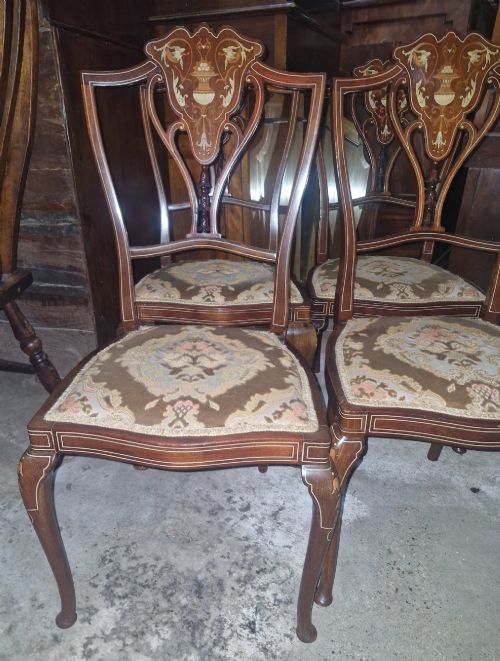
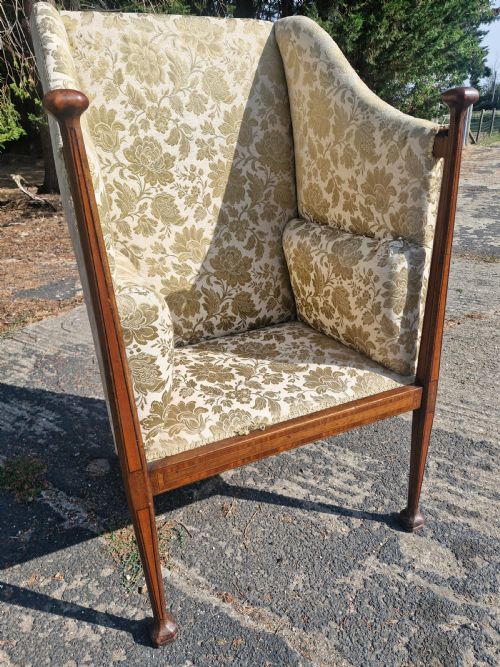
When buyers search for art nouveau inlay chairs, they encounter seating spanning the late nineteenth century through the Edwardian era, predominantly built from mahogany with contrasting wood details. The form appears most frequently as single side chairs, salon carvers, and occasional armchairs, often featuring characteristic whiplash lines.
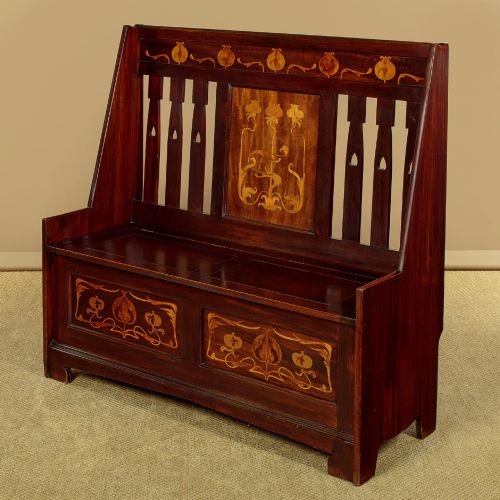
The selection ranges from bedroom chairs and corner seats to complete parlour suites and matching dining sets. Makers of the period applied marquetry and satinwood inlay to define structural panels and back splats with stylised botanical patterns.
Dining chairs and low salon models dominate the available forms, reflecting the domestic requirements of the 1900s. These pieces bridge late Victorian mass production and the artistic ambition of the Arts and Crafts movement.
Materials and Construction
Cabinetmakers constructed these frames primarily in solid mahogany and walnut, selected for structural strength and a deep warm grain. Lighter timbers such as satinwood supplied the contrasting tones needed for detailed floral and linear marquetry.
Inlay work relied on hand-cut veneers fitted precisely into recessed channels within the primary wood. Upholstery materials included contemporary textiles and fabric panels pinned directly to sprung or stuffed bases.
Makers occasionally produced child-sized armchairs featuring the same complex marquetry as full-scale parlour furniture for affluent households.
Distinctions in Quality
The sophistication of the marquetry dictates the tier of the piece, separating simple geometric stringing from complex, multi-timber floral pictorials. Precision in the joint work and the fluidity of the carved mahogany crest rails further mark out superior examples.
Scale and proportion separate standard utilitarian seating from bespoke parlour furniture designed for formal reception rooms. Original upholstery schemes and branded maker marks elevate the standing of surviving pieces within the market.
James Shoolbred & Co
The Art Nouveau Inlay Chairs Glossary
- Marquetry Inlay
- The art of fitting decorative veneer pieces into a prepared wooden surface to create pictorial designs. This technique allows cabinetmakers to form complex botanical patterns using varied timber tones.
- Satinwood
- A durable tropical hardwood known for its golden-yellow lustre and fine grain. Craftsmen utilised this timber extensively for contrasting inlay work and banding.
- Parlour Suite
- A matched set of seating furniture comprising a settee and several armchairs or side chairs. These suites furnished the formal reception spaces of Edwardian homes.
- Corner Chair
- A seat designed to fit diagonally into the angle of a room, featuring a diagonal seat plan and a continuous curved back rail supported on multiple posts.
- Settle
- A wooden bench featuring high backrests, solid arms, and frequently an enclosed lower box storage compartment. These functional items appeared in Arts and Crafts interiors.
Art Nouveau Inlay Chairs: Frequently Asked Questions
What defines art nouveau chairs?
These chairs feature asymmetric curved lines, stylised floral motifs, and organic shapes inspired by natural forms. Cabinetmakers integrated these motifs directly into the wooden framework and back splats.
They break away from rigid Victorian revival styles in favour of flowing contours and rhythmic plant-based designs.
How do I date these chairs?
Dating relies on examining the timber selection, construction methods, and stylistic integration of inlay work. Pieces from the 1890s often retain heavier Victorian proportions alongside emerging botanical motifs.
Items marked as Edwardian or from 1900 typically display lighter frames, more stylised whiplash curves, and refined satinwood details.
Where were these chairs used?
Original placement included formal drawing rooms, domestic parlours, bedrooms, and dining spaces. Parlour suites provided matching seating arrangements for entertaining guests.
Occasional chairs and corner seats filled smaller domestic niches, serving both decorative and practical seating functions.
Are these chairs suitable for daily use?
Solid mahogany and walnut construction provides the structural integrity needed for regular contemporary seating. Proper care of the upholstered surfaces and wooden frames ensures longevity.
Many salon and dining models function effectively in modern interiors alongside contemporary furniture.