



Art Nouveau Glass Pendant
These art nouveau glass pendant pieces bring organic forms and fluid lines into your interior or collection.
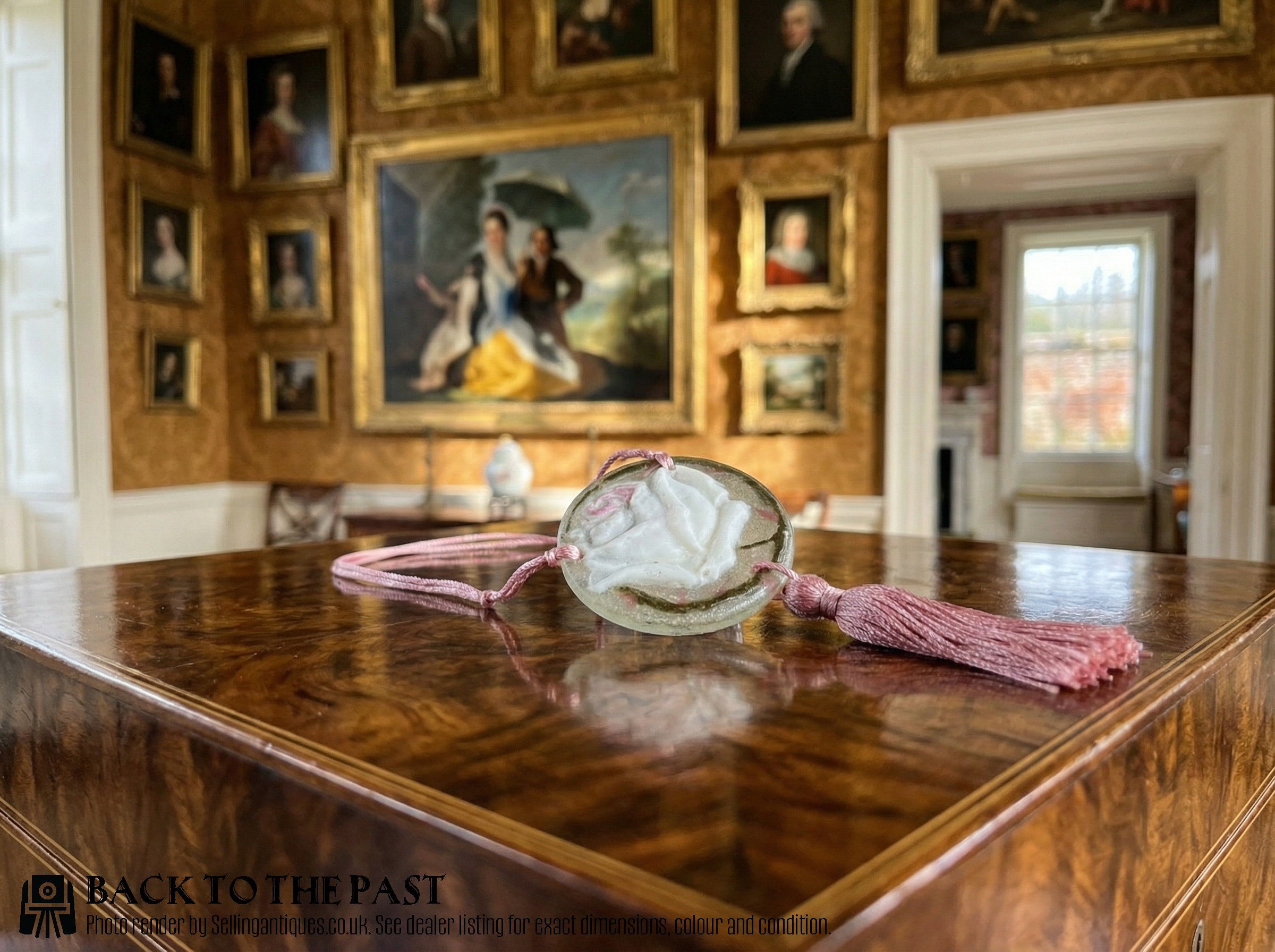
Art Nouveau Glass Pendant
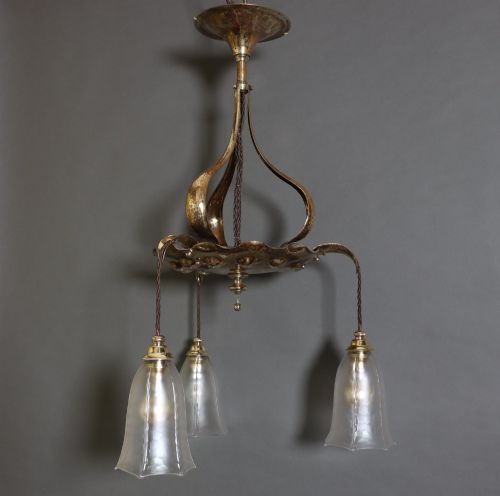
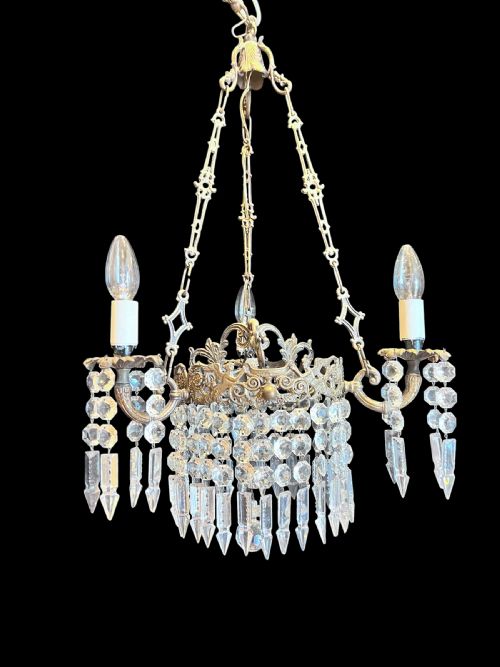
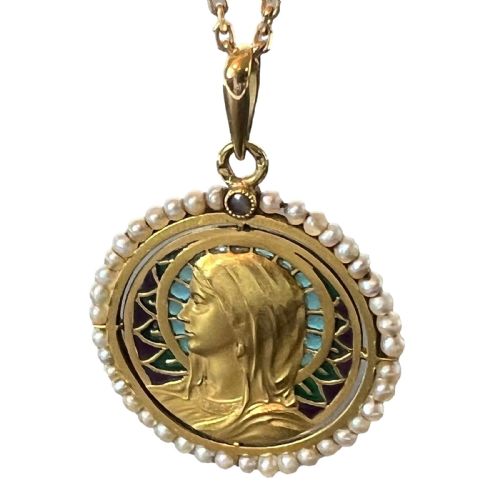
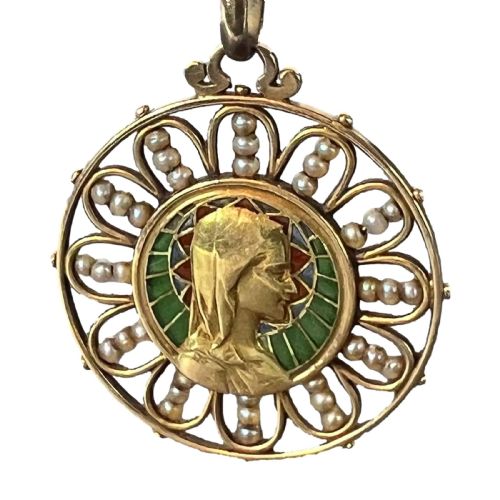
When you search for art nouveau glass pendant items, you encounter objects spanning the late nineteenth century through to the interwar decades. The selection encompasses hanging ceiling lamps, chandeliers, and wearable jewellery medals fashioned in precious metals.
You are most likely to meet lighting fixtures featuring brass or bronze frames holding moulded, frosted, or iridescent glass shades. Jewellery items featuring plique-a-jour enamel and pate de verre also appear among the offerings.
How they were made
Makers shaped molten glass using techniques such as pate de verre and plique-a-jour enamelling to create translucent effects resembling stained glass or wings. Metalwork components in brass, copper, bronze, and wrought iron provided structural support for these delicate glass elements.
Workshops utilised cast and beaten metal alongside precious metals like 18k yellow gold to mount stones, pearls, and glass shades securely. Craftspeople balanced sturdy suspension hardware with fragile decorative glass panels.
Listings feature items from the nineteenth century through the Edwardian period and the 1920s, utilising brass, bronze, copper, and 18k yellow gold.
What varies in quality
The sophistication of the glass moulding and the depth of its colouration distinguish finer examples from standard production. Master glasshouses achieved subtle iridescence and complex shading that simpler pressed glass cannot replicate.
Metalwork execution also dictates the standard of a piece, separating hand-wrought copper and chased bronze frames from simpler stamped brass assemblies. Integrated harmony between the glass shade and its metal housing indicates superior design.
F&C Osler·Schneider·Argy Rousseau·Amalric Walter·Verrerie Des Vosge·Muller Freres
The Art Nouveau Glass Pendant Glossary
- Pate de verre
- A glass-crafting method where finely crushed glass is packed into a mould and fused in a kiln. This technique produces richly coloured objects with a characteristic granular texture.
- Plique-a-jour
- An enamelling technique where transparent enamel is fired in open metal cells without a backing, resembling miniature stained glass. It allows light to pass directly through the coloured fields.
- Iridescent glass
- Glass treated with metallic salts while hot to create a shimmering, rainbow-like surface sheen. Makers utilised this effect to mimic natural surfaces.
- Rise and fall
- A mechanical suspension system using pulleys and weights to allow the height of a hanging lamp to be adjusted. This mechanism was common in domestic lighting of the period.
Art Nouveau Glass Pendant: Frequently Asked Questions
How do I hang a heavy glass pendant?
These fixtures require secure fixing to ceiling joists using appropriate hooks and brackets to bear the combined weight of metal and glass. Professional installation ensures the electrical wiring safely supports older fittings.
Ensure the suspension chain or cord is adjusted to the correct drop for your ceiling height before final connection.
Can I use modern bulbs in these lights?
Most historic fixtures accept standard modern bulbs provided the wattage does not exceed the tolerance of the original wiring and shade size. LED alternatives are often recommended to reduce heat output near fragile antique glass.
Check the inner clearance of the shade to ensure the bulb fits comfortably without touching the glass surface.
How do I clean antique art nouveau glass?
Wash glass shades gently in warm water with mild soap, removing them from the metal frame if the fixings allow safe disassembly. Avoid harsh chemical cleaners that might strip historic surface treatments or iridescence.
Dry the components thoroughly with a soft cloth before reassembling the light fitting or jewellery mount.
Are jewellery pendants and ceiling lights from the same period?
Both forms share the characteristic curving lines, natural motifs, and glass techniques associated with the turn of the twentieth century. Jewellery often incorporates precious metals like 18k gold alongside miniature enamelling, while lighting uses structural base metals.
Examining the mounting hardware and hallmarks helps establish the precise decade of manufacture for each item.