



Art Nouveau Floral Glass
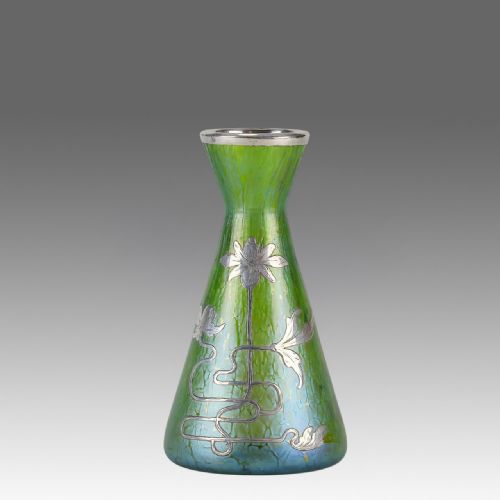
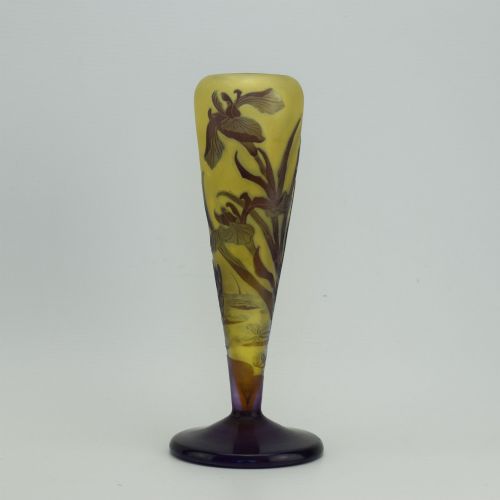
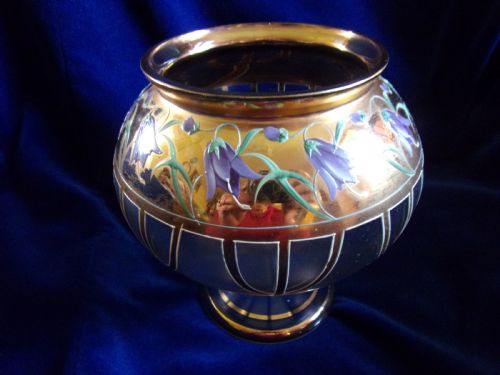
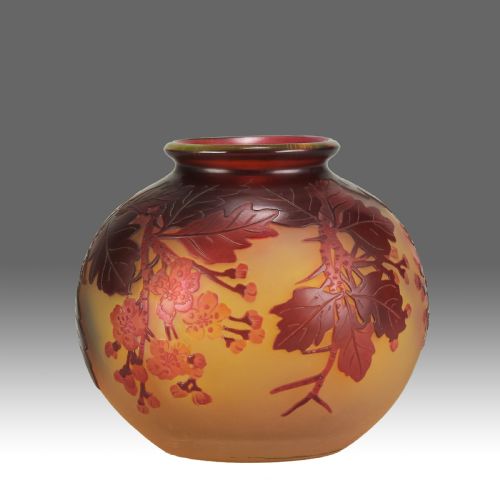
Art nouveau floral glass brings organic botanical forms into domestic spaces through vibrant enamelling, delicate cameo carving and shimmering silver mounts.
Art Nouveau Floral Glass
Art nouveau floral glass encompasses decorative vessels, scent bottles, and table pieces shaped by the botanical motifs of the turn of the twentieth century. These items emerge primarily from the Victorian, Edwardian, and early twentieth-century periods, capturing the curvilinear essence of French Belle Epoque and Jugendstil aesthetics.
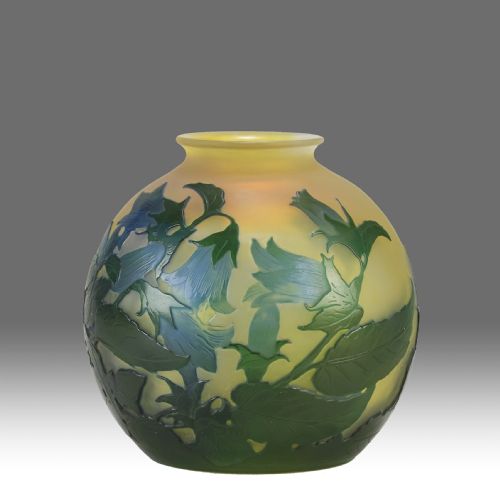
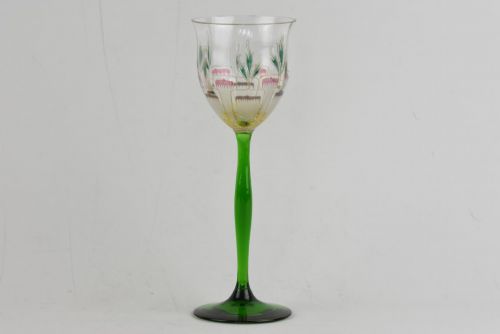
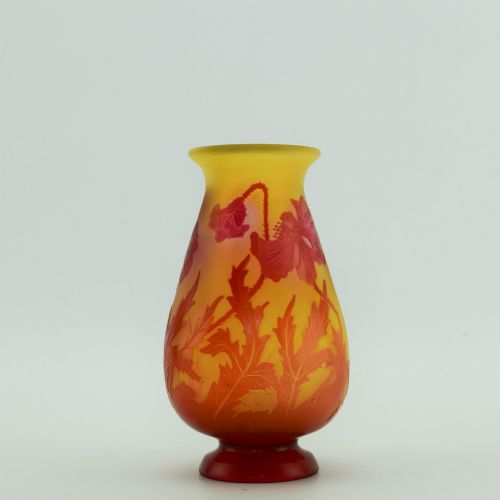
Vases, perfume bottles, and decorative bowls dominate the selection, often bearing depictions of specific flowers like cornflowers, poppies, and irises. The physical forms range from compact dressing table jars to large cameo glass vases and hanging chandeliers.
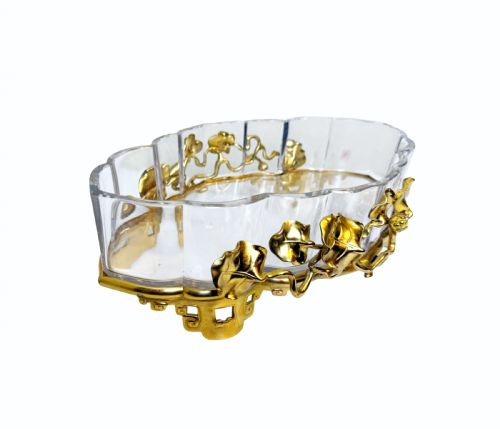
Makers and glasshouses across Britain and continental Europe utilised techniques such as acid-etching and enamel painting to translate natural flora into durable glass art. Collectors encounter everything from delicate wine glasses to robust crystal centrepieces mounted in bronze or sterling silver.
How they were made
Makers created multi-layered cameo glass by acid-etching and carving through distinct coloured strata of glass to reveal crisp botanical reliefs. This required precise chemical control and manual skill to render delicate petals and stems without damaging the background layer.
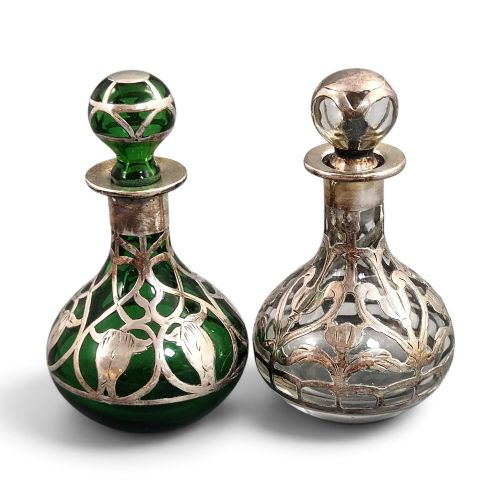
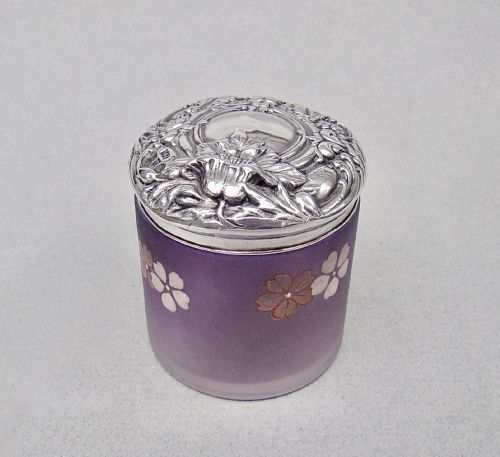
Enamelling and gilding involved applying mineral pigments and gold leaf directly onto the glass surface before firing the vessel in a kiln to fuse the decoration. Artisans also combined blown crystal with metalwork, mounting silver overlays and bronze frames securely around the finished glass bodies.
Materials recorded include frosted glass, brass, gold leaf, and sterling silver alongside cameo glass.
What varies in quality
Quality rests on the depth and precision of the cameo carving, where sharper relief work and subtle shading demonstrate superior craftsmanship. Pieces displaying complex multi-layered acid-etching demand greater technical mastery than simple surface enamelling.
The integration of precious mounts, such as heavy sterling silver overlay or cast bronze frames, elevates the overall execution of the object. Weight, clarity of the base crystal, and the nuance applied to botanical details distinguish standard production ware from exceptional studio output.
Emile Gallé·Daum Frères·Johann Loetz·Gorham·Theresienthal·Baccarat·Rene Lalique
The Art Nouveau Floral Glass Glossary
- Cameo Glass
- A form of glass art produced by etching or carving through fused layers of different coloured glass to create a raised design. This technique allows for intricate shading across botanical motifs.
- Acid-Etched Glass
- Glass exposed to hydrofluoric acid to eat away specific areas of the surface, creating frosted designs or textured background layers. It enables rapid production of detailed patterns.
- Enamel Painting
- The application of coloured glass powders mixed with an oil medium onto a glass vessel before kiln-firing. This process locks vibrant floral pigments permanently onto the exterior.
- Sterling Silver Overlay
- A decorative layer of solid silver cut into floral patterns and fused or clamped directly onto the glass body. It reinforces the piece while adding metallic contrast.
- Phänomen
- An iridescent glass surface treatment developed by Loetz featuring combed wavy lines across the molten body. This method catches light to simulate natural organic movement.
Art Nouveau Floral Glass: Frequently Asked Questions
What is cameo glass?
Cameo glass is a vessel formed with multiple layers of contrasting coloured glass, then carved or acid-etched down to the base layer to reveal a raised design.
This intricate method highlights naturalistic botanical subjects like poppies and irises with notable depth and tonal variation.
How do I clean antique glass?
Antique glass requires gentle hand washing in lukewarm water using a mild, non-abrasive detergent and a soft cloth.
Avoid submerging pieces with silver mounts or glued attachments for extended periods to protect the metallic elements and adhesives.
Are silver mounts hallmarked?
Many silver-overlay and lidded pieces feature British or continental assay office hallmarks stamped directly into the metal components.
These tiny stamped symbols help confirm the exact year and location of manufacture for the precious metal mountings.
What is Jugendstil?
Jugendstil is the continental European manifestation of the Art Nouveau movement, named after a Munich art magazine.
It shares the same flowing, organic plant-based inspirations found in British and French design during the turn of the twentieth century.