




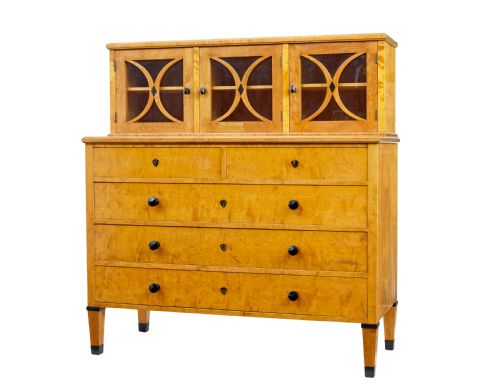


Art Nouveau Drawers
Art nouveau drawers bring organic lines and rich timber into a room, offering practical storage with distinct period character.
Art Nouveau Drawers
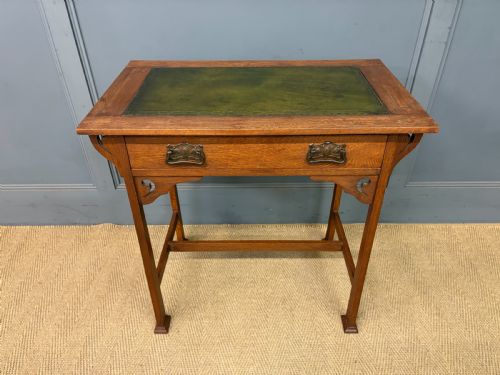
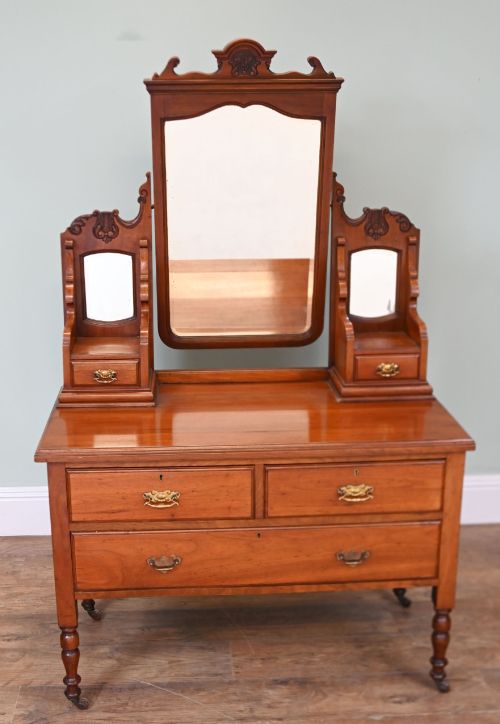
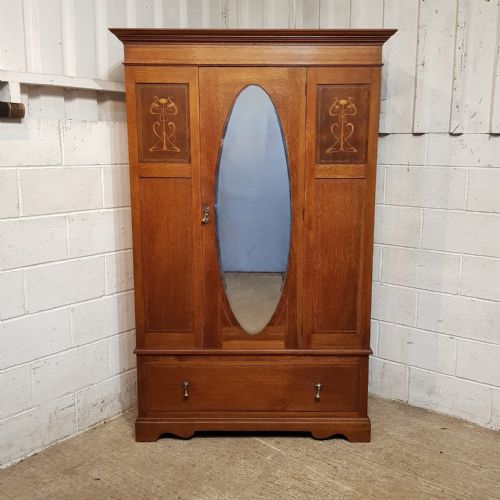
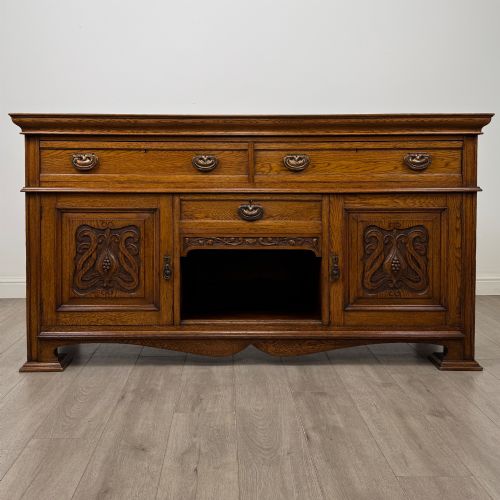
Art nouveau drawers encompass a range of storage forms shaped by the stylistic movements of the late nineteenth and early twentieth centuries, including sideboards, chests of drawers, and cabinets. A buyer searching for art nouveau drawers will encounter pieces crossing several overlapping stylistic definitions, such as Edwardian, Arts and Crafts, and Victorian revivals. These items originate from British and continental workshops, reflecting a period of transition in domestic furniture design.
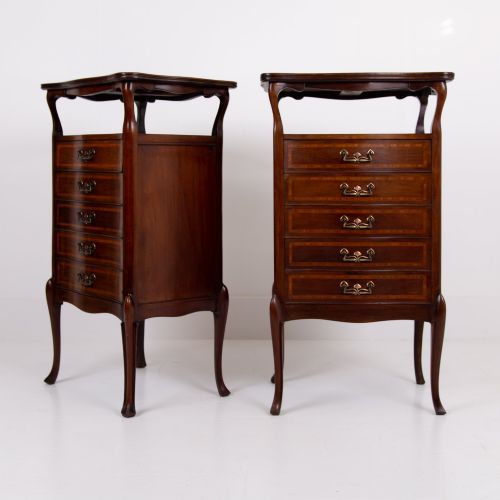
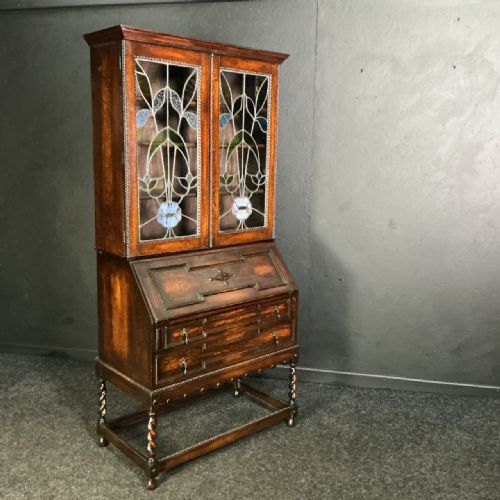
Chest of drawers and sideboards form the most common iterations on this page, often built from sturdy native timbers like oak and pine. Alongside standard chests, smaller wall-hanging cabinets with descending drawers and specialised music cabinets appear, showing the diversity of storage solutions produced during this era. Each piece integrates functional drawer space with the characteristic decorative motifs of the turn of the century.
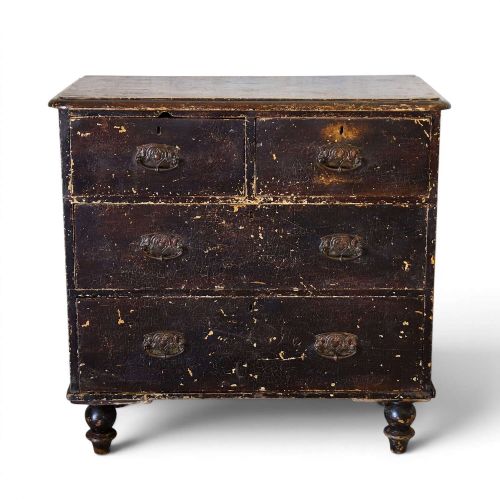
The materials span solid hardwoods and softwoods, frequently enhanced by decorative hardware or applied paint finishes. Walnut, mahogany, and birch provide finer surfaces, while pine often carries original paint schemes like brown scumble. This variety ensures that whether a buyer seeks a grand sideboard or a modest bedside cabinet, the construction remains rooted in traditional period joinery.
What varies in quality
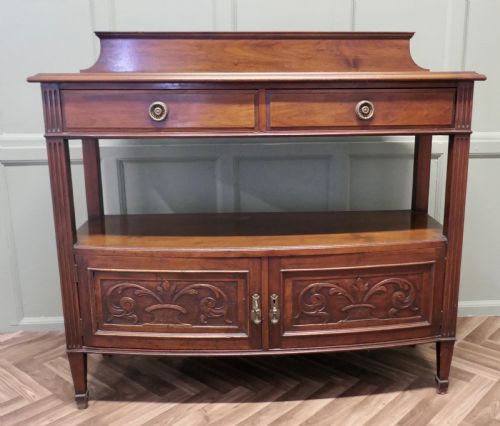
The standard of timber selection and cabinet construction dictates the upper tier of these pieces, separating workshop-produced items from simpler utilitarian versions. Dense hardwoods like walnut and figured mahogany, combined with intricate carved details or fine inlay, distinguish finer cabinets and sideboards from standard pine furniture.
Hardware integrity and the preservation of original finishes heavily influence a piece's standing. Original brass or copper fittings, intact glass panels, and undisturbed surface paints demonstrate how well a cabinet or chest has survived through its various periods of origin.
Art Nouveau Drawers Retail Price Guide 2026
Typical asking prices for art nouveau drawers among the pieces listed under this phrase on Sellingantiques today, from the lower quarter to the upper quarter. They describe what is for sale here now, not the wider market.
Some cabinets hide descending drawers just for keys, proving that historical clutter was just as troublesome as our own.
The Art Nouveau Drawers Glossary
- Scumble
- A decorative paint technique involving a translucent glaze dragged or brushed over a base coat to imitate grain or create textured patterns. It frequently appears on period pine furniture.
- Escutcheon
- A flat plate surrounding a keyhole, designed to protect the surrounding wood from wear. In these pieces, they are often cast in brass or copper with organic floral motifs.
- Dovetail
- A joint formed by interlocking wedge-shaped fingers, used extensively in period drawer construction. Its presence indicates traditional hand or early machine joinery.
- Jugendstil
- The continental German-speaking variant of the art nouveau movement, characterised by flowing lines and stylised natural forms. Items bearing this label show distinct European design influences.
- Barograph
- A recording meteorological instrument housed in a wooden case, occasionally fitted with a lower storage drawer. These scientific instruments often incorporated contemporary decorative styles into their cabinetry.
Art Nouveau Drawers: Frequently Asked Questions
Are art nouveau drawers heavy?
The weight depends entirely on the primary timber used in construction. Pieces built from dense hardwoods like oak, mahogany, or walnut tend to be substantial and require two people to move safely.
Conversely, items made from pine or birch are generally lighter and easier to position within a room. Solid construction methods mean even smaller wall-hanging cabinets have noticeable heft.
How do I clean antique wood drawers?
Dust surfaces regularly with a soft, dry cloth to prevent dirt accumulation in carved details and around hardware. Avoid modern chemical polishes that can degrade historical wax or oil finishes over time.
Feed dry timber occasionally with a quality beeswax applied sparingly and buffed gently. This maintains the natural lustre of mahogany, oak, and walnut without harming the underlying patina.
What rooms suit these cabinets?
Sideboards and larger chests fit naturally into dining rooms or living spaces, providing practical storage for tableware or linens. Their decorative woodwork adds warmth and focal weight to a neutral interior.
Smaller items like bedside cabinets or wall-hanging drawers function well in hallways or bedrooms. Their compact footprints allow them to integrate easily without overwhelming smaller living areas.
How do I spot an Edwardian piece?
Edwardian furniture often combines traditional Victorian solidity with the lighter, more flowing aesthetic of the early twentieth century. Look for simpler lines, subtle inlay work, and restrained carving compared to heavier mid-century styles.
Construction details and hardware from this era frequently overlap with arts and crafts or early art nouveau movements. Examining the interior secondary timbers helps confirm the manufacturing window.