




Art Nouveau Brass Stand
When you search for an art nouveau brass stand, you meet fluid metalwork, organic plant forms, and tall lighting pieces forged across the turn of the twentieth century.
Art Nouveau Brass Stand
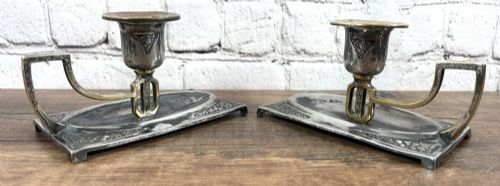
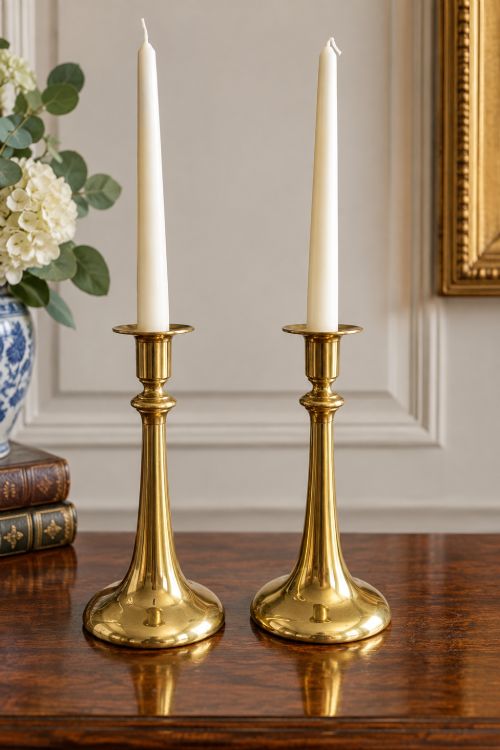
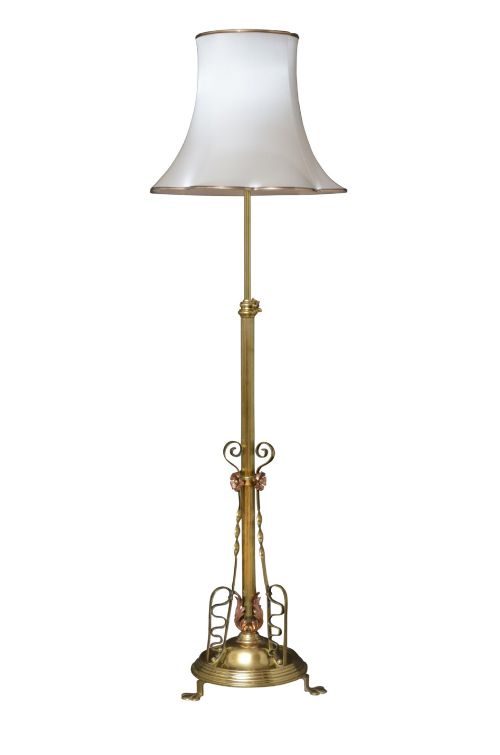
An art nouveau brass stand spans functional household items such as towering standard lamps, umbrella holders, plant holders, and desktop ink repositories. These objects emerge from various European design movements including the Arts and Crafts tradition, the Amsterdam School, and continental Belle Epoque workshops.
Tall standard lamps and adjustable reading lights dominate the available offerings, alongside heavy floor-standing plant displays and hall furniture. Makers frequently combine brass with copper, cast iron, marble bases, or ceramic elements to create utilitarian objects with decorative flair.
The pieces date predominantly from the late nineteenth century through the Edwardian era into the nineteen-twenties. Buyers encounter domestic accessories that served practical household roles, from holding walking sticks in hallways to illuminating reading rooms.
Design Integrity and Weight
The distinction between ordinary production and superior craftsmanship lies in the weight of the metal and the precision of the joints. Better examples display crisp hand-chased surface detail on floral motifs rather than soft, mass-produced stampings.
Structural robustness separates utilitarian items from finer decorative pieces, particularly in telescopic lamp standards and heavy plant displays. Original components, such as intact marble tops and unmodified oil burners converted safely to electricity, retain greater historical integrity.
Art Nouveau Brass Stand Retail Price Guide 2026
Typical asking prices for art nouveau brass stand among the pieces listed under this phrase on Sellingantiques today, from the lower quarter to the upper quarter. They describe what is for sale here now, not the wider market.
A brass hanging bird cage swings alongside standard lamps and umbrella stands.
Abel Landry·William Tonks·William Tonks and Sons
The Art Nouveau Brass Stand Glossary
- Pricket candlestick
- A candle holder featuring a sharp metal spike upon which the wax taper rests, common in ecclesiastical and heavy domestic metalwork.
- Jardiniere
- An ornamental stand or receptacle designed to hold live plants or floral arrangements, frequently lined with metal or ceramic.
- Telescopic
- A construction design utilising nested sliding tubes that permit vertical adjustment of height on standard lamps and reading stands.
- Geschutzt
- A German term denoting a protected or registered design, frequently stamped onto continental metalware of the period.
- Amsterdam School
- An architectural and design movement originating in the Netherlands characterised by brick expressionism, rounded organic forms, and elaborate metal fittings.
Art Nouveau Brass Stand: Frequently Asked Questions
How do I use an antique standard lamp today?
Most tall lamps have been professionally rewired for modern electrical standards while retaining their original brass sockets and telescopic mechanisms. They function effectively as reading lights or ambient floor illumination in traditional and contemporary interiors.
Position the heavy base securely on a level floor, and utilise LED bulbs that generate minimal heat to protect nineteenth-century metal finishes.
Where were these stands placed in period homes?
Umbrella and stick holders stood directly in entrance hallways to receive wet outdoor gear, while jardiniere stands occupied drawing room corners to display ferns. Desktop ink stands and photograph frames graced library tables and writing desks.
Larger plant stands and cake tiers were positioned near windows or serving areas to maximise both light and decorative utility.
How do I distinguish Art Nouveau from Arts and Crafts pieces?
Art Nouveau metalwork relies on asymmetrical whiplash lines, sinuous floral curves, and stylized natural motifs inspired by plant stems and insect wings. Arts and Crafts items typically emphasise visible construction methods, hand-hammered surfaces, and functional utility with simpler geometric restraint.
Many transitional pieces combine both philosophies, pairing sturdy copper construction with flowing organic brass mounts.
Should I polish the brass on these stands?
Preserving the dark patination accumulated over a century is generally preferred by collectors, as heavy cleaning removes historical character. Light dusting with a dry cloth maintains the surface without disturbing the aged metallic tones.
If cleaning is necessary, avoid abrasive compounds that strip the original skin and soften crisp hand-chased details.