

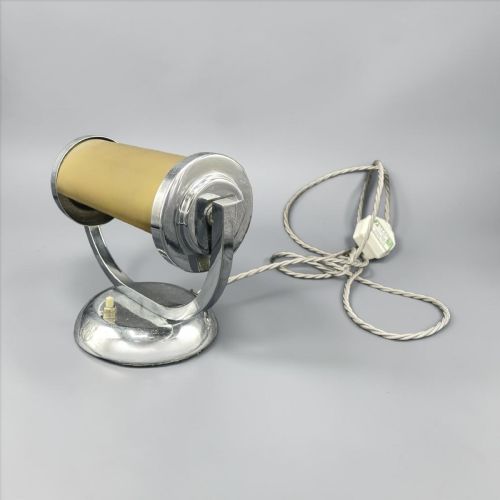
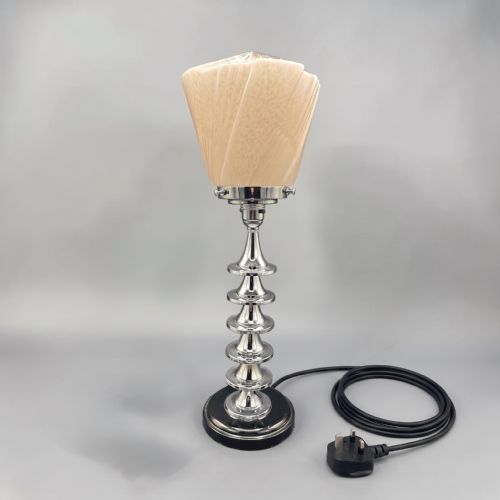
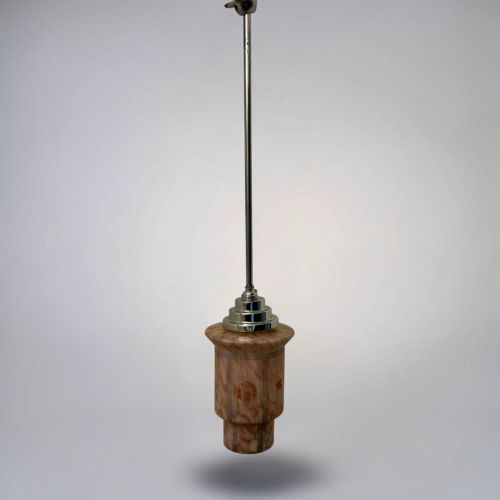
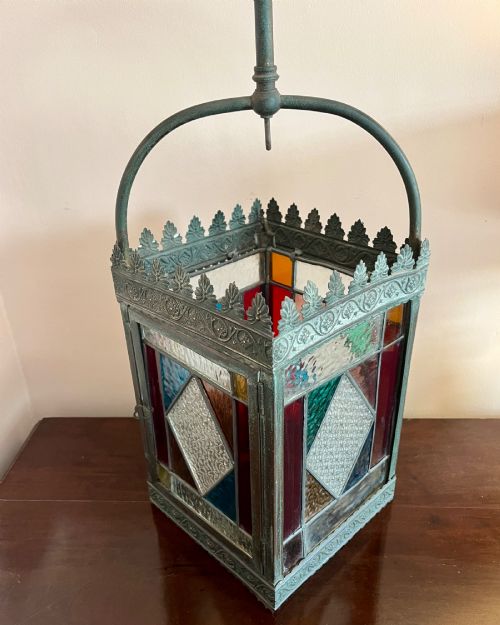

Art Glass Shades
Art glass shades bring colour, texture and directional illumination to period lighting fixtures.
Art Glass Shades
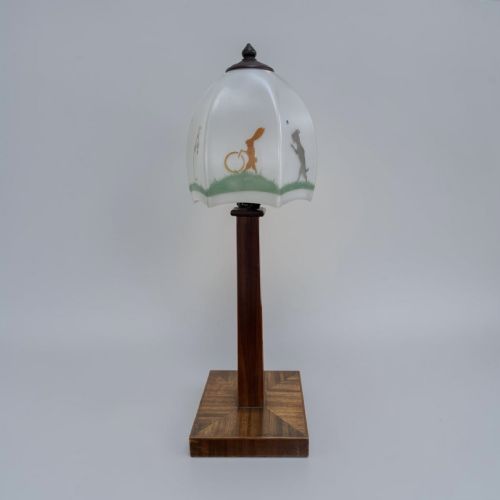
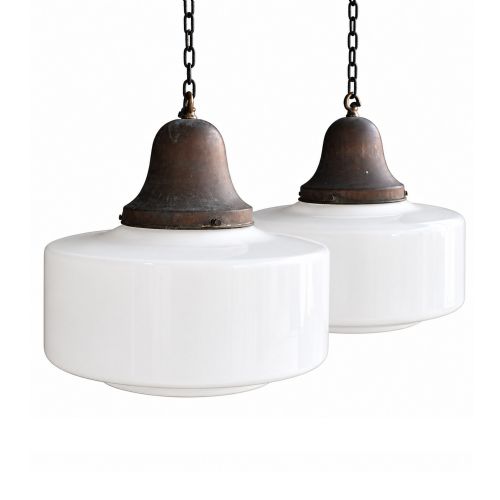
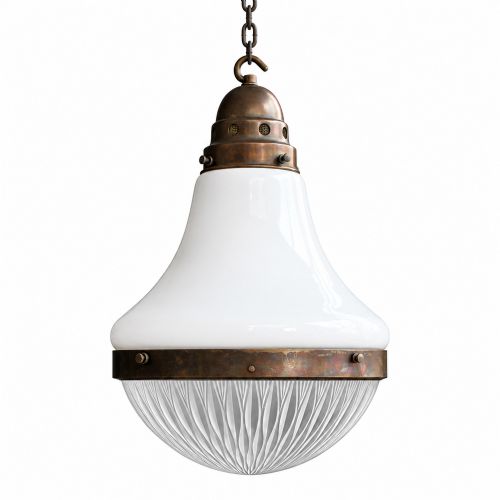
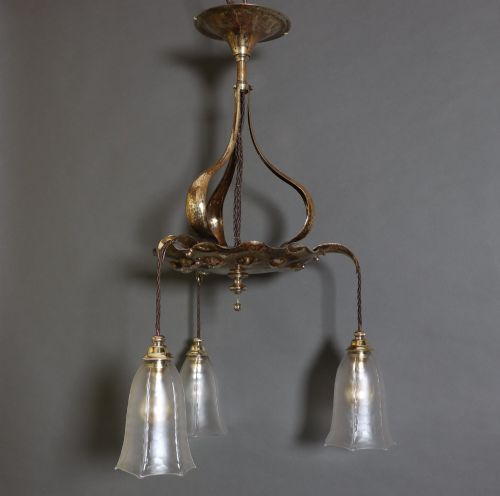
Art glass shades encompass decorative diffusers used across pendant lights, ceiling fixtures and table lamps from the nineteenth century through the mid-twentieth century. When searching for art glass shades, buyers encounter diverse forms ranging from spherical globes and conical pendants to slip shades designed for domestic and public interiors.
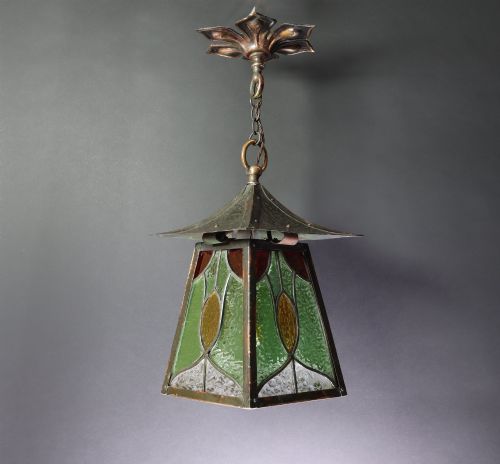
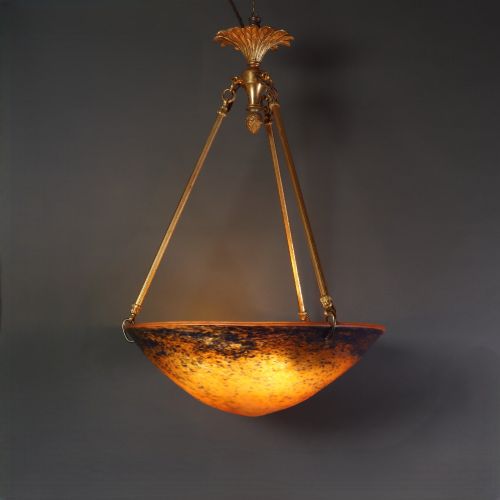
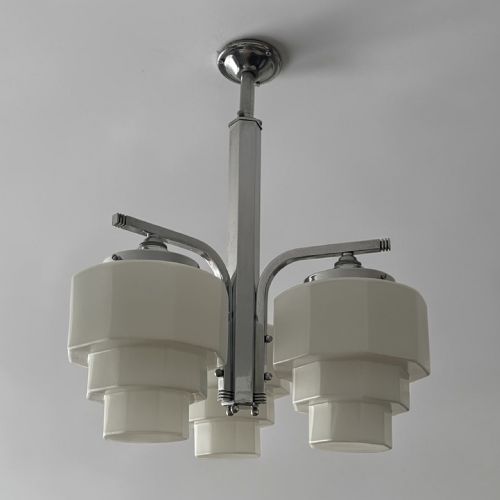
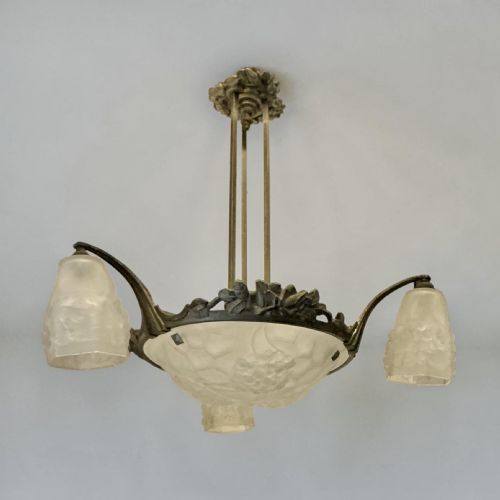
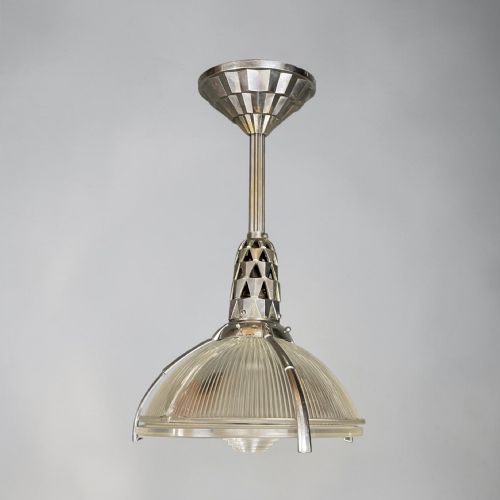
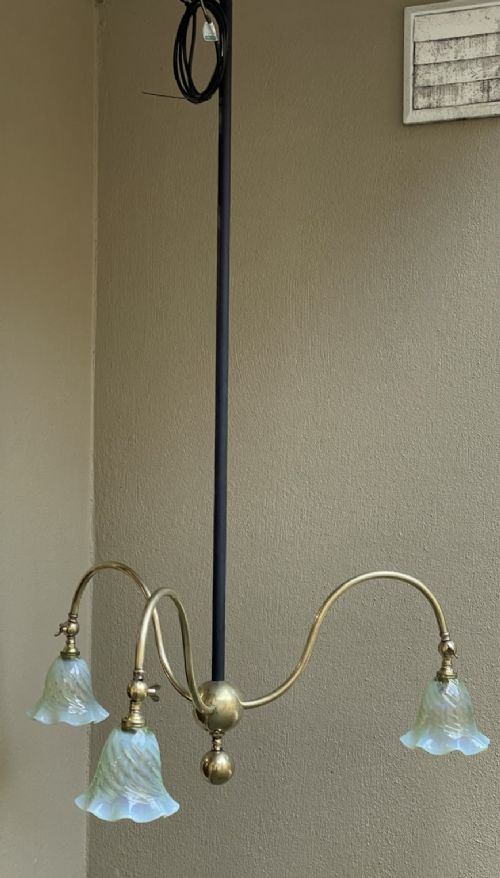
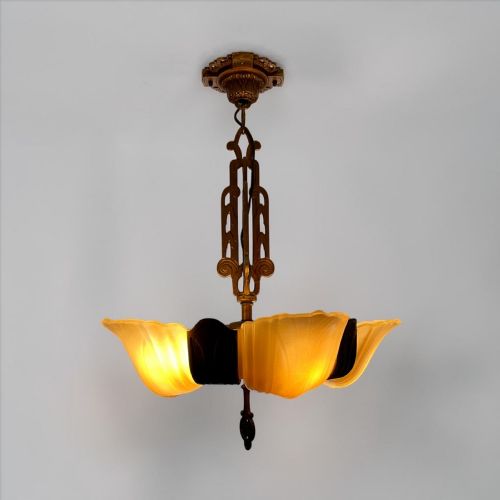
The pieces appearing on this page span several distinct design movements, with Art Deco geometric creations and Art Nouveau organic curves appearing frequently. Alongside these, Arts and Crafts designs and Victorian pieces demonstrate the wide variety of lighting fixtures utilising decorative glass components.
Originating from British, French and American workshops, these shades are mounted in brass, copper and chrome fittings. They function as both standalone replacements and integrated components of complete antique lighting assemblies.
How they were made
Glassmakers utilised techniques such as hand-blowing, moulding, and acid-etching to achieve frosted, crackle, opaline, and cut crystal finishes. Molten material was manipulated into complex shapes, sometimes incorporating coloured layers or leaded stained glass segments.
Metal mounts and bases were produced using cast brass, wrought copper, and chrome-plated metals, often secured with marble elements or ceramic components. These materials provided the structural weight necessary to support hanging pendants and desk lamps.
Art Glass Shades Retail Price Guide 2026
Typical asking prices for art glass shades among the pieces listed under this phrase on Sellingantiques today, from the lower quarter to the upper quarter. They describe what is for sale here now, not the wider market.
The object forms recorded here range from portable desk lamps and reading lights to large municipal ceiling pendants and wall sconces.
What varies in quality
Quality in these items is determined by the depth and clarity of the glasswork, the precision of the moulding, and the weight of the supporting metal framework. Superior pieces display deliberate control over colour distribution and texture.
Named makers and signed glass pieces demonstrate higher artistry through sophisticated design and finishing details. Heavier gauge brass, copper and marble mountings similarly distinguish finer fixtures from standard production items.
Charles Schneider·Degué·Émile-Jacques Ruhlmann·Gustave Serrurier Bovy·Stuart Crystal
The Art Glass Shades Glossary
- Plafonnier
- A ceiling-mounted light fixture featuring a bowl-shaped glass shade fitted closely against the ceiling. These direct illumination downwards into the room.
- Slip shade
- A moulded glass insert used primarily in Art Deco lighting fixtures, held in place by a metal frame. Several matching slip shades typically form a basket around the bulb.
- Opaline glass
- An opaque or translucent glass characterised by a milky appearance, often white or pastel-toned. It diffuses light softly without harsh glare.
- Rise and fall
- A mechanical pulley system utilising counterweights to allow a pendant light to be adjusted in height. This mechanism was popular in Edwardian and Arts and Crafts interiors.
- Crackle glass
- Glass deliberately fractured during the cooling process and then reheated to fuse the internal cracks while maintaining a textured surface pattern.
Art Glass Shades: Frequently Asked Questions
How do I identify an Art Deco shade?
Art Deco shades typically display symmetrical geometric patterns, stylised motifs, and structured forms like chevrons or stepped designs. They often utilise frosted or slip glass construction housed in chrome or brass frames.
These pieces reflect the design priorities of the 1920s and 1930s, contrasting with the flowing organic lines of earlier Art Nouveau lighting.
Can I use modern bulbs with antique shades?
Modern low-heat LED bulbs can generally be utilised with vintage glass shades, provided the physical dimensions and fitting sizes match correctly. Care must be taken with older wiring and original brass sockets.
Consulting a professional electrician ensures that historical fixtures comply with current safety standards while accommodating contemporary lighting output.
What is opaline glass?
Opaline glass is a semi-translucent material developed to soften light distribution by obscuring the bulb within. It appears commonly in conical and spherical pendant configurations from the early twentieth century.
The milky finish provides even illumination without creating hotspots, making it practical for task lighting and general room ambiance.
How are pendant lights mounted?
Pendant lights are suspended from ceilings using brass, copper or iron chains, rods, or twisted fabric cords connected to ceiling roses. The glass shade is secured via screw fitters or internal galleries.
Heavier fixtures require secure anchorage into ceiling joists to support the combined weight of the metal framework and glass components.