




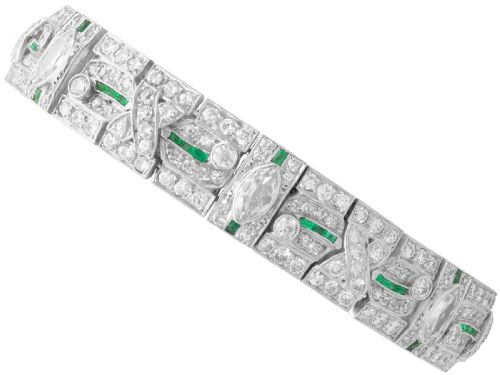


Art Deco Wristlet
These art deco wristlet pieces span platinum, gold, and silver, offering striking geometric designs for the wrist.
Art Deco Wristlet
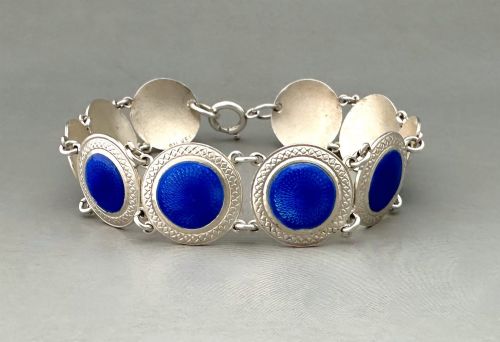
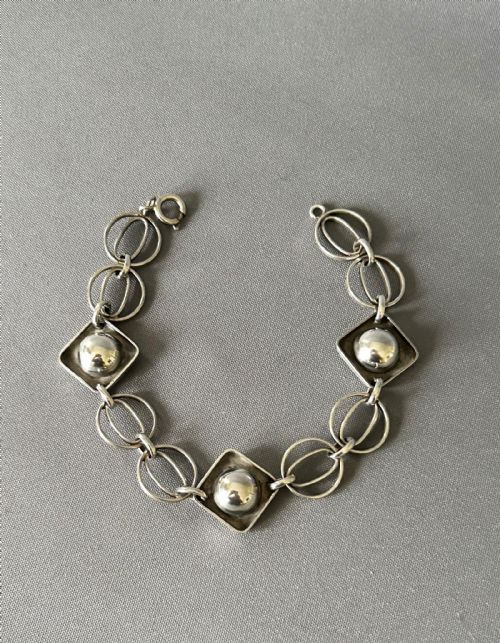
An art deco wristlet encompasses silver, gold, and platinum bracelets alongside wristwatches and compacts from periods such as the 1920s and 1930s. Buyers searching for an art deco wristlet will encounter diverse forms ranging from panel link silver bracelets to diamond and emerald platinum pieces.
The assortment includes specialised items such as ladies watches and powder compacts alongside traditional fine jewellery. These pieces demonstrate the varied material combinations utilised during the 1940s, 1950s, and 1960s.
Materials and construction methods
The construction of these pieces relies heavily on precious metals like platinum, sterling silver, 18ct yellow gold, and 15ct rose gold. Metals are frequently worked into pierced filigree settings or structured panel links to house gemstones.
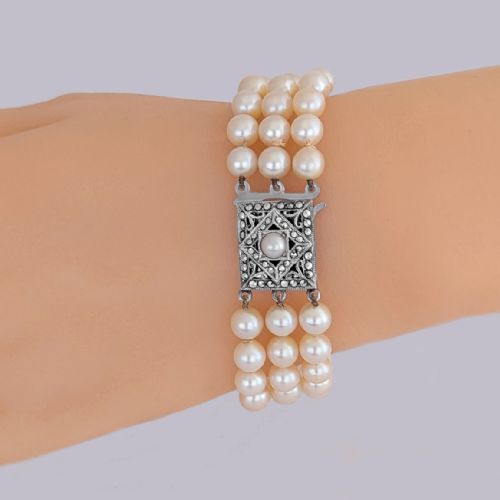
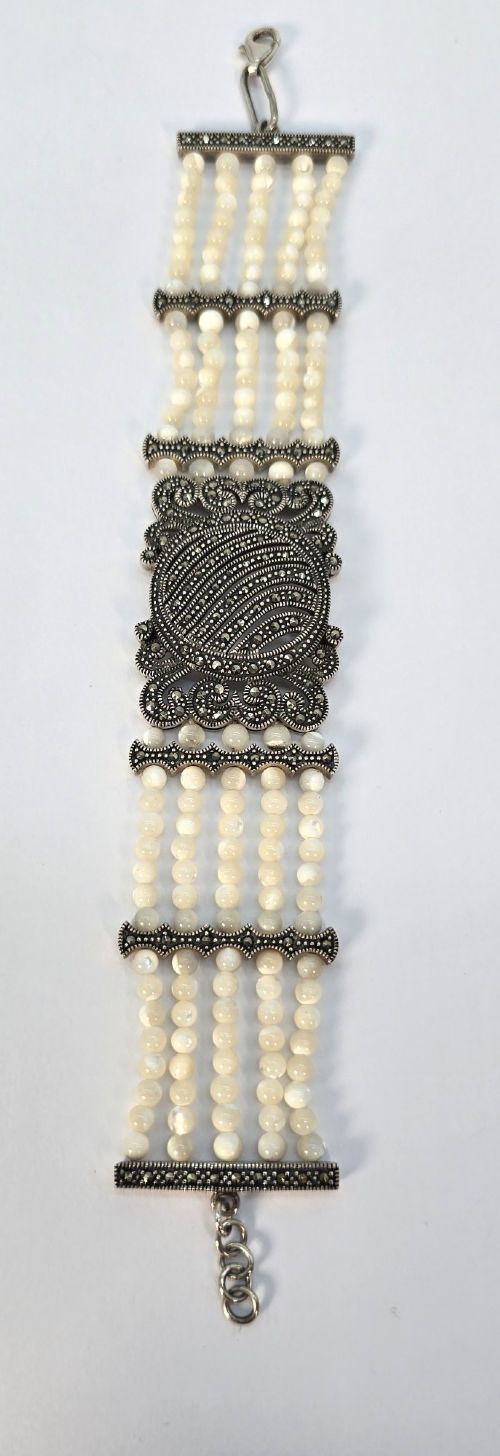
Gemstones including diamonds, emeralds, sapphires, and seed pearls are integrated alongside decorative elements of enamel, marcasite, and mother of pearl. Certain items incorporate collet set stones or detailed silver and gold fabrication techniques.
Some ladies found time and beauty in one pocket, thanks to wristlets that doubled as powder compacts.
Factors of distinction
Quality varies according to the selection of primary metals and the integration of precious stones such as diamonds and emeralds. Platinum and high-carat gold settings combined with substantial gemstone weights elevate a piece above standard silver and enamel work.
The complexity of the metalwork, seen in pierced filigree settings and panel link construction, demonstrates superior craftsmanship. Preservation of original components, such as clasps and fitted boxes, further distinguishes individual examples.
The Art Deco Wristlet Glossary
- Filigree
- Delicate ornamental work of fine wire, usually gold or silver, formed into open transparent patterns. This technique appears frequently in pierced settings.
- Marcasite
- Polished pyrite stones cut and set in silver to resemble diamonds, popular in vintage jewellery. It provides a dark metallic sparkle.
- Collet setting
- A metal collar that encircles the girdle of a gemstone to hold it securely in place. This method creates a clean line around the stone.
- Panel link
- A bracelet construction method joining flat or curved segments together in a sequence. This design allows the jewellery to drape flexibly around the wrist.
Art Deco Wristlet: Frequently Asked Questions
What defines an art deco wristlet?
An art deco wristlet generally refers to bracelets, watches, and compacts from the early twentieth century that display geometric patterns and fine metalwork. These items utilise materials such as platinum, silver, diamonds, and enamel.
Pieces range from simple silver panel designs to elaborate platinum creations set with emeralds and diamonds. The style draws heavily on the aesthetics of the 1920s and 1930s.
How do I care for silver and gold bracelets?
Maintenance depends on the specific materials used in the construction of the bracelet. Items containing enamel, pearls, or marcasite require gentle cleaning without harsh chemical dips.
Storing pieces in appropriate boxes prevents surface scratching on softer stones and delicate metals. Regular inspection of settings helps secure gemstones within their mounts.
Are these items suitable for daily wear?
Wearability depends on the construction and materials of the individual piece. Robust silver and gold designs handle regular use better than delicate filigree or antique seed pearl settings.
Precious metal and diamond bracelets generally offer greater durability for frequent wear. Antique items with delicate enamel or fine chains benefit from more careful handling.
How are different periods identified?
Periods are recognised through a combination of material choices, design motifs, and manufacturing techniques. Edwardian pieces often show lighter platinum and diamond work, while Art Deco items favour bold geometric symmetry.
Hallmarks, metal purities, and specific decorative elements like marcasite or coloured enamel provide further chronological clues. Structural styles shift visibly across the decades from 1900 through the 1960s.