

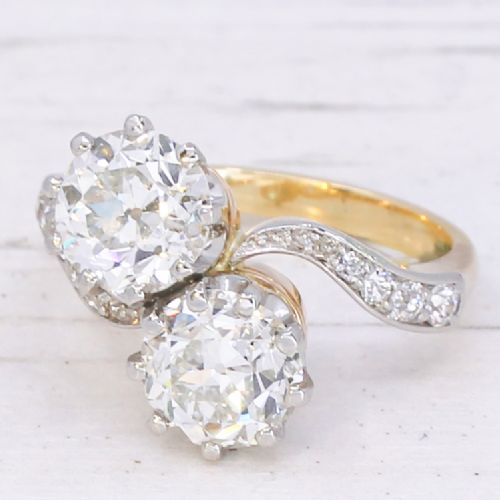


Art Deco Two Stone Ring
An art deco two stone ring pairs twin gems in a single symbolic setting designed to catch the eye.
Art Deco Two Stone Ring
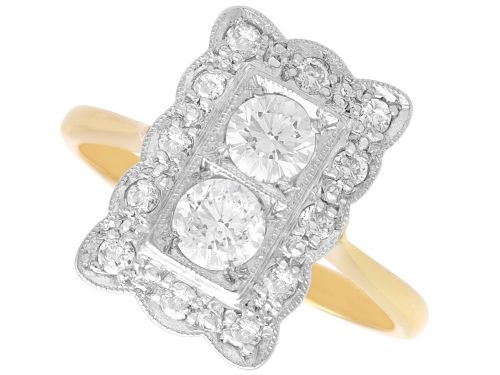
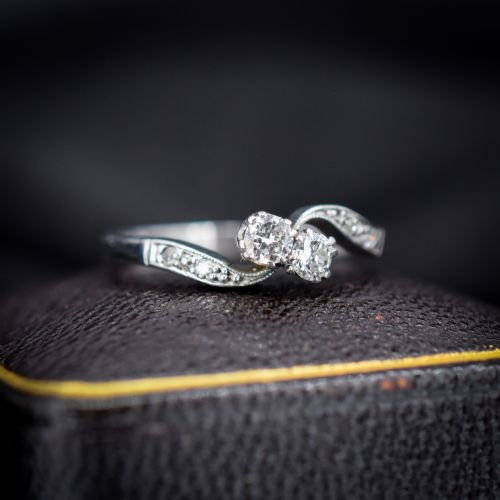
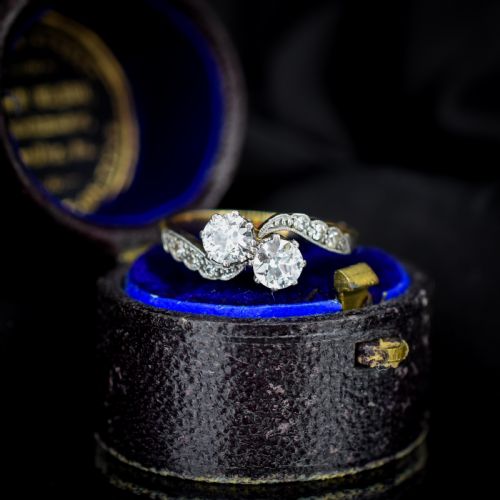
An art deco two stone ring brings together a pair of principal gems, often referred to as a toi et moi design, symbolising two souls intertwined. These pieces frequently take the form of a twist, crossover, or bypass ring where the mount curves gracefully around the finger.
The selection on this page spans the early decades of the twentieth century, drawing on Edwardian origins alongside classic Art Deco geometry. Engagement rings dominate the form, pairing diamonds together or introducing coloured stones such as Burmese ruby alongside the central diamonds.
Makers of these rings utilised distinct configurations, ranging from twin diamond duos to asymmetric twists. The aesthetic relies heavily on the interplay between the two main stones, whether matched in size or balanced with subtle variations.
Materials and construction methods
Platinum serves as a primary metal for mounting these stones, prized during the period for its strength and bright white finish that securely holds older diamond cuts. Workshops also turned to 18ct white gold, standard yellow gold, and 14ct yellow gold to construct the foundational bands and settings.
Stones within these mounts are predominantly old cut, old European cut, and older diamond shapes cut by hand to maximise fire under candle or gas light. Master jewellers set these gems into intricate twists and bypass forms that require precise metalwork to maintain structural integrity.
Old cut diamonds in these rings were shaped by hand to dance under candlelight, long before electric bulbs flattened their fire.
Distinctions in craftsmanship and design
Quality rests in the harmony of the two primary stones and the fluidity of the metalwork surrounding them. Finer examples display meticulous balance in stone weight and proportions, ensuring neither gem overwhelms the other within the twist or crossover.
The choice of precious metal influences the overall character, with platinum mounts offering crisp detail in geometric shoulders compared to softer gold alloys. Superior pieces maintain crisp lines in the gallery work while securely framing each individual gem.
The Art Deco Two Stone Ring Glossary
- Toi et Moi
- French for you and me, this term describes a ring featuring two main stones set closely together to represent two entwined figures. The style gained immense popularity during the Edwardian and Art Deco periods.
- Old European Cut
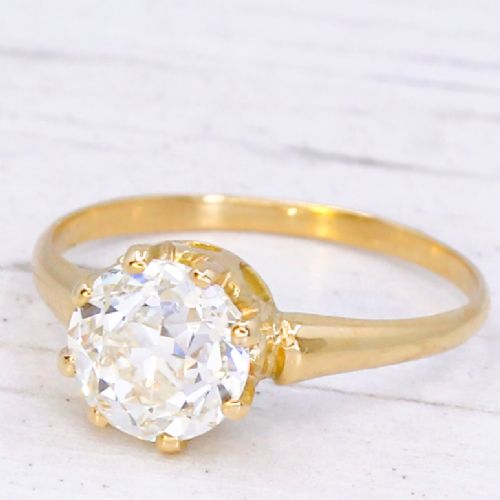
- An early form of brilliant cut diamond featuring a small table, high crown, and large culet facet. These stones exhibit distinctive broad facet patterns unique to hand-cut gems of the era.
- Bypass Ring
- A ring style where the shank wraps around the finger and crosses over itself rather than forming a complete circle. This configuration creates a dynamic, continuous movement around the main stones.
- Twist Ring
- A design where the metal band coils or intersects beneath or around the focal gems. It softens the geometric rigidity often associated with the period.
Art Deco Two Stone Ring: Frequently Asked Questions
How do I date an art deco ring?
Dating relies on examining the mounting style, the cut of the diamonds, and the choice of precious metals used by the workshop. Platinum settings combined with old European cut stones typically point toward the earlier decades of the twentieth century.
Hallmarks, where present, provide additional chronological markers to narrow down the decade of production.
Are these rings suitable for daily wear?
These antique rings were built to endure, utilising durable metals like platinum and 18ct gold to secure the stones. Regular checks by a professional jeweller help ensure the settings remain robust.
Removing the ring during heavy manual tasks preserves the delicate twist and bypass details over time.
Can I wear a two stone ring as an engagement ring?
Two stone rings have served as popular engagement ring choices for over a century, offering an alternative to traditional single-stone solitaires. The twin gems provide ample surface area for sparkle on the hand.
Their distinctive historical character makes them a favoured option for modern proposers seeking individuality.