
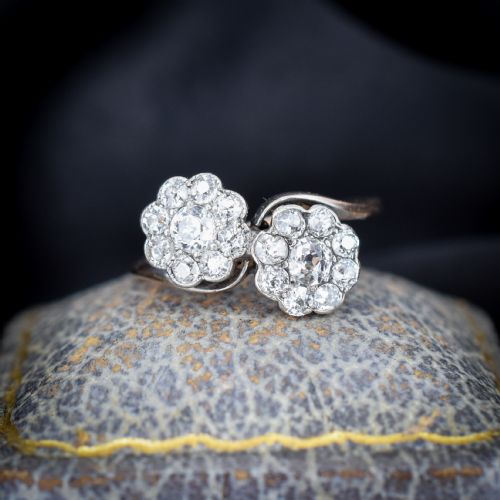


Edwardian Two Diamond Ring
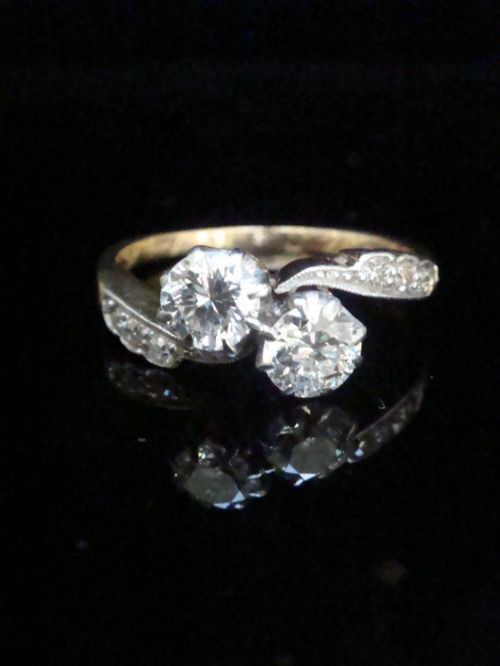
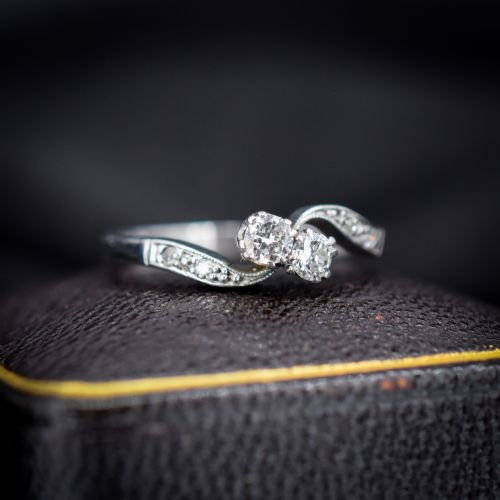
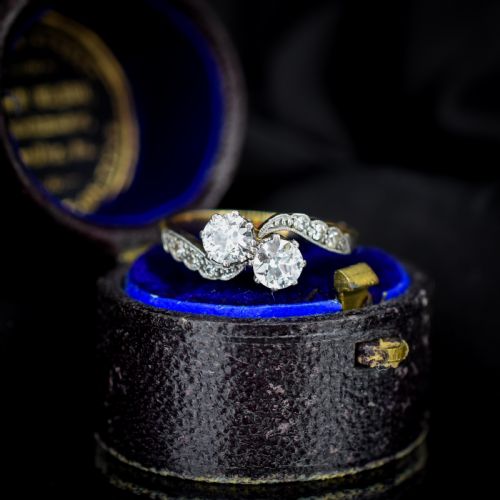
An edwardian two diamond ring brings together twin stones in a classic twist setting that catches the light from every angle.
Edwardian Two Diamond Ring
An edwardian two diamond ring centres on dual stones, often arranged as a toi et moi design or a crossover twist that signifies two souls united. Most examples on this page hail from the Edwardian period or carry hallmarks from the early twentieth century.
The form frequently pairs two old cut diamonds, though variations exist that combine a diamond with a sapphire, ruby, emerald, natural pearl, or synthetic ruby. These rings rely on fluid lines and organic curves typical of the era to showcase the paired gems.
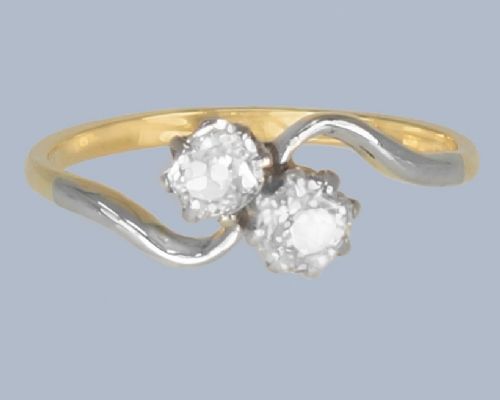
Makers of the period utilised yellow gold, white gold, and platinum, frequently combining an 18ct yellow gold shank with a platinum setting to enhance the brilliance of the stones. Crossover and twist motifs dominate the selection, offering a distinct silhouette on the hand.
How They Were Made
Goldsmiths of the era relied on a combination of 18ct gold and emerging platinum techniques to mount the stones securely while minimising visible metal. Platinum settings allowed artisans to create delicate claws that maximised the light entering each old cut diamond.
Stones were hand-cut, resulting in softer facets and characteristic open culets distinct from modern brilliant cuts. Shanks were shaped into twists, crossover bands, and cluster arrangements, often integrating delicate shoulder details alongside the main twin gems.
Listings span the Edwardian era through to the mid-century, incorporating platinum, yellow gold, diamonds, sapphires, rubies, and pearls.
What Varies in Quality
Quality rests in the match and proportion of the two principal stones, where symmetry in size and cut creates a balanced visual weight. Finer examples maintain an intentional harmony between the gems, whether two diamonds or a diamond paired with a coloured stone like sapphire or ruby.
The integrity of the setting also defines the piece, particularly where platinum meets gold in dual-metal construction. Precision in the twist or crossover framework ensures the stones sit securely while presenting clean, sweeping lines without bulk.
The Edwardian Two Diamond Ring Glossary
- Toi et Moi
- A French term meaning you and me, describing a ring featuring two main gemstones set close together to represent two entwined lovers.
- Old Cut
- A historic diamond cutting style characterised by a smaller table, higher crown, and open culet, designed to catch candlelight.
- Crossover
- A ring design where the band sweeps and crosses over itself to hold two central stones in a continuous, flowing embrace.
- Platinum
- A dense, durable white metal utilised in Edwardian jewellery to create fine, secure settings for delicate gemstone arrangements.
- Culet
- The small flat facet at the base of an old cut diamond, visible as a tiny dot through the centre of the stone.
Edwardian Two Diamond Ring: Frequently Asked Questions
How do I care for an Edwardian ring?
These antique rings require gentle cleaning with warm soapy water and a soft brush.
Avoid harsh chemical dips to protect softer stones like pearls or emeralds often paired with the diamonds.
Are the diamonds modern cuts?
The diamonds in these pieces are typically old cut stones shaped by hand.
They feature distinctive proportions and softer facet patterns compared to modern brilliant cut stones.
What metals were used in Edwardian rings?
Jewellers commonly worked with 18ct yellow gold and platinum during this era.
Platinum was frequently used for the top settings to hold stones securely while yellow gold formed the band.