

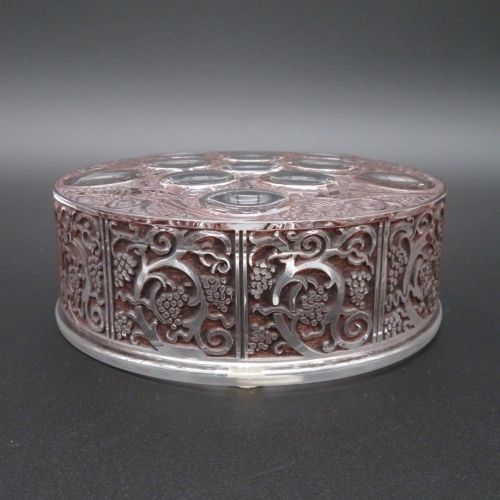


Art Deco Trinket Container
An art deco trinket container keeps small dressing table essentials secure while bringing geometric elegance to a room.
Art Deco Trinket Container
An art deco trinket container encompasses vanity jars, powder boxes, and decorative caskets produced predominantly during the 1920s, 1930s, and 1940s. These vessels range from moulded crystal bowls to silver-mounted glass pots and porcelain figural jars.
The pieces on this page are most commonly ceramic powder bowls, crystal vanity jars, and metal boxes reflecting the dominant design ethos of the interwar decades. European makers from France, Germany, and Austria feature heavily among these domestic receptacles.
Buyers seek these containers for their functional utility on dressing tables and their distinct sculptural forms. Whether housing powder, cigarettes, or small jewellery, each object serves as a compact display of period craftsmanship.
Differentiating quality
Quality rests upon the pedigree of the maker, the complexity of the materials, and the precision of the execution. Pieces designed by notable figures or produced by esteemed houses display superior clarity in crystal moulding and finer detail in enamel work.
The integration of precious metals with glass or porcelain elevates a piece beyond standard production wares. Superior examples maintain crisp lines in their geometric patterns and undamaged surface decoration.
Art Deco Trinket Container Retail Price Guide 2026
Typical asking prices for art deco trinket container among the pieces listed under this phrase on Sellingantiques today, from the lower quarter to the upper quarter. They describe what is for sale here now, not the wider market.
Early twentieth-century dressing tables hosted porcelain half dolls serving as both lid handles and elegant companions for morning powder.
Sigvard Bernadotte for Georg Jensen·René Lalique·Limoges
The Art Deco Trinket Container Glossary
- Guilloche enamel
- A decorative mechanical technique that etches precise patterns into metal beneath translucent coloured enamel. This method produces a repeating geometric wave or sunburst effect.
- Bonbonniere
- A small ornamental box originally intended for holding sweets or confectionary. These vessels double as decorative containers for dressing table items.
- Half doll
- A porcelain upper torso figure with no lower limbs, commonly manufactured to sit atop fabric powder skirt covers. They serve as whimsical lids for ceramic jars.
- Rouge pot
- A tiny lidded container designed specifically for holding cheek or lip cosmetic colour. They frequently feature precious metal mounts over glass or ceramic bodies.
Art Deco Trinket Container: Frequently Asked Questions
What were art deco trinket containers used for?
These vessels originally held loose face powder, rouge, hairpins, cigarettes, or small personal jewellery on dressing tables and boudoir desks.
Today, they serve the same organisational purpose while acting as sculptural decorative objects in modern interiors.
How do I identify a 1930s powder box?
Look for characteristic geometric motifs, stylised figural lids featuring flappers or jesters, and materials like moulded crystal and guilloche enamel.
Maker marks, continental porcelain stamps, and Birmingham silver hallmarks also provide clear chronological indicators.
Are these containers safe for modern use?
Most glass, crystal, and glazed porcelain boxes are robust enough to hold modern dry cosmetics, trinkets, or everyday jewellery items safely.
Care should be taken with delicate enamel surfaces and antique silver mounts during routine cleaning.
How are silver and glass vanity jars cleaned?
Glass and crystal components tolerate gentle washing in warm soapy water, provided metal mounts are kept dry to protect adhesives and delicate linings.
Silver elements require a specialist polishing cloth used carefully around enamel or glass inserts.