

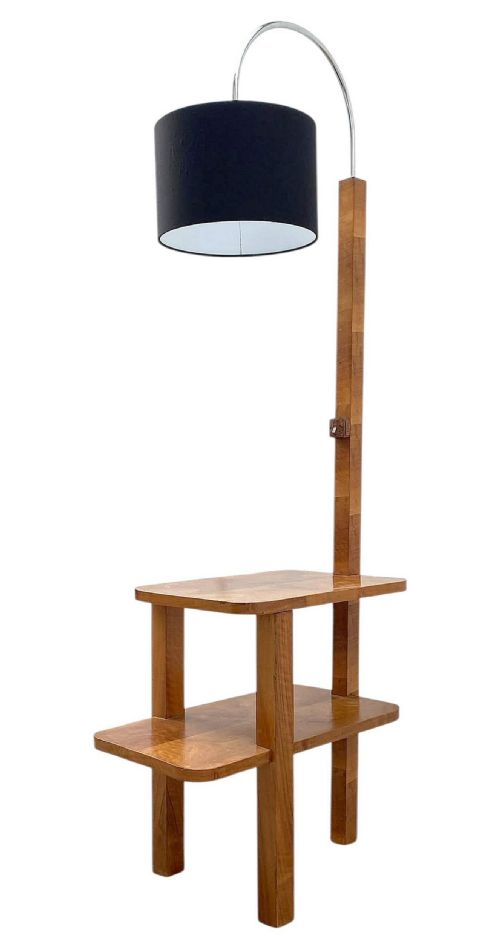
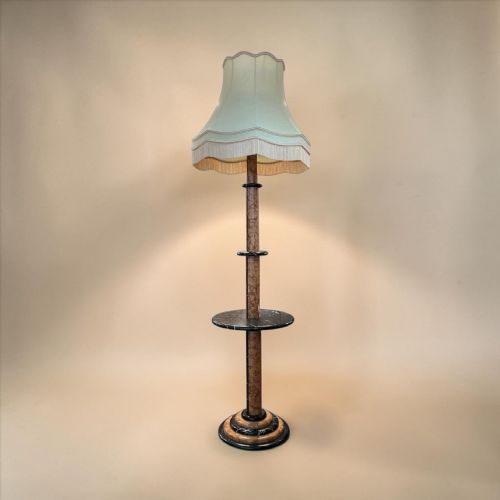
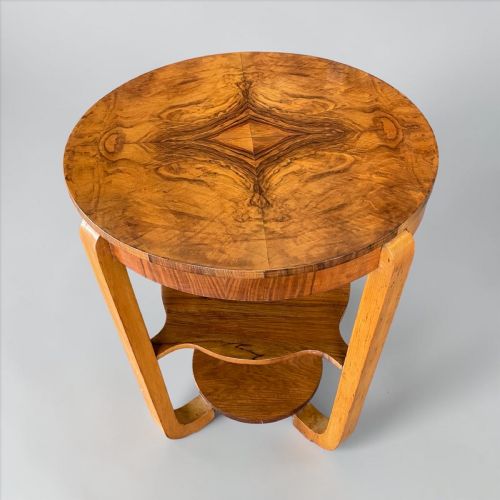


Art Deco Tier Stand
An art deco tier stand brings structural tiered geometry and rich woods into a room, offering practical display space with distinct period character.
Art Deco Tier Stand
An art deco tier stand is a piece of furniture designed with multiple levels for display or utility, emerging from the nineteen twenties and nineteen thirties. These stands range from revolving book tables to tiered modernist tables and occasional side pieces.
The versions most commonly met on this page date to nineteen thirty and nineteen twenty, reflecting the geometric and skyscraper influences of the era. Makers often constructed these multi-level pieces to maximise vertical display space in compact footprints.
Forms in this category overlap with occasional tables, lamp tables, and display shelving that utilise stepped or tiered architecture. Walnut, oak, and wood veneer form the primary structural foundations of these multi-level surfaces.
How they were made
Makers utilised walnut, oak, and wood veneers to build the carcasses and surfaces of these tiered pieces, often pairing them with inlay or ebonised details. Solid marble, glass, brass, and bronze also appear as structural or decorative elements.
Techniques relied on careful veneering over wood bases to create smooth, figured surfaces that caught the light. Ebonising and inlay work added sharp contrast to the natural grain of walnut and oak.
Art Deco Tier Stand Retail Price Guide 2026
Typical asking prices for art deco tier stand among the pieces listed under this phrase on Sellingantiques today, from the lower quarter to the upper quarter. They describe what is for sale here now, not the wider market.
Listings feature pieces dated to nineteen twenty and nineteen thirty, constructed from walnut, oak, and marble.
What varies in quality
Quality in an art deco tier stand rests on the selection of wood veneers and the precision of the tiered joinery. Pieces featuring matched grain patterns and substantial timber framing sit at the higher end of the range.
The integration of contrasting materials, such as marble tops or bronze and brass mounts, distinguishes standard production from finer examples. Maker attribution, through signatures or established workshop origins, further separates individual pieces.
Hille·Majorelle·Michel Dufet·Elkington
The Art Deco Tier Stand Glossary
- Tiered table
- A piece of furniture constructed with multiple ascending or descending levels connected by supports. This design allows for the display of several objects within a minimal floor area.
- Veneer
- A thin layer of figured wood applied over a secondary timber base to create a decorative surface. This technique permits the use of expensive grains like walnut while maintaining structural stability.
- Skyscraper style
- An architectural and decorative influence from the interwar period characterised by stepped forms and vertical emphasis. This aesthetic directly inspired the profile of many multi-level stands.
- Ebonising
- The process of treating wood to imitate ebony, producing a dense black finish. Makers utilised this method to create stark geometric contrasts against lighter oak and walnut surfaces.
- Gueridon
- A small occasional table, typically round, originating in seventeenth-century France and reinterpreted in modernist forms during the nineteen thirties. These tables often serve beside seating or lamps.
Art Deco Tier Stand: Frequently Asked Questions
What defines an art deco tier stand?
An art deco tier stand is defined by its multi-level stepped construction and dates predominantly from the nineteen twenties and nineteen thirties. These stands utilise geometric forms and materials such as walnut, oak, and glass.
They reflect the modernist design movements of their period, prioritising clean vertical lines and functional display surfaces.
How were these stands used originally?
These stands functioned primarily as occasional tables, display shelves, or revolving book tables in domestic interiors. Their multiple tiers allowed owners to exhibit decorative items or lamps in limited spaces.
Their versatile size made them suitable for placement beside seating or in corners of a room.
How do I care for wood veneer surfaces?
Care for wood veneer involves keeping the piece away from direct sunlight and maintaining stable humidity levels. Gentle dusting with a soft cloth preserves the polished finish without harming the grain.
Avoid placing damp items directly onto the veneer to prevent lifting or water marking.
How can I tell a nineteen thirties tier stand apart?
Nineteen thirties tier stands are identified by their characteristic stepped profiles, skyscraper influences, and typical use of walnut or oak veneers. Ebonised accents and geometric inlay often provide period-specific detailing.
Construction methods from this era generally show machine-cut precision combined with hand-applied finishing.