




Art Deco Stick Stand
These art deco stick stand pieces bring geometric order and metallic shine to the hallway, offering a sturdy place for walking sticks and umbrellas.
Art Deco Stick Stand
When you look for an art deco stick stand, you find hall furniture designed to hold walking sticks and umbrellas with clean architectural lines. These pieces organise hallways using the distinctive geometry and materials of the interwar period.
The versions you meet on this page span the nineteen-twenties and nineteen-thirties, appearing in forms that combine metal framework with sturdy bases. Alongside dedicated umbrella stands, the records show related hall stands and porcelain vessels used for the same purpose.
How they were made
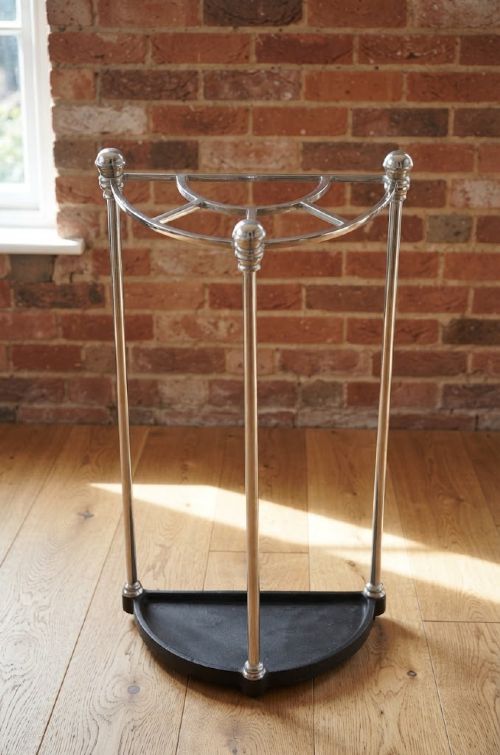
Maker workshops built these pieces using combinations of wood, chrome, brass, and cast iron to achieve both weight and industrial polish. Oak provides the wooden framework in certain examples, while plated metals supply the reflective surfaces characteristic of the style.
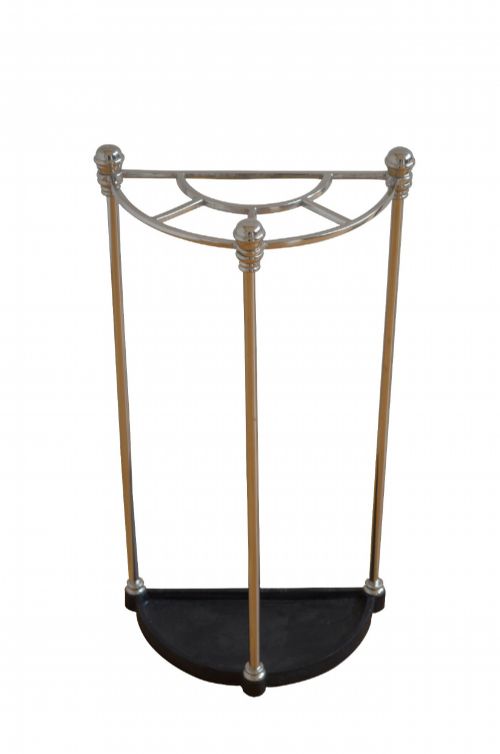
Cast iron frequently forms the heavy base plates needed to catch water and keep the stand stable, while enamel and bakelite appear as contrasting details. Metal components are often nickel-plated or polished brass, fastened to create rigid divisions for individual sticks.
Listed objects span the nineteen-tens, nineteen-twenties, and nineteen-thirties, with the majority centred around nineteen-thirty.
What varies in quality
The distinction between standard production items and finer examples rests on the choice of materials and the complexity of the metalwork. Pieces that combine heavy cast iron bases with well-finished chrome or brass show superior construction.
Proportion and the integration of secondary materials like enamel or specific wood types define the better examples in this group. Simpler items rely on basic frames, whereas superior versions feature divided compartments and refined plating.
Deakin and Francis·Sudre
The Art Deco Stick Stand Glossary
- Art Deco
- A design style from the nineteen-twenties and nineteen-thirties characterised by sleek geometric shapes and industrial materials. It dominates the aesthetic of these hall furnishings.
- Demi-Lune
- A half-moon shape used for furniture that sits flat against a hallway wall. This profile saves floor space while holding umbrellas.
- Bakelite
- An early form of plastic utilised for handles and decorative details during the interwar period. It provides a durable contrast to metal frames.
- Chrome
- A hard, shiny metal plating applied to iron or brass to prevent corrosion and create a reflective surface. It is a defining finish for the era.
Art Deco Stick Stand: Frequently Asked Questions
What materials make up an art deco stick stand?
The listings show combinations of chrome, brass, cast iron, and oak. Enamel and bakelite also appear as supporting materials in the construction.
Heavier metals like cast iron provide the base stability, while plated brass and chrome form the upper frames and divisions.
How do these stands handle wet umbrellas?
These pieces utilise heavy cast iron bases or built-in metal trays designed to catch water drops from wet walking sticks and umbrellas.
The robust bottom sections protect hallway floors while keeping the umbrellas upright and separated within the metal or wooden divisions.
Are these items strictly for hallway use?
While primarily designed as hall stands for umbrellas and walking sticks, some examples combine the function with side tables or coat racks.
The records also list porcelain vases and china vessels used historically to hold sticks within entrance spaces.
How can I date an art deco stick stand?
Dating relies on the materials used, such as early plastics like bakelite, alongside the characteristic geometric styling of the nineteen-twenties and nineteen-thirties.
The presence of nickel plating, chrome, and specific combinations of cast iron and brass points directly to the interwar manufacturing period.