


Art Deco Standing Shelving
Art deco standing shelving brings architectural presence and clean, vertical lines to a room.
Art Deco Standing Shelving
When you search for art deco standing shelving, you are looking at upright tier furniture designed to hold books and objects with geometric flair. These pieces offer practical vertical storage while anchoring a room with distinct period character.
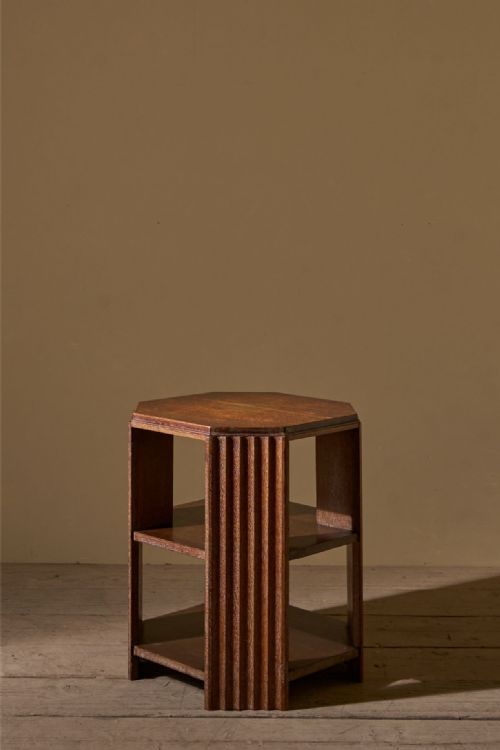
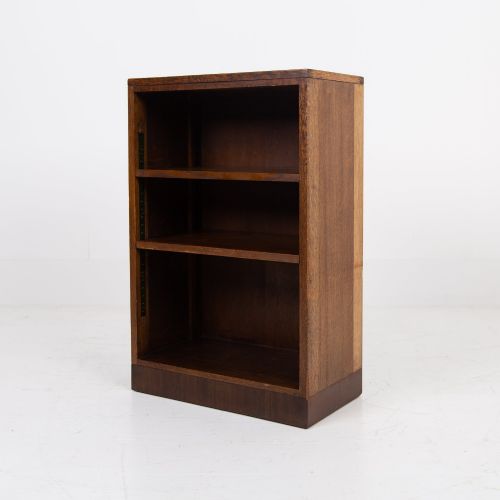
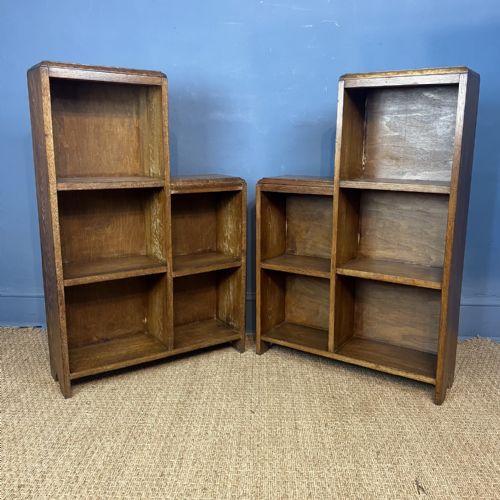
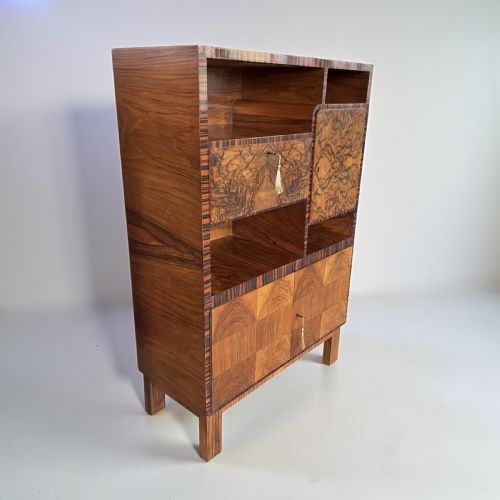
You are most likely to meet oak and walnut open bookcases, cabinets, and display shelves dating from the 1930s. The selection also includes earlier transitional pieces like Edwardian waterfall bookcases and Victorian burr walnut drinks cabinets with sliding shelves.
Forms range from simple open shelving units to complex cabinet hybrids featuring brass details and leather tops. Swedish Grace and Heals designs appear alongside works by makers such as Betty Joel and Liberty's of London.
How they were made
Construction relies heavily on solid oak, mahogany, and walnut, often enhanced by rich veneer work and burr walnut surfaces. Makers utilised brass accents, glass panes, and leather inserts to create tactile contrast against the timber.
Techniques range from limed oak finishes and front mouldings to specialised sliding shelf mechanisms within drinks cabinets. Bronzed metal framing provides sturdy structural support for open display shelving.
Some cabinets hide their contents behind sliding shelves, proving that even a book storage unit can keep a secret.
What varies in quality
Quality reveals itself in the selection of wood veneers and the precision of the joinery. Pieces featuring burr walnut or figured mahogany show a higher ambition than plain secondary timbers.
The sophistication of the hardware, from solid brass mounts to smooth-sliding shelf tracks, separates standard production from superior workshops.
Betty Joel·Liberty's of London·Sandberg & Co
The Art Deco Standing Shelving Glossary
- Art Deco
- A design style characterised by sleek geometric shapes, streamlined forms, and modern industrial materials. It dominated decorative arts during the 1920s and 1930s.
- Veneer
- A thin layer of superior wood glued to a base timber to provide a decorative surface. Burr walnut veneers display intricate, swirling grain patterns.
- Waterfall Bookcase
- A tiered shelving unit where the sides step back progressively from bottom to top. This design originated in the Edwardian era.
- Swedish Grace
- A refined classicist architectural and design movement bridging neoclassical restraint and early modernism. It is seen in pieces from the early twentieth century.
Art Deco Standing Shelving: Frequently Asked Questions
What is art deco standing shelving?
Art deco standing shelving consists of upright vertical storage units built primarily during the early twentieth century. These pieces combine practical book storage with the clean geometric lines characteristic of the period.
They serve as both display furniture and architectural focal points within domestic interiors.
Where should I place these shelves?
These upright shelving units suit studies, living rooms, and hallways where floor space is limited. Their vertical orientation draws the eye upward while holding books or decorative objects.
Keep them away from direct heat sources to protect the vintage veneers and polished wood finishes.
How do I care for walnut veneer?
Dust walnut surfaces regularly with a soft, dry cloth to prevent dirt accumulation. Avoid using modern silicone sprays or harsh chemical cleaners that can degrade the historic finish.
Maintain a stable room humidity to prevent the timber veneers from drying out or lifting over time.
How do I identify a 1930s piece?
Look for characteristic geometric mouldings, symmetrical layouts, and materials like limed oak or figured walnut. The presence of bronze or brass hardware often points directly to this interwar design era.
Construction methods and maker marks can further confirm the production decade.