



Art Deco Silver Plated Shaker
When seeking an art deco silver plated shaker, collectors find striking barware spanning the 1920s to the 1940s that combines modernist design with practical cocktail preparation.
Art Deco Silver Plated Shaker
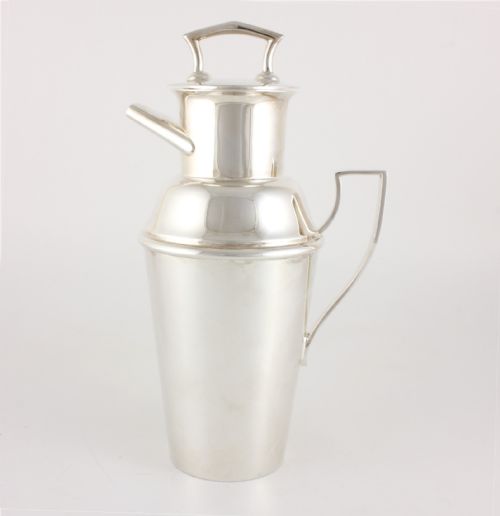
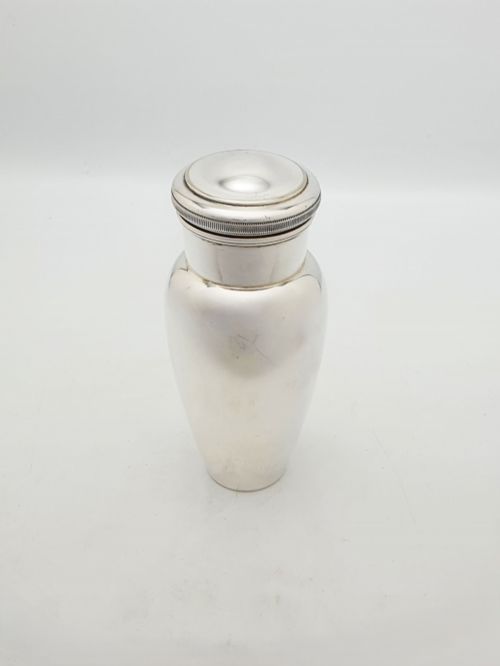
An art deco silver plated shaker brings period sophistication to home bars through distinctive geometric lines, cylindrical bodies, and streamlined forms typical of twentieth-century design. The selection includes tall English and French vessels alongside Italian modernism examples, often engineered with functional additions like built-in lemon squeezers, ice breakers, and rotating recipe rings.
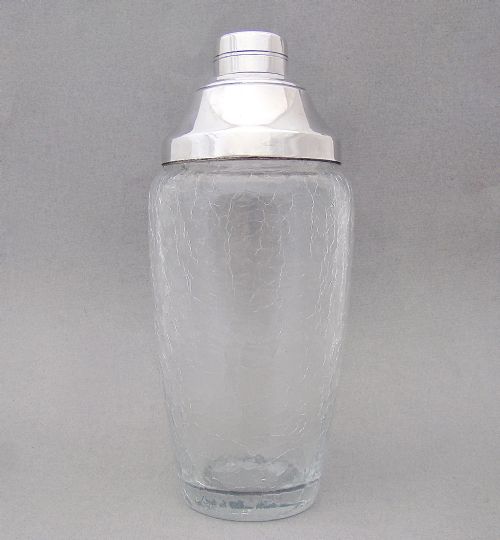
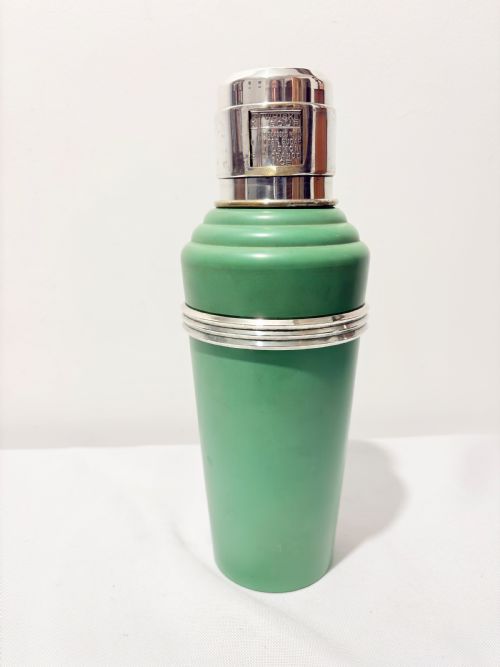
Most items on this page date from the 1930s, accompanied by pieces from the 1920s and 1940s, reflecting the golden era of cocktail culture. Buyers encounter standard cylindrical shakers, novelty milk churn shapes, bullet profiles, and combinations incorporating crackle glass or green Bakelite components.
Materials and Construction
These vessels rely fundamentally on base metals finished with silver plate, electroplated nickel silver, or EPNS, providing a bright metallic sheen over brass, metal, or glass bodies. Makers integrated practical elements such as cork stoppers for secure seals and specialised internal components for straining and mixing.
Surface decoration often involves mechanical engine turning, hand hammering, or etched recipe instructions, while French and Italian pieces frequently pair silver-plated metal with colourful crackle glass or contrasting plastic details.
Materials recorded on this site include silver plate, electroplated nickel silver, brass, crackle glass, and green Bakelite.
Evaluating Quality
Distinction in these shakers rests upon the reputation of the silversmith or manufacturer, with pieces from established firms showing superior weight, balance, and precision in their fitting parts. The complexity of integrated mechanisms - such as rotating recipe bands, built-in lemon squeezers, and ice breakers - separates standard vessels from exceptional examples of period engineering.
Aesthetic execution also dictates standing, where crisp engine-turning, clean geometric proportions, and undamaged glass or Bakelite additions elevate a shaker above simpler mass-produced counterparts.
Asprey and Co·Keith Murray·J B Chatterley and Sons·James Dixon and Sons·William Suckling·Hukin and Heath·C S Green and Co·Adie Brothers·Mappin and Webb·Wilhelm Wolff
The Art Deco Silver Plated Shaker Glossary
- EPNS
- Electroplated Nickel Silver. This designates a base metal alloy coated with a layer of pure silver, commonly found on twentieth-century barware.
- Engine turning
- A mechanical decoration technique. It produces precise geometric patterns etched into the metal surface.
- Ice breaker
- An internal spiked device. This component shatters ice efficiently during the shaking process.
- Bakelite
- An early synthetic plastic. Manufacturers utilised this durable material for coloured handles, knobs, and decorative accents.
Art Deco Silver Plated Shaker: Frequently Asked Questions
How do I use a vintage shaker?
Fill the body with spirits, ice, and mixers before sealing the lid securely using the integrated cork or metal stopper. Shake vigorously to chill the ingredients, then strain the mixture through the built-in barrier into glasses.
Exercise care with antique mechanisms, particularly rotating recipe rings or integrated juicers, ensuring components are washed by hand rather than placed in a dishwasher.
What periods do these shakers represent?
The listings span several decades of the twentieth century, with the majority originating in the 1930s alongside examples from the 1920s and 1940s. This timeframe captures the evolution of cocktail culture from the jazz age through the modernist design movement.
Stylistic shifts appear between the geometric restraint of early English pieces and the more adventurous Italian and French designs later in the period.
How do I identify maker marks?
Look near the base or rim for manufacturer stamps, maker initials, and silver plate designations such as EPNS. Researching these specific trade marks reveals the originating silversmith, factory, or retailer.
Matching the engraved stamp to historical records confirms the production era and helps distinguish English output from continental European workshops.
Can I display these pieces safely?
Silver-plated barware makes an striking display on bar carts or sideboards, reflecting light through polished metal and coloured glass accents. Keep them out of direct sunlight to protect sensitive materials like Bakelite and cork.
Occasional gentle polishing maintains the metallic lustre without wearing away the underlying silver plate.