

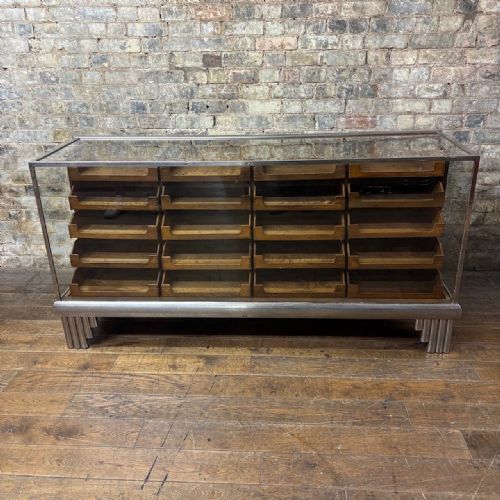


Art Deco Shop Display Cabinet
An art deco shop display cabinet brings striking geometric lines and utilitarian elegance straight from the high street into a modern interior.
Art Deco Shop Display Cabinet
An art deco shop display cabinet is a commercial fixture repurposed for domestic display, designed to showcase objects behind glass while anchoring a room with period geometry. These pieces emerge from the 1920s and 1930s, taking the form of display counters, tower cabinets, haberdashery units, and wall shelving.
The most frequent examples on this page date to 1930 and 1920, reflecting the height of commercial design during the interwar decades. Makers adapted these cases for specific retail environments, from general haberdashery to confectionery sales, resulting in robust constructions built for daily handling.
Buyers encounter freestanding units alongside long counters and tall tower cabinets, often elevated on distinct legs or mounted with metal framing. The combination of generous glazing and structured timber or metal frames makes them exceptionally practical for exhibiting collections at home.
How they were made
Makers constructed these cabinets using a combination of dense hardwoods and structural metals to support heavy plate glass. Oak, mahogany, and burr walnut provide the primary timber bodies, frequently paired with ebonised finishes for high contrast.
Metalwork played a critical structural and decorative role, utilising chrome, brass, aluminium, bronze, and steel for framing, handles, and mounts. Leather and fabric frequently lined the interior bases and shelves to cushion delicate goods during retail use.
Art Deco Shop Display Cabinet Retail Price Guide 2026
Typical asking prices for art deco shop display cabinet among the pieces listed under this phrase on Sellingantiques today, from the lower quarter to the upper quarter. They describe what is for sale here now, not the wider market.
Cadbury sweet shop cabinets once tempted shoppers with confectionery before finding a second life holding modern oddities.
What varies in quality
The distinction between standard commercial joinery and superior cabinet-making rests in the handling of timber and metal interfaces. Pieces featuring burr walnut veneers or complex ebonised surfaces show a higher grade of workshop ambition than plain utility oak.
Hardware integration separates basic counters from exceptional commissions, particularly where heavy bronze, brass, or chrome framing meets thick bevelled glass. The presence of marked maker components indicates a workshop of significant commercial standing.
Dudley and Co·Saml Elliott and Sons·Pollards
The Art Deco Shop Display Cabinet Glossary
- Haberdashery counter
- A long display unit traditionally fitted with multiple small drawers and glass compartments for selling small wares. These pieces provide exceptional compartmented storage for modern collections.
- Tower cabinet
- A tall, narrow vertical display case designed to maximise floor space while offering multi-shelf visibility. They suit tight corners where horizontal furniture will not fit.
- Ebonised wood
- Timber treated with a chemical stain or black finish to imitate expensive ebony. This dark surface creates a sharp contrast against polished brass or chrome mounts.
- Burr walnut
- Wood sliced from the wart-like growths on walnut trees, prized for its swirling, highly figured grain patterns. It forms a decorative veneer on high-end cabinet doors and framing.
Art Deco Shop Display Cabinet: Frequently Asked Questions
What is an art deco shop display cabinet?
An art deco shop display cabinet is a commercial glass case from the 1920s or 1930s built for retail merchandise.
These units combine structured timber or metal frames with large glass viewing panels designed to highlight goods effectively.
How were haberdashery counters used originally?
Haberdashery counters served in merceries and drapery shops to store and display small sewing goods, ribbons, and fastenings.
Shop assistants pulled items from integrated drawers or glass compartments while customers viewed the stock through the top glazing.
How do I style a shop display cabinet at home?
Position a freestanding tower cabinet or long display counter against a living room or study wall to exhibit ceramics, books, or collections.
Keep the surrounding decor minimal to let the geometric timber and metal framing define the room's focal point.
How do I distinguish 1920s pieces from 1930s ones?
Pieces from the 1920s often utilise rich mahogany or ebonised timber alongside bronze or brass details, reflecting early deco elegance.
By 1930, designs frequently incorporated chrome, aluminium, and lighter oak reflecting the streamlined industrial shift of the decade.