
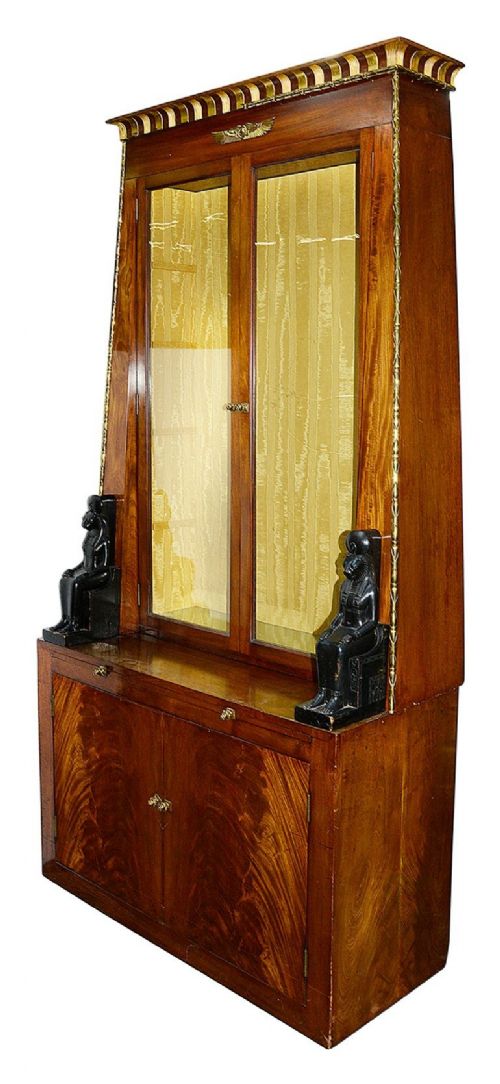


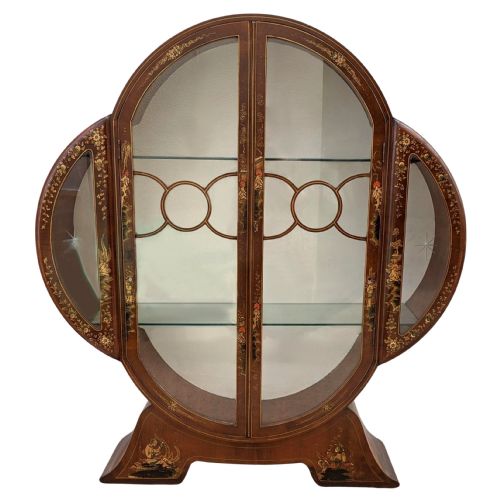


Art Deco Mahogany Cabinet
An art deco mahogany cabinet brings geometric clarity and rich timber grain to a room.
Art Deco Mahogany Cabinet
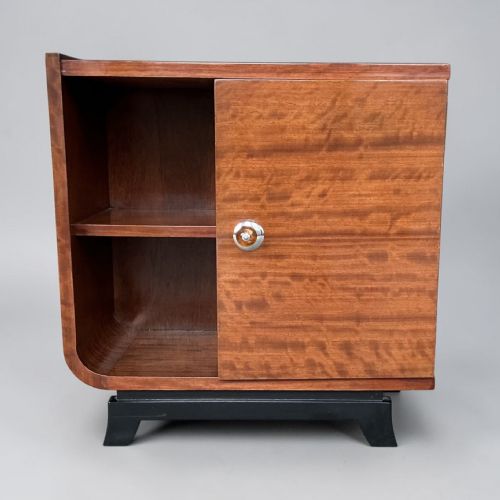
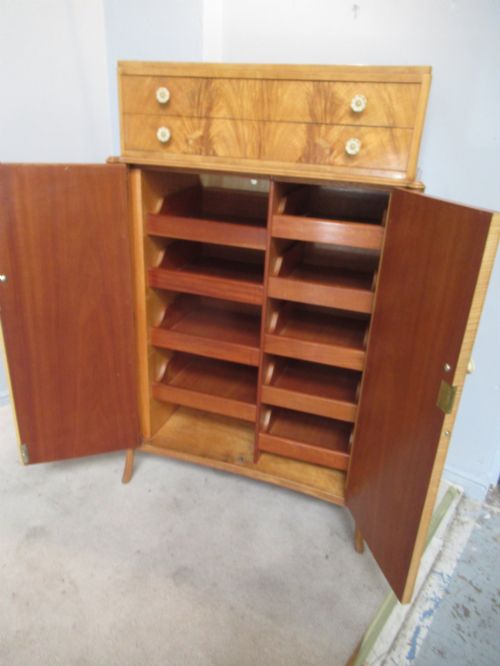
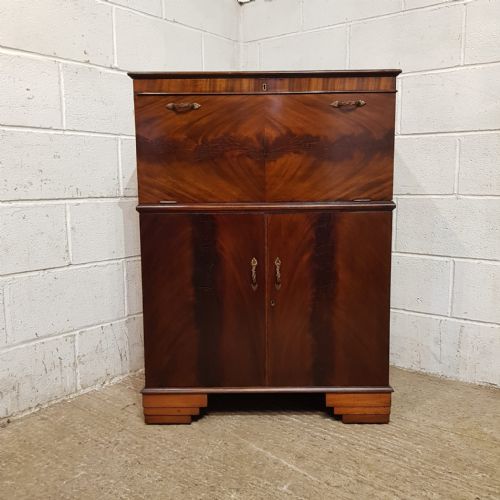
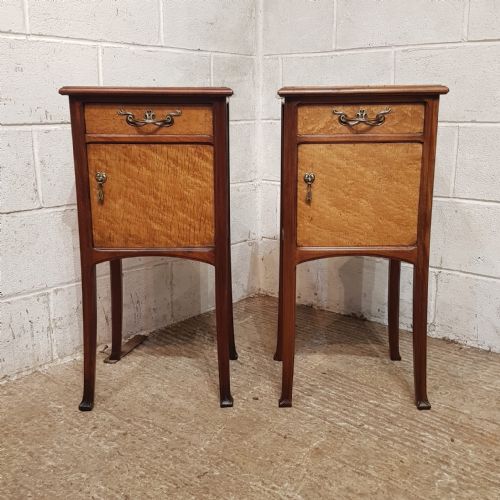
The physical forms range from serpentine sideboards and tallboys to compact lamp tables and shop display units. Mahogany serves as the primary timber, frequently contrasted with maple, walnut, and ebonised wood details. Pieces often combine functional storage with the characteristic aesthetic of the era.
What varies in quality
The standard of timber selection and veneer matching defines the visual impact of a cabinet. Superior pieces display continuous grain across drawer fronts and doors, whereas simpler items utilise plain timber boards without pattern symmetry.
The integration of secondary materials like maple inlay, brass hardware, and ebonised details indicates the level of craftsmanship involved. Workshop execution in the joinery and the proportion of the architectural lines separate standard production items from distinguished examples.
Some bedside cabinets arrive with secret compartments designed to hide midnight novels from strict Victorian parents.
Heal's·Bowman Brothers·Epstein·Pollards
The Art Deco Mahogany Cabinet Glossary
- Art Deco
- A design style emerging in the nineteen-twenties characterised by streamlined geometric shapes, stylised motifs, and modern industrial influences. It dominated decorative arts and architecture up to the second world war.
- Mahogany
- A durable tropical hardwood prized for its reddish-brown colour and stability in furniture construction. It accepts polish exceptionally well and forms the primary carcass material for these cabinets.
- Serpentine
- A furniture shape featuring a curved front with a convex centre flanked by concave ends. This contour adds movement and visual complexity to sideboards and cabinets.
- Veneer
- A thin layer of decorative wood applied over a secondary timber base to create patterned surfaces. Burr walnut and maple veneers frequently complement the mahogany structures.
- Ebonised
- Wood treated with a dark stain or finish to resemble ebony. Makers utilised this technique for decorative banding and contrasting details.
Art Deco Mahogany Cabinet: Frequently Asked Questions
What rooms suit an art deco mahogany cabinet?
These cabinets function well in living rooms, dining spaces, and bedrooms depending on the specific form. Drinks cabinets and display pieces anchor reception areas, while bedside tables suit sleeping quarters.
The rich timber tones integrate easily with both contemporary interiors and traditional settings, providing functional storage alongside distinct decorative presence.
How do I date a mahogany art deco cabinet?
Dating relies on stylistic markers and construction methods typical of the nineteen-twenties and nineteen-thirties. Pieces from the earlier decade often display transitional elements, whereas nineteen-thirty items lean towards streamlined geometric forms.
Maker signatures, hardware styles, and the integration of auxiliary timbers like maple or brass further help narrow the period of production.
Are these cabinets purely decorative?
Cabinet makers designed these pieces for practical everyday storage alongside aesthetic appeal. Drinks cabinets house bottles and glassware, bookcases organise volumes, and sideboards manage dining storage.
Interior compartments, adjustable shelving, and specialised drawers reflect the utilitarian demands of interwar households.
How do English and French cabinets differ?
French cabinets frequently incorporate bolder veneer combinations, such as burr walnut and maple alongside mahogany, often featuring serpentine curves. English workshops tended towards architectural bookcase designs and output from known retailers.
Both regional traditions embraced the overarching aesthetic of the period while applying distinct regional approaches to timber selection and silhouette.