




Art Deco Jade Jewellery
Art deco jade jewellery brings together geometric metalwork and carved green stones, offering distinct modernist character for daily wear.
Art Deco Jade Jewellery
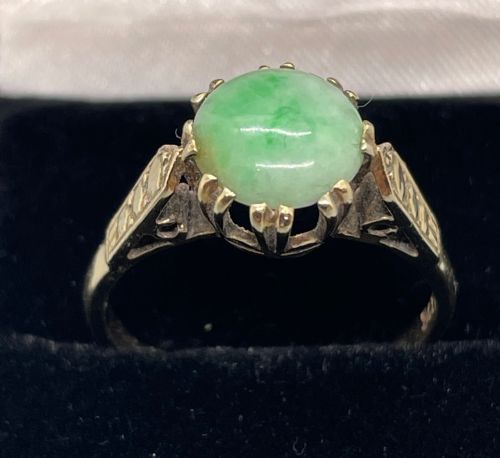
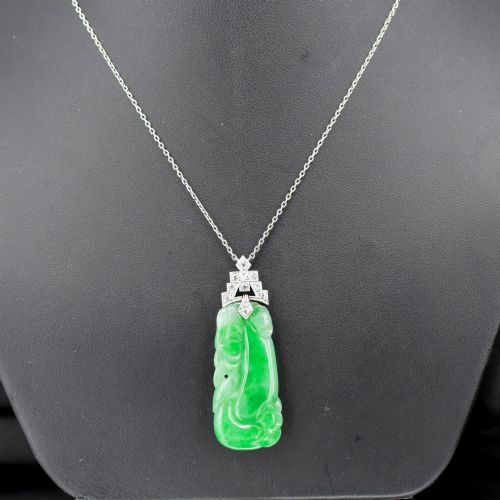
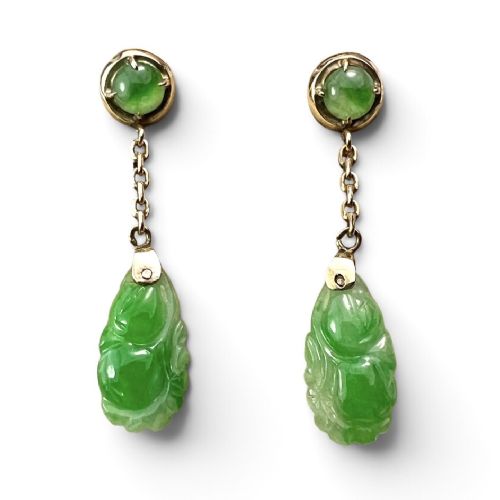
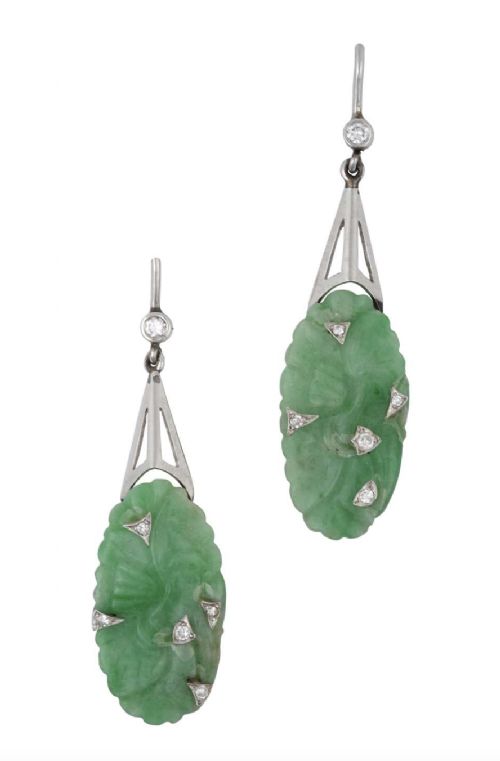
Art deco jade jewellery comprises items like earrings, pendants, necklaces, and rings that date principally from the nineteen twenties, thirties, and forties, alongside a few Edwardian pieces. These items combine carved green stones with precious metals to create symmetrical, linear designs characteristic of the period.
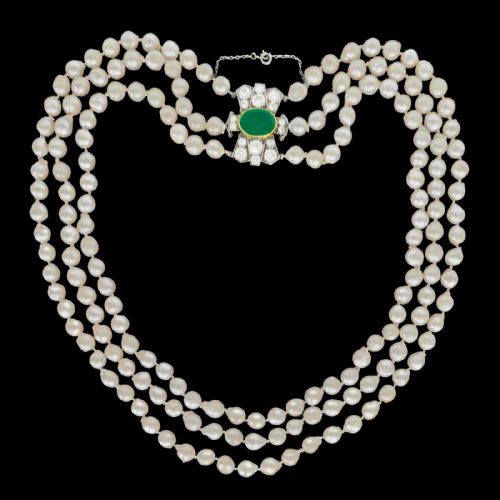
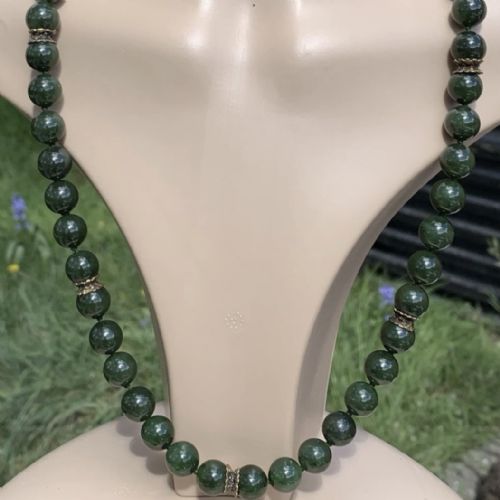
The selections available here feature both bright green jadeite and nephrite, mounted in settings ranging from silver and nine carat gold to fourteen carat gold, eighteen carat gold, and platinum. Buyers find everything from simple carved panels on rings to elaborate drop earrings set with diamonds and pearls.
How art deco jade jewellery was made
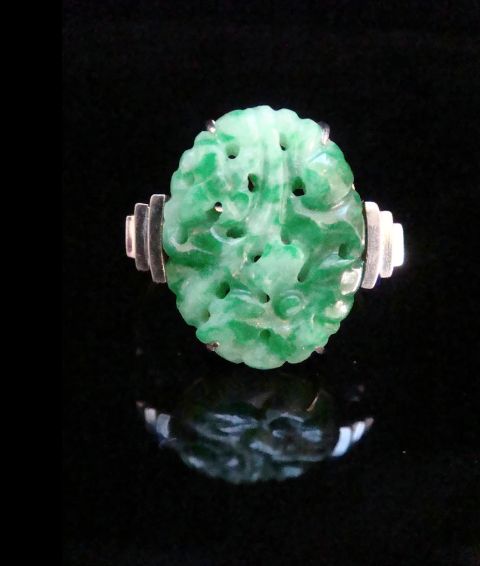
Craftsmen shaped jadeite and nephrite by hand, carving intricate floral or geometric motifs into the panels, drops, and beads used in these pieces. Stones were then set into durable metals such as platinum and high-carat gold, often flanked by smaller accent diamonds to highlight the green tones.
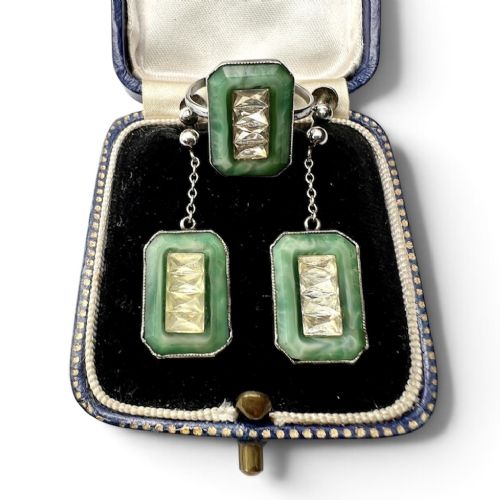
Makers utilised screw-back mechanisms for earrings alongside standard posts, and incorporated pearls, silver, and specialised clasps into multi-strand necklaces. The construction relies on secure metal bezels and claw settings to hold the heavier carved jade stones firmly in place.
Art Deco Jade Jewellery Retail Price Guide 2026
Typical asking prices for art deco jade jewellery among the pieces listed under this phrase on Sellingantiques today, from the lower quarter to the upper quarter. They describe what is for sale here now, not the wider market.
Screw-back earrings let anyone wear vintage drops, whether their ears are pierced or not.
What varies in quality
Quality in these pieces depends heavily on the translucency, texture, and natural colour saturation of the jadeite or nephrite, where stones with an even, vibrant green command greater appreciation. The fineness of the carving also dictates overall merit, as sharper and more deliberate incisions show superior craftsmanship.
The choice of setting metal similarly divides the range, with platinum and diamond-heavy mountings representing more intricate workshop production than simpler silver or lower-carat gold alternatives. The integration of certified gem reports or secure clasps adds further distinction to individual items.
The Art Deco Jade Jewellery Glossary
- Jadeite
- A dense, pyroxene mineral that forms the brighter, more translucent green stones seen in many twentieth-century pendants and rings. It accepts fine carving and high polishes.
- Nephrite
- An amphibole mineral that typically displays a slightly more muted or spinach-green tone, used frequently in heavy twentieth-century necklaces.
- Platinum
- A dense, white precious metal utilised during the period to hold small diamonds securely without competing visually with the central green stones.
- Screw back
- A mechanical earring fastening that uses a threaded post and a small nut to secure the piece on unpierced lobes.
- Carved panel
- A flat or slightly curved piece of jade inscribed with traditional motifs, often mounted directly onto gold or silver ring shanks.
Art Deco Jade Jewellery: Frequently Asked Questions
How do I care for art deco jade jewellery?
Clean these pieces gently using warm water and a soft cloth, avoiding harsh chemical dips or ultrasonic cleaners that can damage natural stones and pearls. Store items individually in lined boxes to prevent softer metals and diamonds from scratching the jade.
Check claw settings and clasps periodically, especially on older necklaces and screw-back earrings, to ensure the stones remain secure during wear.
Are these pieces made with natural jade?
The materials listed span natural jadeite, nephrite, and associated silver, gold, and platinum components originating from the early twentieth century. Gem reports sometimes accompany specific pieces to confirm their material composition.
Examining the natural crystalline structure under magnification helps distinguish untreated antique stones from later alternatives.
How can I tell the period of these items?
Dating relies on stylistic markers such as strict geometric symmetry, platinum mountings, and specific cutting techniques characteristic of the nineteen twenties and thirties. Maker marks, assay office stamps, and metal purities like fourteen or eighteen carat gold provide further chronological anchors.
Edwardian and forties pieces often show transitional styles, moving from delicate lacy filigree towards bolder, heavier block forms.
Can I wear these rings and earrings daily?
Jade has a tough interlocking crystal structure that suits regular wear, though rings and drop earrings still benefit from mindful handling during active tasks. Settings involving pearls or delicate screw-backs require extra care to avoid bending the metal components.
Removing pieces before swimming or exercising preserves both the metal finishes and the integrity of any accent diamonds.