



Art Deco Globe Shade Lamp
An art deco globe shade lamp brings structural symmetry and warm diffusion to a room, uniting functional illumination with period geometry.
Art Deco Globe Shade Lamp
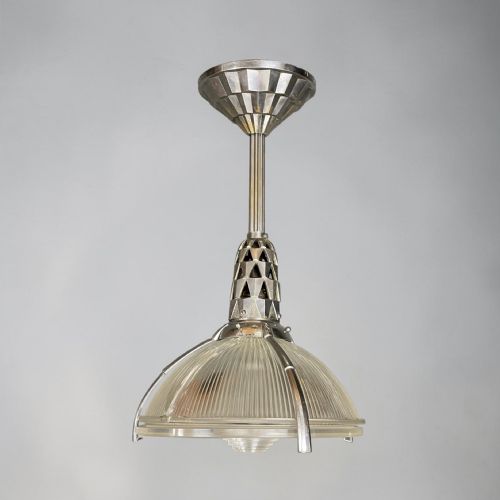
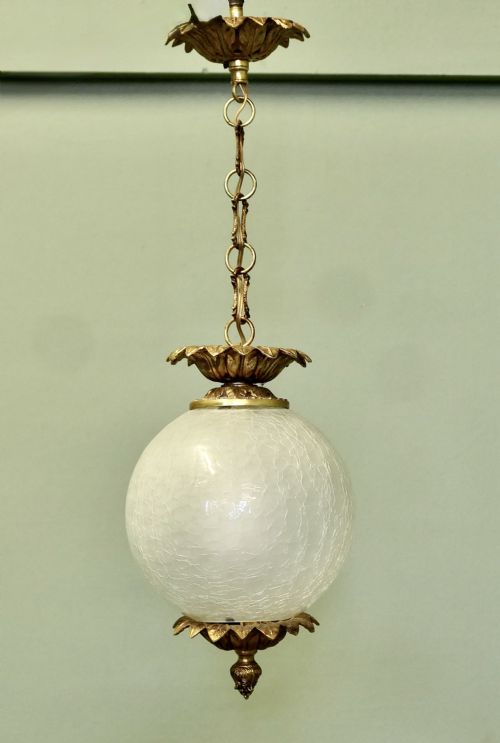
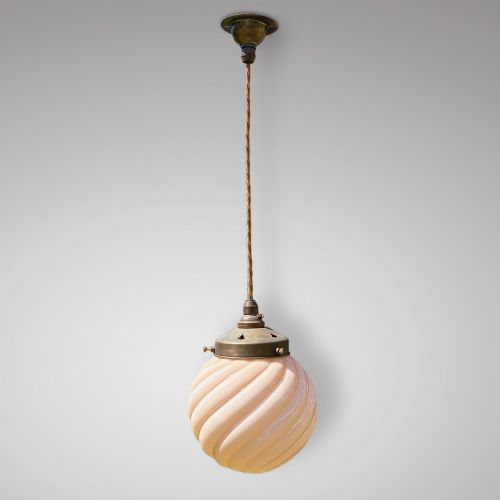
An art deco globe shade lamp centres on spherical or domed diffusers paired with geometric bases and mounting hardware. These pieces originate predominantly from the 1920s, 1930s, and 1940s, spanning table lamps, pendant lights, and ceiling lights.
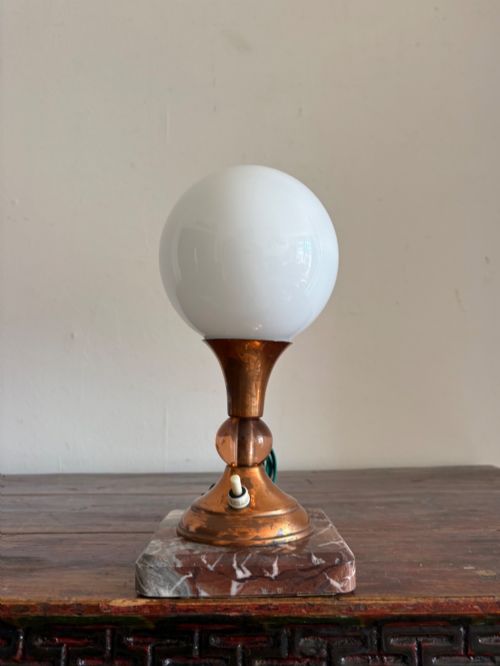
Table lamps frequently feature heavy stone or metal bases supporting figural elements or simple stems beneath opaline or frosted globes. Ceiling lights and pendants utilise suspended spherical glass shades secured by chrome, brass, or bronze fitments.
French art deco examples frequently incorporate specialised glass treatments such as etched crystal or fish scale patterns alongside marble and copper structures. The aesthetic relies on clean lines, industrial metals, and smooth glass forms that soften direct illumination.
Materials and construction
Glass production forms the core of these items, employing opaline glass, frosted glass, crackle glass, and etched crystal to diffuse light evenly. Molten glass techniques created solid spherical globes capable of withstanding continuous heat from early electric bulbs.
Metalworking techniques united chrome, brass, copper, silver plate, bronze, and bakelite into rigid structural frameworks and decorative bases. Artisans mounted these metal components directly onto heavy marble or alabaster plinths to provide stability for upright table lamps and torcheres.
Listings incorporate items from the 1920s, 1930s, and 1940s, utilising glass, chrome, marble, opaline glass, brass, metal, frosted glass, and crackle glass.
Assessing quality
Quality rests on the weight of the materials and the complexity of the glass work rather than mere decorative application. Heavier marble or alabaster bases and substantial cast bronze or chrome fittings indicate superior construction compared to lighter pressed metal alternatives.
The sophistication of the glass shade distinguishes standard utility pieces from exceptional studio work. Acid etching, layered opaline finishes, and intricate crystal cutting demand advanced glassblowing skill that elevates the finished object.
Émile-Jacques Ruhlmann
The Art Deco Globe Shade Lamp Glossary
- Opaline glass
- A milky, translucent glass created by adding bone ash or metal oxides to the batch during melting. It diffuses light evenly without harsh glare.
- Alabaster
- A fine-grained, translucent stone used for carved lamp bases and sculptural elements. It accepts a smooth polish and transmits ambient light.
- Bakelite
- An early synthetic thermosetting plastic moulded into switches, bases, and structural components. Its dense, dark composition characterises interwar electrical fittings.
- Frosted glass
- Glass treated via acid etching or sandblasting to create a textured, matte surface. This process scatters light to soften overall brightness.
Art Deco Globe Shade Lamp: Frequently Asked Questions
What defines an art deco globe shade lamp?
An art deco globe shade lamp combines spherical or domed glass diffusers with geometric bases made from metals like chrome, brass, or copper.
These pieces belong to the interwar period and emphasise symmetry, streamlined silhouettes, and industrial materials.
How do pendant lights differ from table lamps?
Pendant lights suspend from ceilings using cords or metal rods, directing light downward from an overhead position.
Table lamps rest on horizontal surfaces and combine heavy stone or metal bases with upright stems and enclosed globes.
What materials make up the shades?
Shades utilise various glass types including opaline glass, frosted glass, crackle glass, and etched crystal.
These treatments soften harsh bulb glare while maintaining high light transmission through smooth or patterned surfaces.
How should these lamps be placed?
Table lamps sit well on heavy sideboards, desks, or marble tables where their substantial stone bases provide balance.
Pendants and ceiling lights work centrally in hallways or dining spaces to anchor the room's illumination.