



Art Deco Globe Lighting
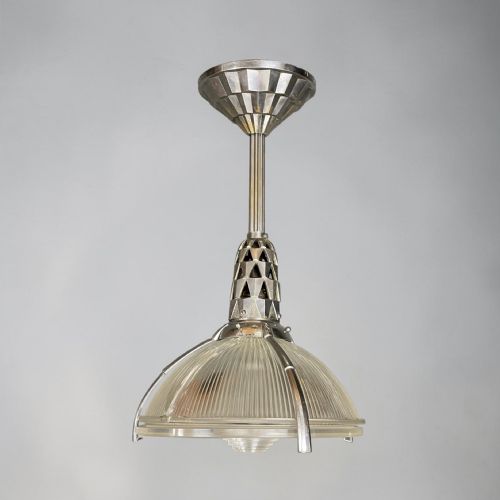
Art deco globe lighting brings geometric symmetry and industrial materials into a room, offering functional illumination rooted in 1920 to 1940 design.
Art Deco Globe Lighting
Art deco globe lighting encompasses spherical and rounded light fixtures designed primarily during the 1920, 1930, and 1940 periods. These pieces range from ceiling lights and hanging pendants to table lamps and torchieres, each designed to diffuse light evenly through spherical shades.
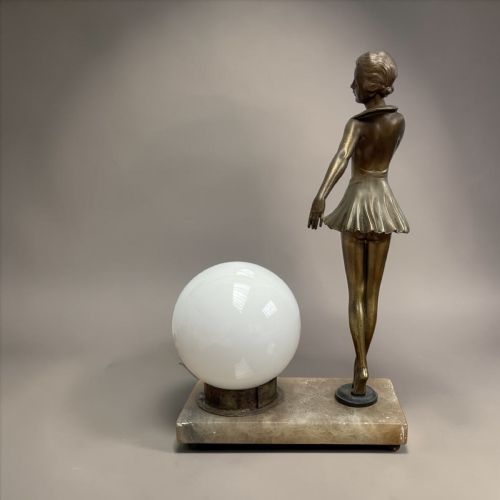
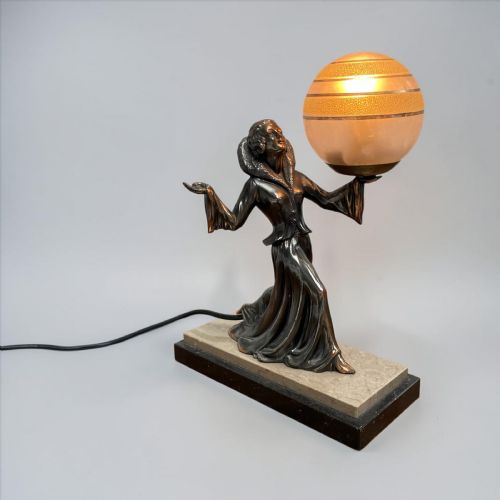
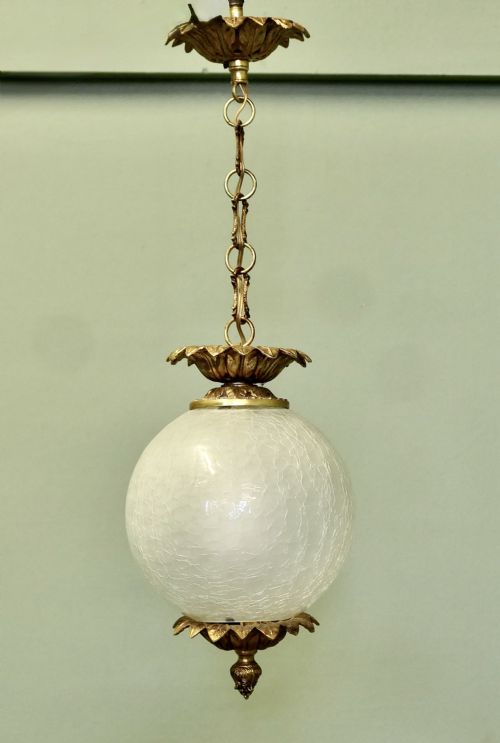
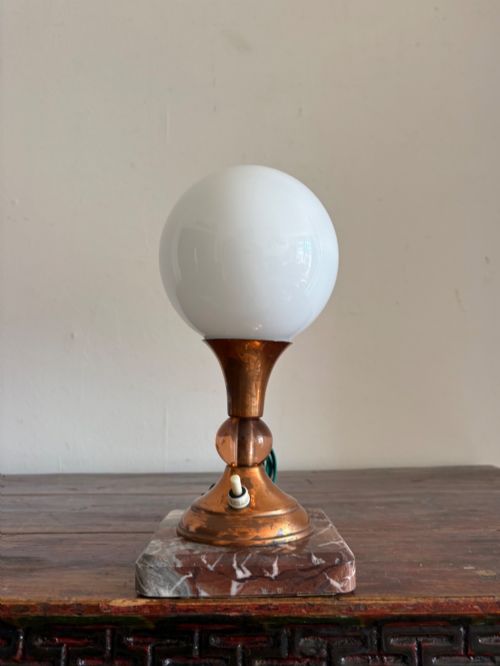
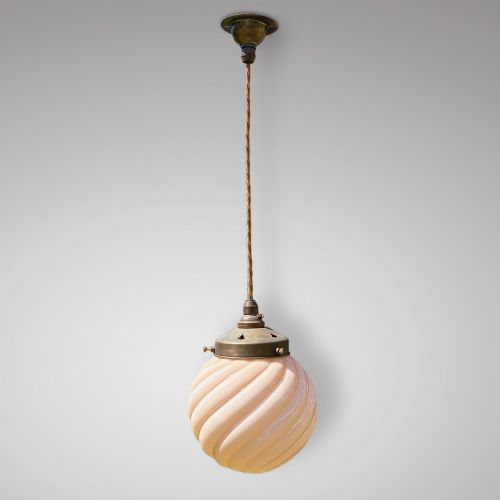
The versions most commonly met on this page include French art deco pendant lights and figural table lamps featuring opaline or frosted glass globes. Many examples pair these glass elements with bases made of marble, brass, chrome, or spelter.
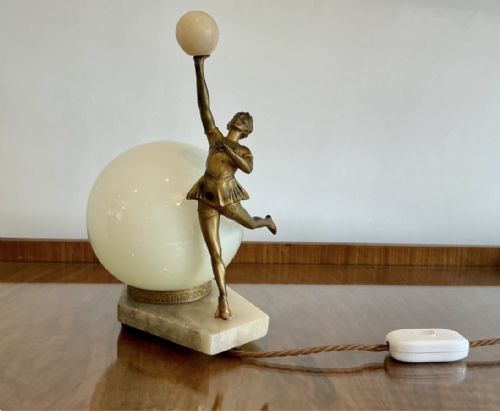
Makers and designers of the period, such as Émile-Jacques Ruhlmann, influenced the clean lines and geometric motifs seen across these lighting fixtures. Pieces often incorporate figurative elements, including nude figures, animals, or athletic motifs supporting or accompanying the globe.
Materials and Construction Techniques
Glass production for these fixtures relied heavily on opaline glass, frosted glass, and etched crystal to achieve soft light diffusion. Workers shaped these materials into smooth spheres or domed shapes, sometimes adding fish scale textures or mottled finishes.
Metal components utilise chrome, brass, silver plate, bronze, and copper, often mounted onto heavy marble, granite, or alabaster bases. Early plastics such as bakelite, catalin, and phenolic materials also appear in structural and decorative elements of the lamps.
Several lamps feature athletic figures balancing balls directly beneath glowing glass globes.
Assessing Quality and Craftsmanship
Quality in these lighting fixtures rests on the weight and purity of the materials, from heavy solid marble bases to thick, hand-finished opaline glass globes. Superior pieces display crisp casting in bronze, spelter, or chrome components without softening of geometric or figurative details.
The integration of design elements distinguishes standard production from finer examples. Balanced proportions between the globe and the base, alongside high-grade metal plating and signed or attributed work, separate the top of the range from simpler utility lighting.
Émile-Jacques Ruhlmann
The Art Deco Globe Lighting Glossary
- Opaline Glass
- A milky, semi-translucent glass used to soften glare and diffuse light evenly across a room. It frequently appears in spherical pendant shades and hallway lights.
- Spelter
- An alloy of zinc used as a cost-effective alternative to bronze for casting figural lamp bases. It is often painted or plated to resemble other metals.
- Torchiere
- A floor or table lamp that directs light upward toward the ceiling. These fixtures often feature large upward-facing glass or crystal shades.
- Bakelite
- An early synthetic thermosetting plastic utilised for switches, bases, and decorative accents on mid-century and 1930s desk lamps.
- Alabaster
- A fine-grained, translucent stone carved into solid bases and shades for heavy table lamps. It absorbs and glows warmly when illuminated from within.
Art Deco Globe Lighting: Frequently Asked Questions
What is art deco globe lighting?
Art deco globe lighting consists of spherical or rounded glass shades paired with metal, stone, or plastic bases, produced predominantly between 1920 and 1940.
These pieces use geometric forms and materials like chrome, brass, and opaline glass to provide ambient illumination in living spaces and hallways.
How were pendant lights used originally?
Pendant lights hung from ceilings in hallways, dining areas, and parlours to cast diffused light downward and outward across the room.
Their spherical shapes helped eliminate harsh shadows while serving as a central decorative feature of the interior space.
How do I identify a 1930s lamp?
Look for characteristic materials such as bakelite, chrome plating, spelter figures, and frosted opaline glass shades. The presence of streamlined geometric patterns or athletic figural motifs usually points directly to this decade.
Construction methods, such as heavy marble bases paired with cast metal, further anchor the piece to the interwar period.
Where should I place a torchiere?
Torchieres work best in corners or beside seating areas where upward-pointing light can bounce off the ceiling to illuminate a room.
Their height and vertical design make them useful for adding ambient light without taking up table space.