


Art Deco Glass Lighting
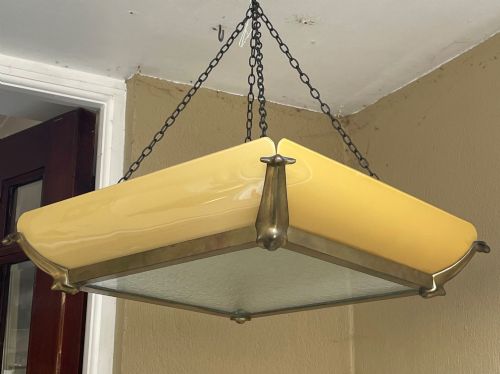
Art deco glass lighting brings geometric form and diffused illumination into a room, spanning pendant lights, wall lights and table lamps.
Art Deco Glass Lighting
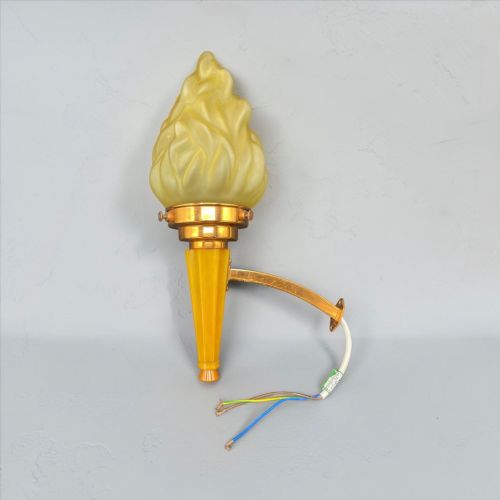
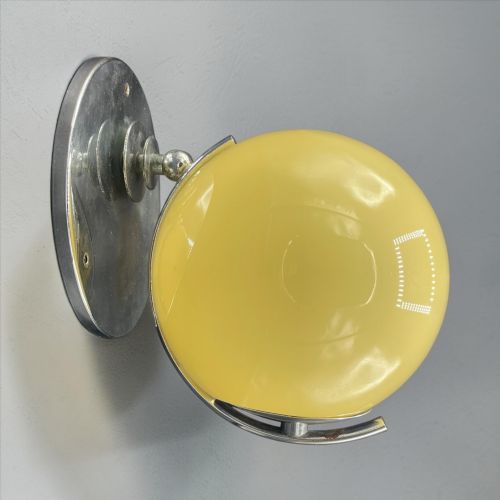
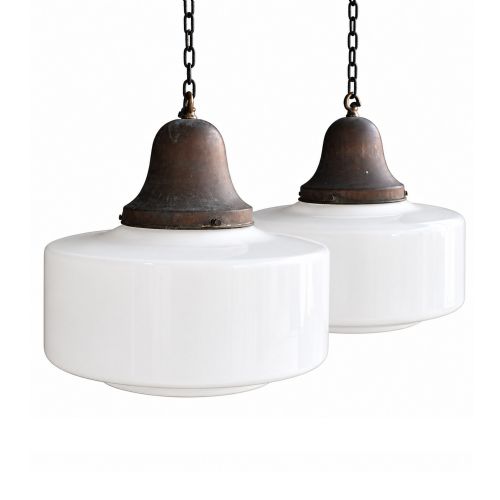
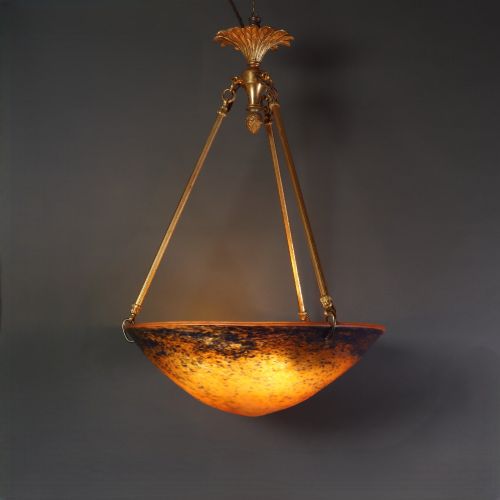
Art deco glass lighting encompasses pendant lights, ceiling lights, chandeliers, wall lights, table lamps and floor lamps created primarily during the 1920s and 1930s. Buyers searching this phrase look for functional pieces that display the characteristic symmetry, clean lines and distinct styling of the period.
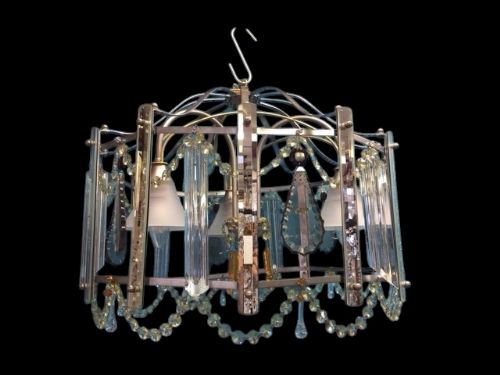
The selection on this page includes standard forms alongside pieces rooted in the Edwardian era, 19th century and 1940s, showing how diverse the origins can be. Table lamps and hanging pendants dominate the configurations, frequently incorporating specialised shades.
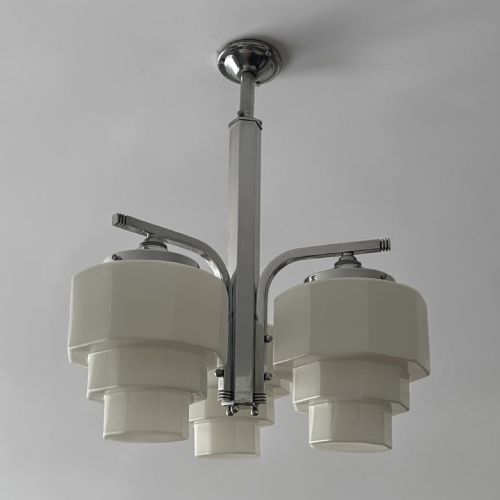
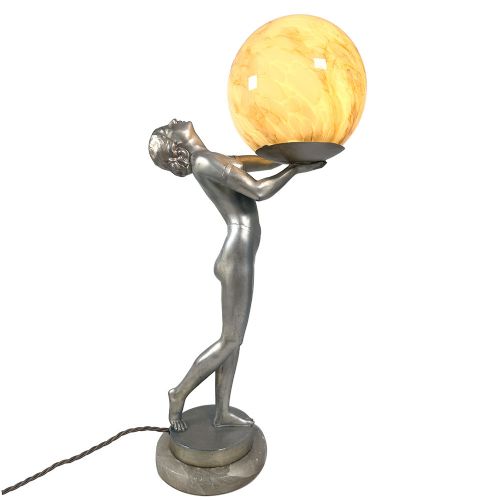
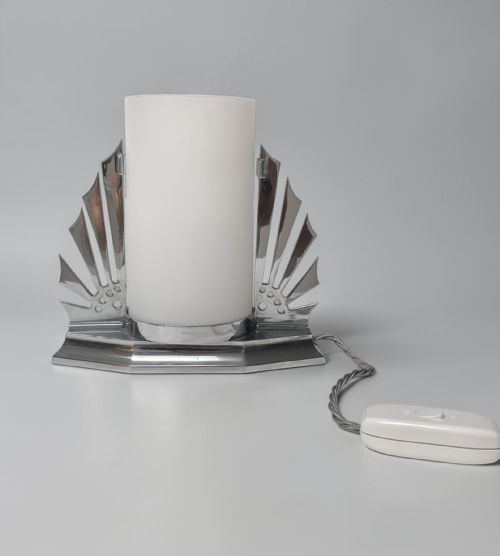
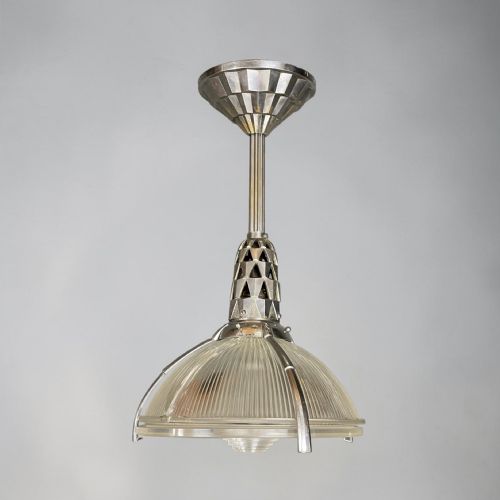
Mottled, opaline, crackle and frosted glass appear frequently across the objects, paired with mountings in brass, chrome, wrought iron and marble. These combinations define the aesthetic output of the era.
Materials and Construction
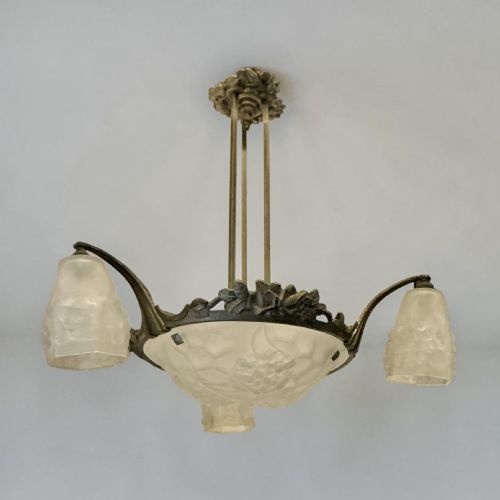
Makers utilised moulded, opaline, cut and frosted glass for shades and bowls, employing techniques that diffused light evenly across the surface. These glass components sit within metal frames or upon heavy bases of brass, chrome, copper and wrought iron.
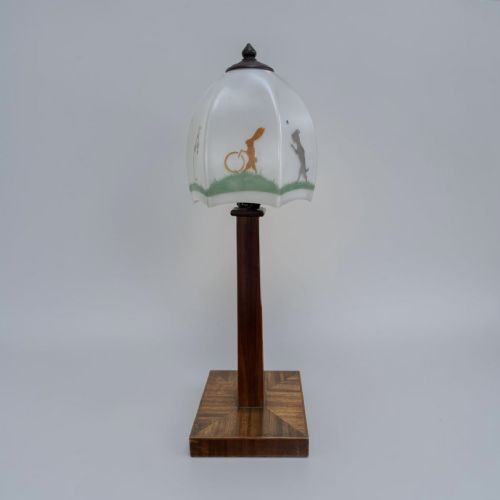
Structural integrity relied on solid mounting materials such as marble and patinated brass, which provided stability for heavier glass elements like slip shades and globes. Detail work incorporated hand painting, enamel and intricate cutting patterns directly into the glass body.
Listings span several decades, featuring items from the 19th century, Edwardian era, 1910, 1920, 1930, and 1940.
Quality Variations
Quality rests in the weight and clarity of the glass, where heavier opalescent or thick moulded shades demonstrate superior substance compared to thin alternatives. The precision of the metalwork, whether chrome, brass or wrought iron, also separates standard production from finer examples.
The integration between the glass component and its metal housing indicates the standard of manufacture, with tight fittings and original mountings holding higher regard. Details such as hand-painted highlights or complex shade designs elevate individual pieces within the range.
Fratelli Toso·Émile-Jacques Ruhlmann·Charles Schneider·Lacroix·Lalique·Eileen Grey·Stuart Crystal
The Art Deco Glass Lighting Glossary
- Opaline Glass
- A semi-translucent white glass that diffuses light softly. It appears frequently in pendant and table lamp shades.
- Slip Shade
- A moulded glass shade designed to fit directly into a metal frame or sconce. These are common in American ceiling lights and wall brackets.
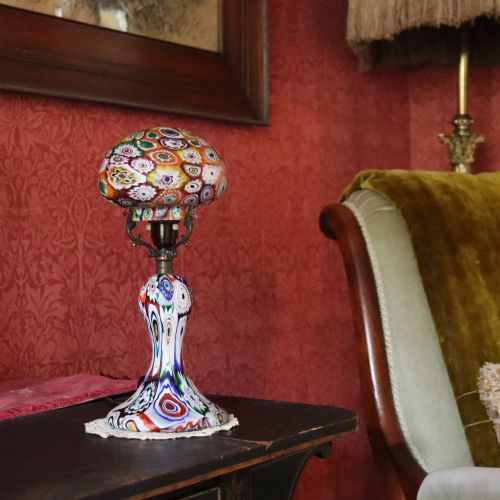
- Millefiori
- Multi-coloured glass cane work producing floral or mosaic patterns. This technique surfaces in Venetian pieces.
- Chrome
- A hard, corrosion-resistant metallic plating applied to steel or brass components. It gives a bright, reflective finish typical of the period.
- Spelter
- An alloy of zinc and lead used for cast sculptural figures on lamp bases. It often received a patinated finish to resemble bronze.
Art Deco Glass Lighting: Frequently Asked Questions
How do I clean antique glass shades?
Wash glass components gently in warm soapy water using a mild detergent, avoiding harsh abrasives that might damage delicate surface textures or hand-painted details.
Dry thoroughly with a lint-free cloth before reassembling the shade onto its brass or chrome mount.
Can these lamps take modern bulbs?
Most pieces accommodate standard modern screw or bayonet bulbs, provided the wattage matches the capacity of the original wiring and socket.
Consult a qualified electrician to inspect older brass and chrome fixtures before connecting them to a modern power supply.
What rooms suit a pendant light?
Pendant lights and chandeliers work well in hallways, dining spaces or living rooms where downward illumination is required.
Ceiling height dictates the drop length, particularly with multi-branch fixtures or substantial glass globes.
How do I identify a 1930s piece?
Look for geometric motifs, streamlined chrome mountings, and characteristic glass types such as opaline, crackle or moulded slip shades.
Materials like bakelite and heavy marble bases also point directly toward manufacturing standards of the 1930s.