



Art Deco Female Dancers
Art deco female dancers capture the kinetic energy of the early twentieth century in bronze, marble and carved wood.
Art Deco Female Dancers
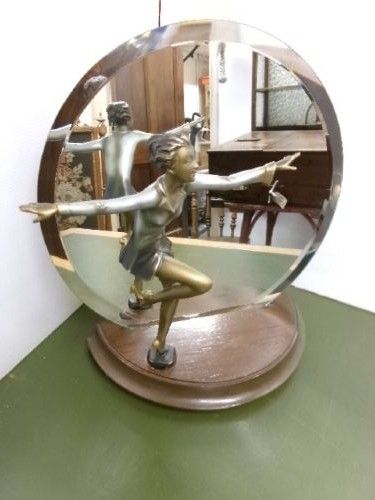
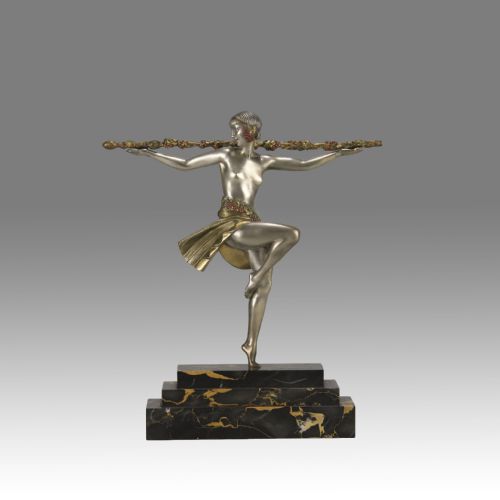
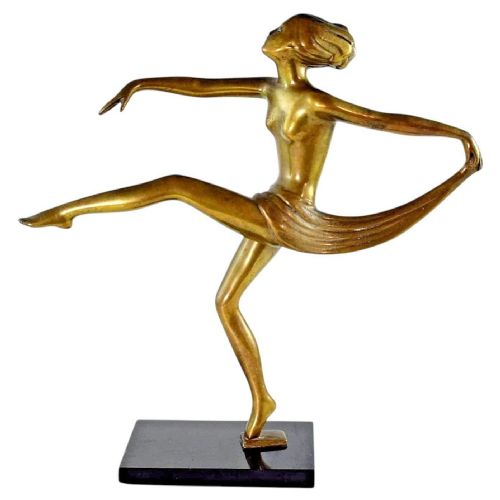
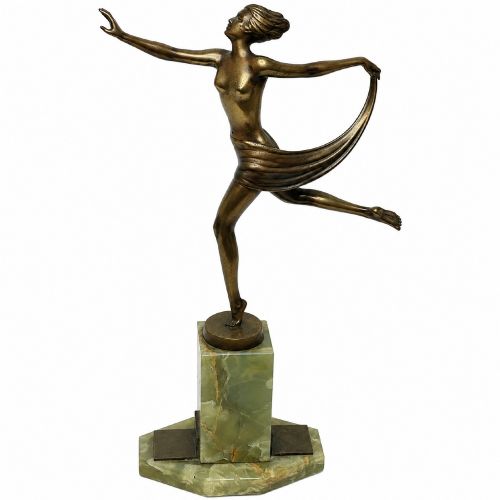
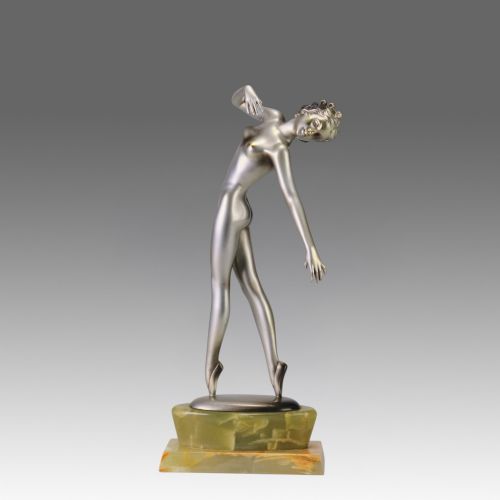
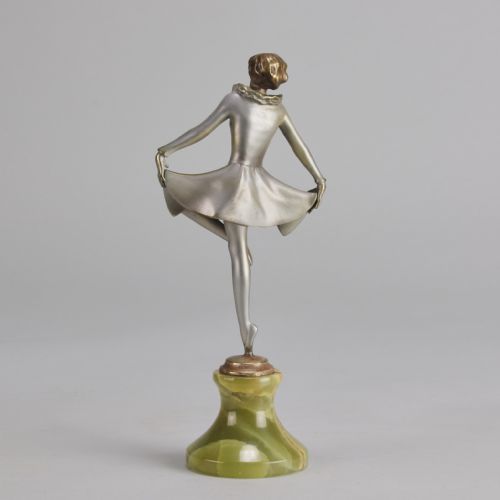
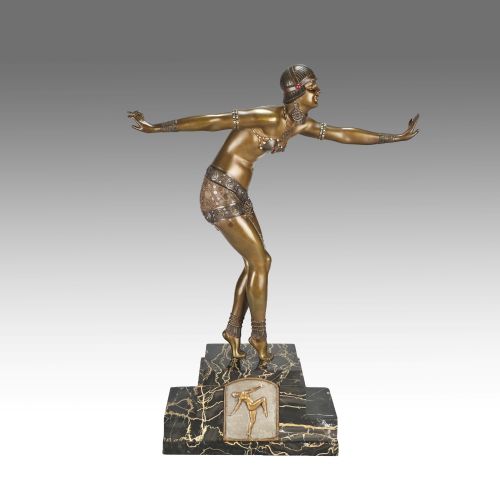
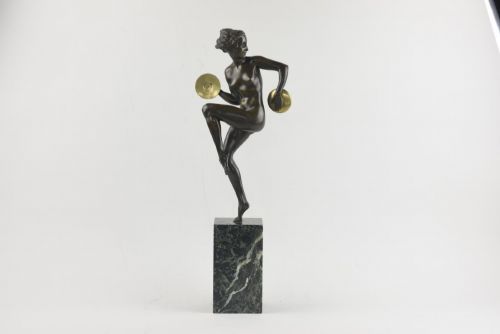
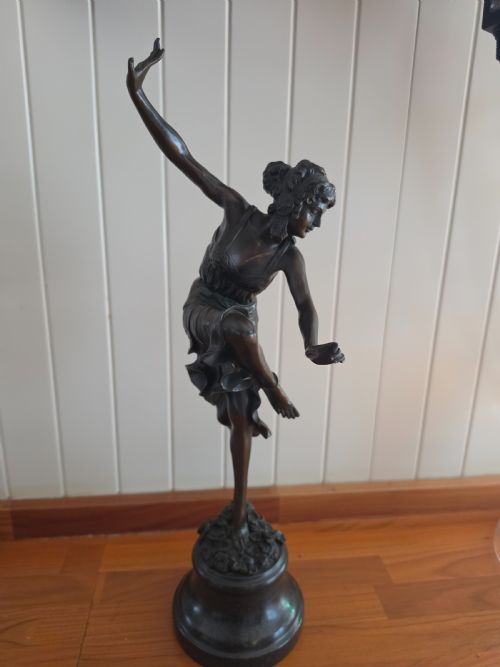
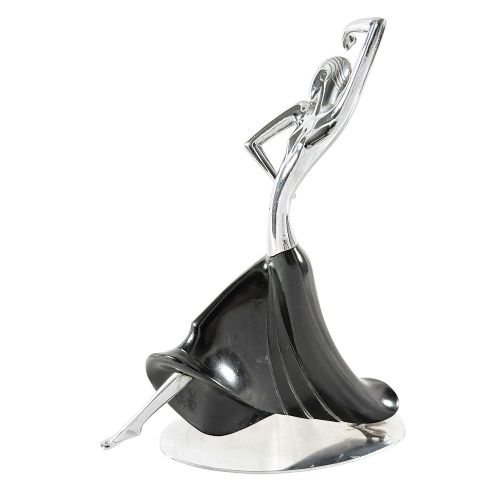
Art deco female dancers embody the vibrant cabaret and ballet culture of the nineteen-twenties and nineteen-thirties. These figures capture arrested motion, often balancing on tiptoe or sweeping their arms in theatrical gestures inspired by famous performers of the period.
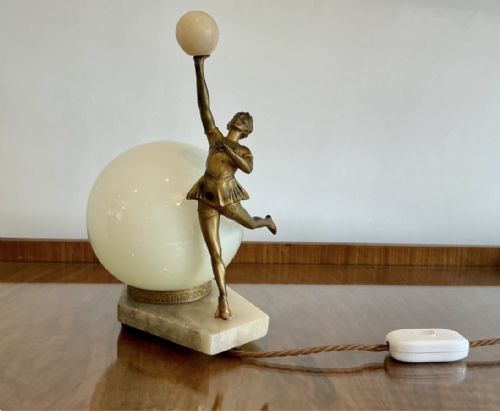
Most examples found on this page date from the nineteen-twenties and nineteen-thirties, emerging from French, Austrian and British workshops. Forms range from freestanding cabinet sculptures and large floor-standing figures to functional table lamps and table lighters where the dancer forms the central stem.
How they were made
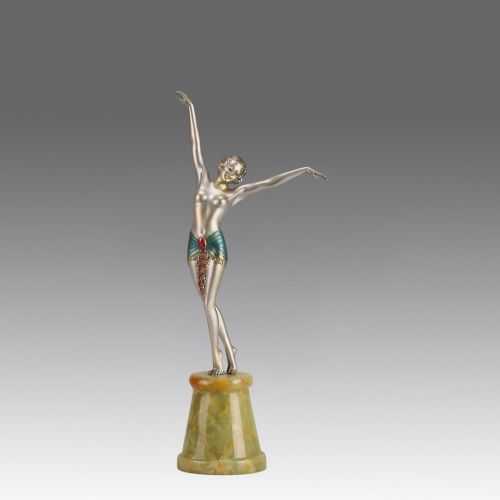
Foundry artisans utilised the lost-wax casting method to create hollow or solid bronze and spelter figures with intricate surface detail. Cold painting, gilding and silver plating added rich colour and sheen to the metal surfaces.
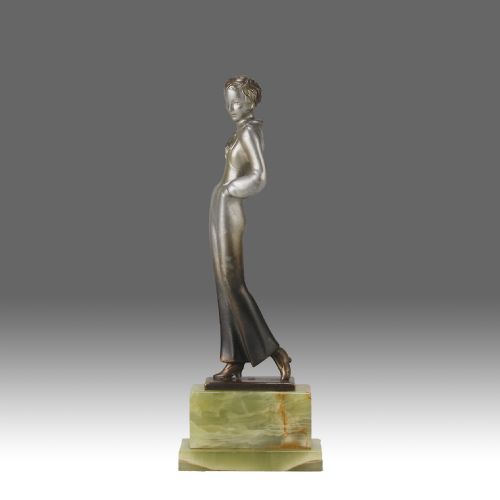
Sculptors mounted these figures upon heavy bases cut from contrasting geological materials such as marble, onyx and alabaster. Some luxury pieces incorporated carved wooden elements or ivory in chryselephantine compositions.
Listings span the periods from 1910 to 1930, capturing the shift from late art nouveau aesthetics into full art deco abstraction.
What varies in quality
The precision of the chasing work and the crispness of the casting separate standard commercial figures from master foundry editions. Superior pieces retain their original cold-painted or gilt surfaces without touch-ups, showing sharp facial expressions and well-defined drapery.
The quality of the mounting base dictates overall harmony, where genuine multi-coloured marble or onyx plinths complement the proportions of the dancer rather than overpowering the metalwork.
Josef Lorenzl·Demetre Chiparus·Pierre le Faguays·Claire Jeanne Roberte Colinet·Paul Philippe
The Art Deco Female Dancers Glossary
- Chryselephantine
- A sculpture created from a combination of bronze and ivory. This technique highlights the contrast between metallic garments and the warm tones of carved ivory faces and hands.
- Spelter
- A zinc alloy frequently utilised as a cost-effective alternative to bronze. It accepts patination and metallic paint finishes well, though it is softer and lighter than bronze.
- Cold-painted
- A method where enamel or oil paint is applied to metal without subsequent heat-firing. This fragile finish gives vibrant polychrome colour to costumes and hair.
- Patination
- The chemical treatment or natural weathering applied to metal surfaces to produce a specific colour or aged tone. Bronze figures rely on patination to accentuate muscular definition and fabric folds.
Art Deco Female Dancers: Frequently Asked Questions
What materials are these figures made from?
These sculptures utilise bronze, silvered bronze, spelter and carved wood, frequently mounted on heavy bases of marble, onyx or alabaster.
Some exceptional compositions incorporate cold-painted pigments or ivory elements to accentuate the theatrical costumes of the dancers.
How do I identify a lamp conversion?
Table lamps featuring dancers often integrate wiring channels or threaded mounting stems through the original base or figure.
Careful inspection reveals whether lamp fittings were added during production or adapted from a standard sculpture at a later date.
Where were these sculptures produced?
The majority of these pieces originated in European art centres during the interwar years, with prominent foundries operating in France and Austria.
British workshops also produced related figures, while Indonesian and Italian carvers created distinct regional interpretations.
How should I care for a cold-painted bronze?
Cold-painted finishes require gentle dusting with a soft, dry brush to preserve the delicate enamel pigments.
Avoid liquid cleaners, abrasive cloths and direct sunlight, as moisture and UV exposure damage the original surface.