



Art Deco Fall Front
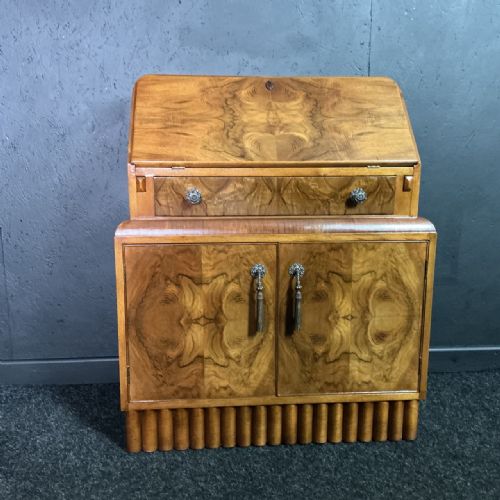
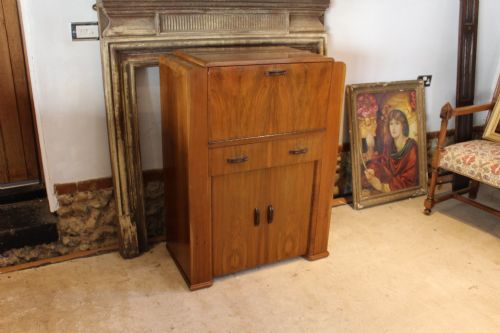
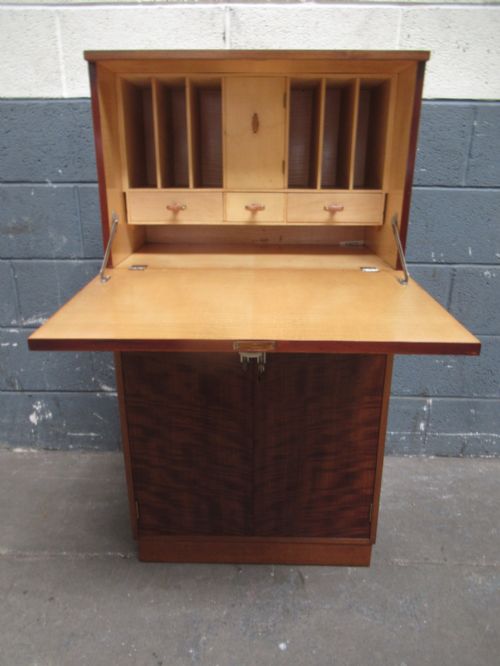
These art deco fall front pieces offer clever drop-down writing surfaces and concealed storage wrapped in striking walnut, burl walnut, and oak.
Art Deco Fall Front
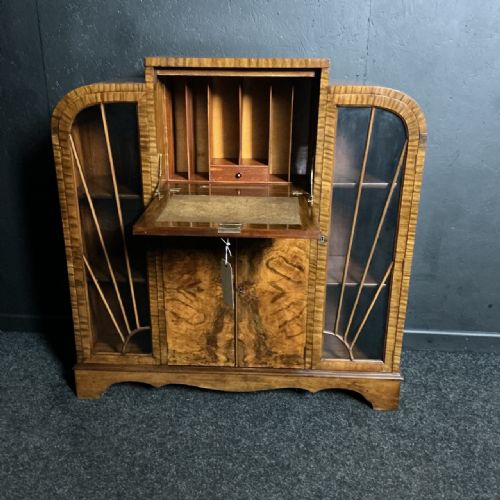
When you search for art deco fall front pieces, you encounter practical writing desks, cocktail cabinets, and bureau bookcases designed to conceal their contents behind a hinged panel. These items combine the geometric symmetry of the period with compact storage solutions suited to smaller spaces.
The versions most commonly met on this page date predominantly from nineteen thirty, alongside examples spanning nineteen twenty to nineteen fifty. English and French workshops produced these designs in forms ranging from simple writing desks to elaborate glazed bookcase bureaus.
How they were made
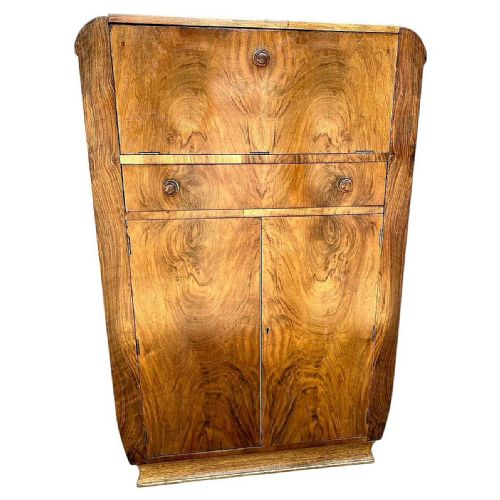
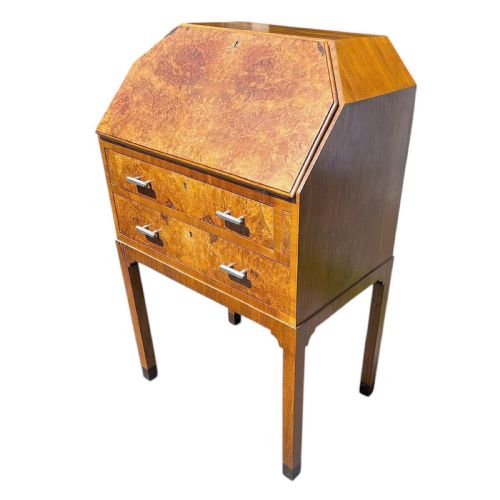
Cabinet makers applied figured walnut, burr walnut, and oak veneers over solid wood carcases to create rich, swirling grain patterns across the primary surfaces. Brass and chrome hardware provided functional accents and structural support for the drop-down panels and doors.
Glazed compartments and fitted interior cubbies required precise joinery to balance display areas with the mechanical demands of a falling front desk. Finishing techniques highlighted the natural warmth of the wood without obscuring the distinct figuration of the grain.
Art Deco Fall Front Retail Price Guide 2026
Typical asking prices for art deco fall front among the pieces listed under this phrase on Sellingantiques today, from the lower quarter to the upper quarter. They describe what is for sale here now, not the wider market.
Listings feature walnut, burr walnut, oak, brass, chrome, and glass across desks, cocktail cabinets, and bureau bookcases.
What varies in quality
The visual hierarchy of these pieces rests largely on the choice and matching of veneer, where book-matched figured walnut commands attention through its deliberate symmetry. Plain timber surfaces or less carefully aligned grain patterns shift an example toward the simpler end of the range.
Internal complexity also distinguishes standard utilitarian items from finer examples equipped with fitted stationary compartments, integrated glass shelving, and specialised cocktail storage. The integration of durable brass or chrome fittings rather than basic metalwork signals a higher grade of production.
F H Marshall and Co Glasgow
The Art Deco Fall Front Glossary
- Fall front
- A hinged writing flap or door that drops down into a horizontal position to serve as a desktop. This mechanism conceals pigeonholes and small drawers when closed.
- Bureau bookcase
- A combination furniture form featuring a writing desk base beneath an upper shelving section enclosed by wooden or glazed doors. These tall units maximise vertical storage space.
- Burr walnut
- A prized wood veneer harvested from tree growths that produces intricate, swirling grain patterns. Cabinet makers used this material on prominent exterior surfaces for decorative impact.
- Cocktail cabinet
- A specialised drinks storage unit often featuring a drop-down prep surface and mirrored interior compartments. These pieces emerged strongly during the interwar period for home entertaining.
Art Deco Fall Front: Frequently Asked Questions
What is a fall front desk?
A fall front desk uses a hinged writing panel that folds down to create a flat work surface. When closed, the panel hides the interior compartments and keeps papers out of sight.
This design protects the contents from dust and maintains a tidy silhouette in a living area or bedroom.
How are these cocktail cabinets used?
These cocktail cabinets store glassware, bottles, and bar accessories behind doors or drop-down panels. The interior often includes mirrored surfaces or glass shelves for serving preparation.
Owners typically place them in reception rooms as both functional hospitality units and decorative focal points.
Are these pieces English or French?
The selection includes both English and French examples produced during the interwar period. English workshops frequently utilised walnut and oak, while French pieces often display distinct continental proportions.
Each regional tradition reflects local cabinet-making preferences while adhering to the broader geometric style.