

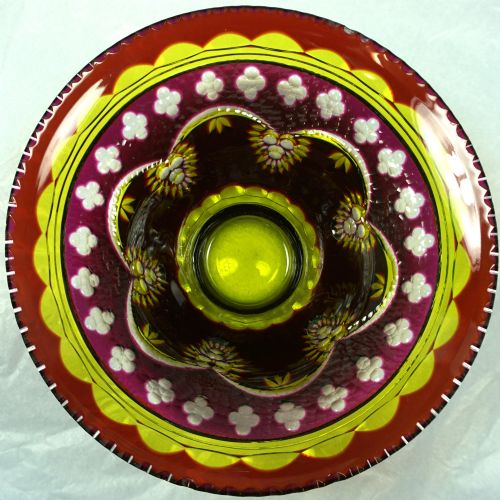

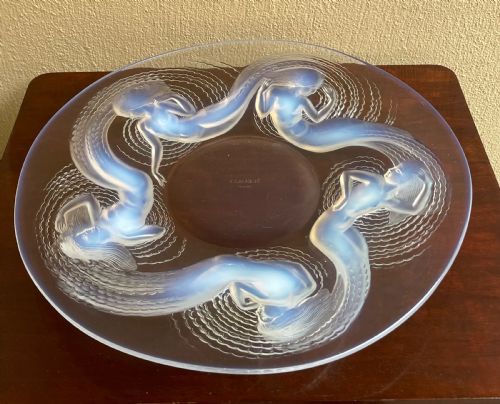


Art Deco Crystal Dish
An art deco crystal dish brings geometric clarity and lustrous weight to any table, formed from heavy moulded crystal or cut glass.
Art Deco Crystal Dish
An art deco crystal dish encompasses decorative bowls, lidded vanity jars, chargers, pin dishes, and ashtrays produced primarily during the 1920 and 1930 periods. These functional and decorative objects capture the distinctive modernist aesthetics of the interwar years through bold forms and contrasting materials.
The pieces appearing on this page range from heavy opalescent glass chargers to smaller cut lead crystal bowls and silver-topped jars. Many incorporate striking colour accents, combining clear or tinted crystal with vibrant blue or green enamel and sterling silver mounts.
How they were made
Makers utilised heavy moulding and intricate glass-cutting techniques to achieve the characteristic facets and dimensional depth seen across these items. Opalescent glass required precise thermal control during cooling to produce the characteristic milky, light-catching quality that shifts tone in the light.
Metalwork components such as sterling silver rims and lidded mounts were fashioned to fit snugly against the glass body, occasionally finished with hand-applied enamel details. These mixed-media constructions required close collaboration between glassworks and silversmiths.
Art Deco Crystal Dish Retail Price Guide 2026
Typical asking prices for art deco crystal dish among the pieces listed under this phrase on Sellingantiques today, from the lower quarter to the upper quarter. They describe what is for sale here now, not the wider market.
What varies in quality
The distinction between ordinary production and superior work rests on the crispness of the glass moulding, the depth of the hand-cut facets, and the integrity of any associated metal mounts. Pieces designed by notable artists or produced by distinguished factories display sharper definition in their motifs and heavier, more resonant crystal.
Preservation of fragile enamel elements and original silver components heavily influences desirability. Superior examples maintain intact surface decoration and uncompromised structural fittings that demonstrate the maker's original standard of execution.
Rene Lalique·Joseph Simon·Val St. Lambert·Hoffman
The Art Deco Crystal Dish Glossary
- Opalescent glass
- Glass that diffuses light to display a milky, glowing appearance with subtle colour shifts, frequently utilised by prominent French glassmakers of the period.
- Cut lead crystal
- Heavy glass containing lead oxide, which increases brilliance and allows for deep, sharp geometric cutting along the exterior.
- Charger
- A large decorative plate or shallow bowl traditionally used for presentation or service.
- Pin dish
- A small, shallow receptacle originally intended for holding loose pins or vanity items on a dressing table.
Art Deco Crystal Dish: Frequently Asked Questions
What is an art deco crystal dish used for?
These versatile vessels served various domestic purposes, functioning as dressing table vanity jars, cigarette boxes, ashtrays, or decorative centrepiece bowls.
Today, collectors use them to display small keepsakes or simply as sculptural objects that anchor a room's interior scheme.
How do I date an art deco crystal dish?
Dating relies on stylistic markers, factory stamps, and the specific material combinations typical of the 1920 and 1930 manufacturing periods.
Signatures etched into the glass or stamped factory marks on the base provide the most reliable evidence of origin and production date.
Are these dishes made of solid crystal?
Many examples consist of heavy lead crystal or moulded glass, while others incorporate contrasting elements such as sterling silver rims and enamel lids.
The integration of multiple materials was a hallmark of luxury manufacturing during the modernist era.
How should I care for an antique glass dish?
Gentle hand washing in lukewarm water with mild soap preserves the delicate surface polish and any applied enamel details.
Harsh detergents and sudden temperature changes must be avoided to protect the structural integrity of the antique glass.