


Art Deco Commode
An art deco commode brings geometric lines and striking veneers into a room, offering practical storage with distinct period character.
Art Deco Commode
An art deco commode functions as a substantial storage piece, appearing primarily as a chest of drawers or a side cabinet. These pieces belong predominantly to the 1930 and 1920 periods, with occasional early examples dating back to 1910.
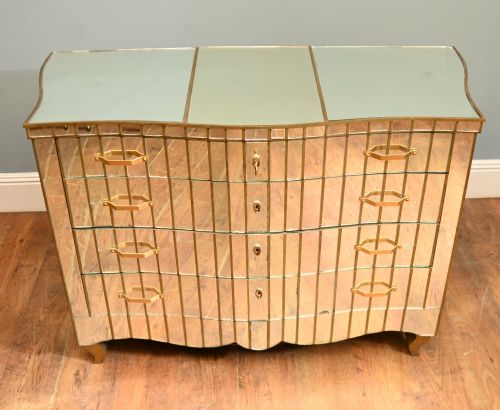
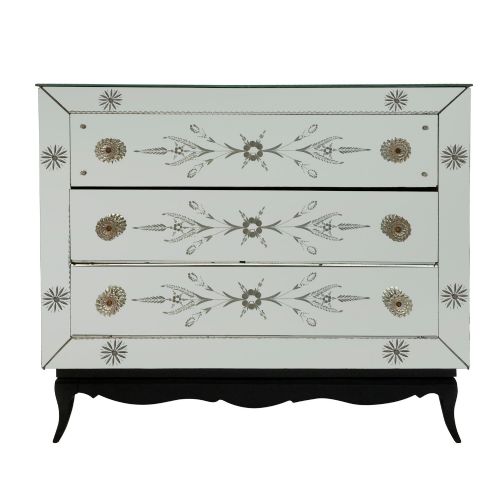
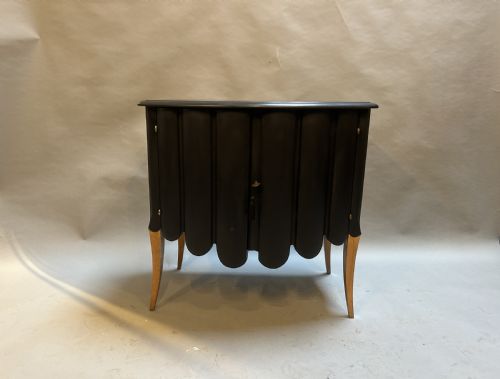
Makers on both sides of the Channel produced these items, ranging from English walnut chests to French designs featuring marble tops, mirrored glass, and specialised woods. Buyers frequently encounter variants such as bedside cabinets and tall chests alongside traditional commodes.
Materials and Construction
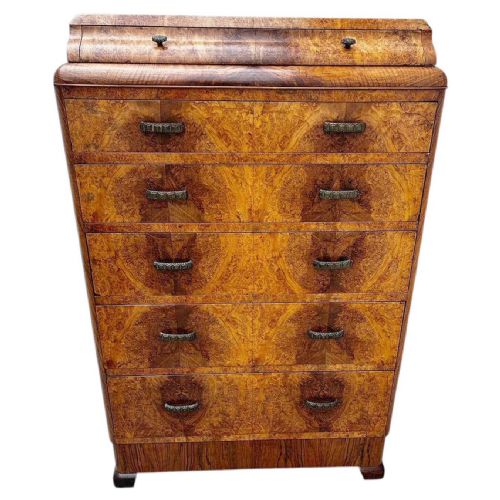
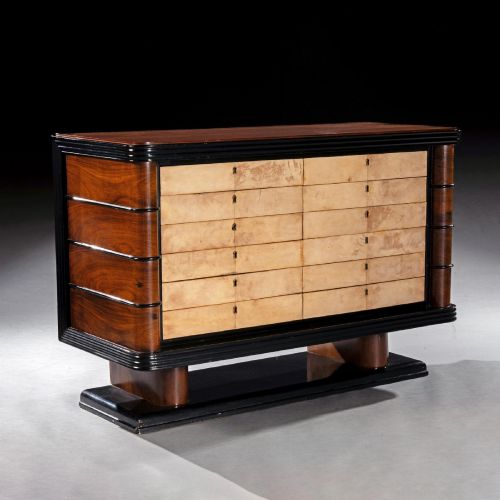
Cabinetmakers utilised rich timber selections including walnut, burr walnut, ebonised wood, and palisander, often laid out in striking grain patterns. Surfaces gained contrast and texture from additions like brass hardware, parchment drawer coverings, and fossil marble tops.
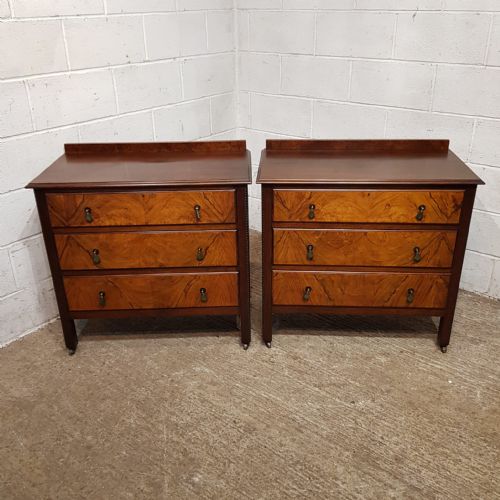
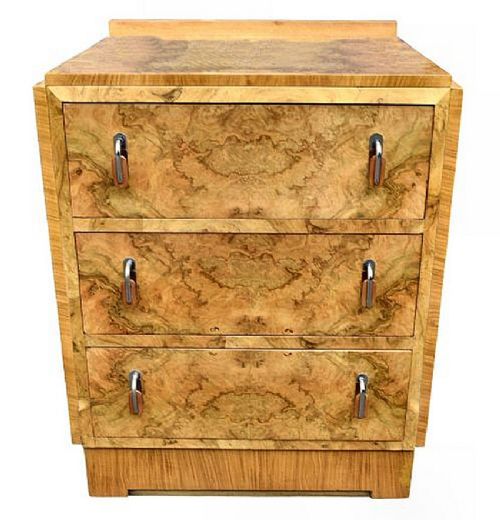
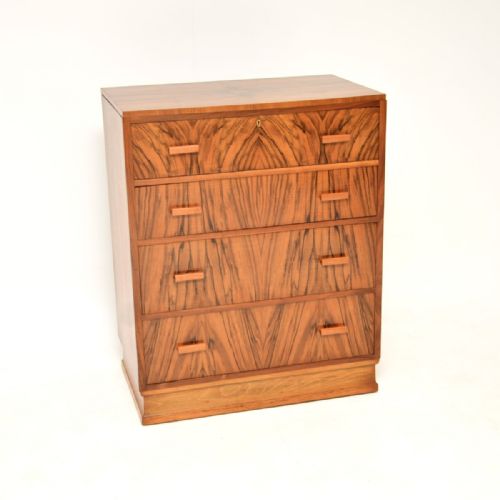
French examples frequently incorporate mirrored glass and heavy marble surfaces paired with solid wood carcases. English workshops focused heavily on figured and bleached blonde walnut veneers across multi-drawer chests.
One exceptional piece pairs dark palisander with unexpected parchment-covered drawers.
Evaluating Quality
Quality rests heavily on the selection and matching of veneers, where book-matched burr walnut or palisander creates balanced geometric patterns across the drawer fronts. Finer pieces demonstrate meticulous attention to secondary materials, such as genuine fossil marble tops, heavy brass mounts, and parchment panels.
The architectural form dictates distinction, separating standard multi-drawer chests from unusual silhouettes and bespoke maker attributions. Superior examples maintain crisp lines in ebonised details and flawless integration of mirrored glass or specialised stone.
Jules Leleu
The Art Deco Commode Glossary
- Burr walnut
- A figured wood veneer taken from the wart-like growths on walnut trees, prized for its swirling grain patterns. It forms the primary decorative surface on many high-end English chests.
- Palisander
- A dense, dark timber utilised in elite cabinetmaking during the early twentieth century. This exotic wood provides deep contrast against lighter drawer fronts.
- Ebonised wood
- Timber treated to imitate ebony through staining or painting. It appears on French commodes to outline geometric drawer arrangements.
- Parquetry
- A geometric mosaic of wood pieces used for decorative surfaces on cabinet doors and tabletops. It frequently decorates the top surface of French commodes.
Art Deco Commode: Frequently Asked Questions
Where should I place an art deco commode?
These pieces suit living rooms, hallways, or bedrooms where their strong geometric forms act as a focal point.
Pair them with minimalist surroundings to let the burr walnut or marble surfaces stand out without visual competition.
How do I care for marble-topped commodes?
Wipe the marble surface regularly with a soft, damp cloth and avoid acidic liquids that can etch the stone.
Treat the wood elements with appropriate wax polish to maintain the finish on walnut and ebonised frames.
What is the difference between English and French pieces?
English examples from the period tend to focus on figured walnut veneers across structured chests of drawers.
French pieces frequently incorporate luxury details such as marble tops, mirrored glass, parquetry, and unusual geometric forms.
Can I use a commode as a bedside cabinet?
Compact side cabinets and specific bedside pairs from the period fit well beside lower modern beds.
Check the height and surface dimensions to ensure the cabinet matches your bedside requirements.