





Art Deco Cat Statue
An art deco cat statue brings fierce feline grace to a room, capturing sleek big cats in bronze, wood and marble.
Art Deco Cat Statue
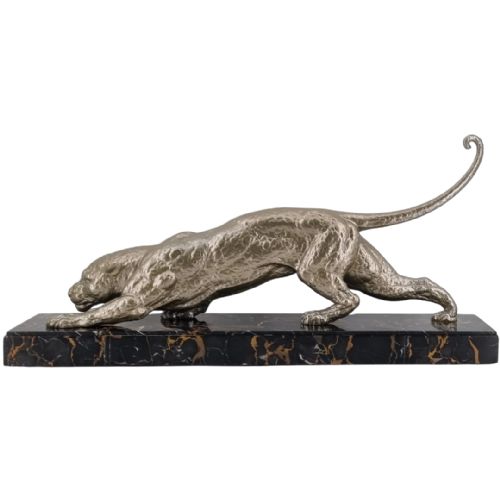
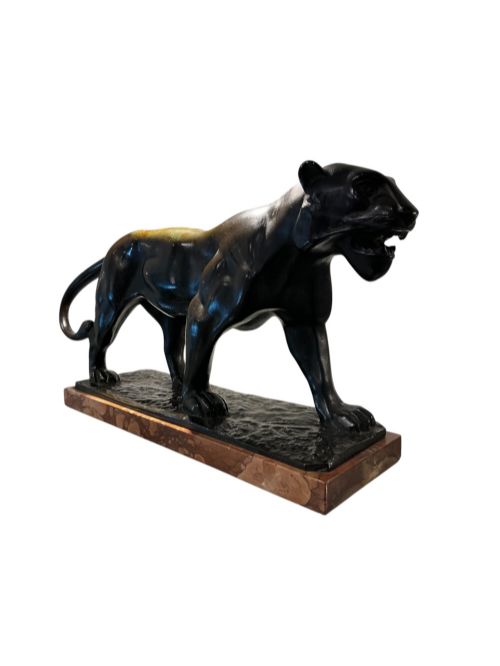
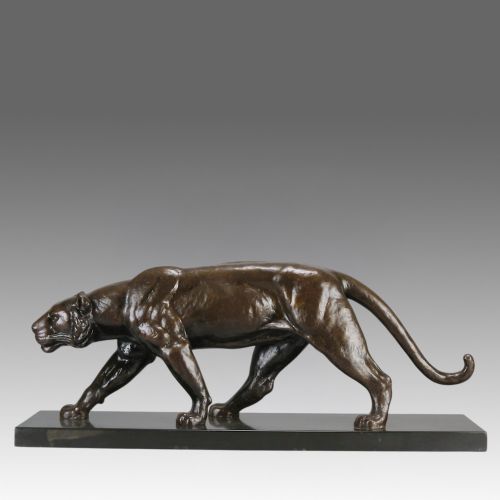
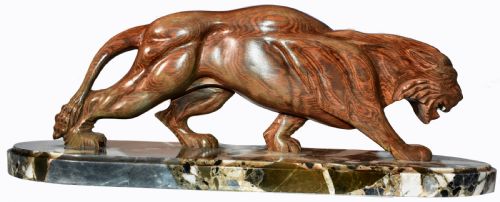
When you search for an art deco cat statue, you encounter stylised depictions of panthers, lionesses and domestic felines created during the 1920s and 1930s. These sculptures and figurines range from prowling beasts on stone bases to seated figures with distinctive glass eyes.
The pieces on this page lean heavily towards the animalier tradition of the early twentieth century, showing predatory cats in low, stalking postures. French workshops dominated this output, producing both monumental bronzes and more accessible spelter figures.
You will find these sculptures mounted on contrasting plinths, most notably dark marble or Portoro marble, which emphasise the horizontal lines of the animal. The period aesthetic prizes clean silhouettes and muscular tension over fussy naturalism.
How they were made
Foundries cast these metal sculptures using traditional techniques, rendering the felines in hot-cast bronze or less expensive spelter before applying dark patination. Spelter pieces often receive a painted or patinated finish to imitate bronze, while glass is occasionally utilised for piercing inset eyes.
Wood carvers worked directly with dense timbers, shaping carved wooden lionesses and panthers to highlight the natural grain along the spine and flanks. Sculptors also carved alabaster and marble for both the feline figures and the stepped bases they rest upon.
Art Deco Cat Statue Retail Price Guide 2026
Typical asking prices for art deco cat statue among the pieces listed under this phrase on Sellingantiques today, from the lower quarter to the upper quarter. They describe what is for sale here now, not the wider market.
Materials recorded on this page include bronze, spelter, marble, Portoro marble, alabaster, carved wood, glass and ceramic.
What varies in quality
The distinction between a top-tier sculpture and a modest one lies in the sharpness of the casting and the expressiveness of the musculature. Finer bronzes retain crisp chisel work and subtle surface textures that reveal the underlying power of the animal.
Base selection also marks out the better examples, with high-grade multi-tiered marble or Portoro marble elevating the presentation. Signature placement and the weight of the metal distinguish superior foundry output from standard commercial souvenirs.
D. H. Chiparus·Alexandre Ouline·Eugene Emile Borga·Michel Decoux
The Art Deco Cat Statue Glossary
- Animalier
- Art that depicts animals, particularly sculptures focusing on wild beasts in realistic or stylised forms. This genre flourished in nineteenth and twentieth century European bronze casting.
- Spelter
- A zinc alloy used as a cheaper alternative to bronze for decorative figures. It takes patination well but is softer and lighter than copper alloys.
- Patination
- The surface treatment or chemical colouration applied to metal sculptures. It creates deep brown, black or greenish tones that define the musculature.
- Portoro Marble
- A distinctive black Italian marble with golden-yellow veins. It provides a dramatic, high-contrast base for twentieth-century bronze and spelter sculptures.
- Alabaster
- A fine-grained translucent stone used for carving figures and architectural ornaments. Its soft surface allows for smooth, luminous modelling.
Art Deco Cat Statue: Frequently Asked Questions
What metals are used for these cats?
Foundries cast these sculptures primarily in bronze or spelter, applying dark patination to mimic the sleek coat of a panther. Some pieces utilise hot-cast bronze while others rely on zinc-based alloys.
Base materials also vary, combining metal figures with contrasting stone plinths such as black marble or alabaster.
How do I identify a French piece?
French works from this era often feature foundry marks, artist signatures, or distinct styling associated with Parisian animalier sculptors. The use of Portoro marble and specific patination techniques also point towards French production.
Many figures incorporate stylistic elements typical of the interwar Parisian salons, such as stylised glass eyes.
Where should I display a heavy sculpture?
These statues require a stable, level surface such as a sideboard, mantelpiece or dedicated console table. Because many figures are mounted on dense marble bases, they carry significant weight and need adequate support.
Keep them away from direct sunlight to protect patinated surfaces and wooden or alabaster finishes.
Are wooden and metal figures cleaned differently?
Carved wood requires gentle dusting and occasional waxing to preserve the grain and prevent drying out. Metal and marble surfaces benefit from a soft, dry cloth to remove dust without disturbing the patination.
Avoid liquid cleaners and harsh chemicals on all parts of the sculpture, particularly around inset glass eyes and stone joints.