


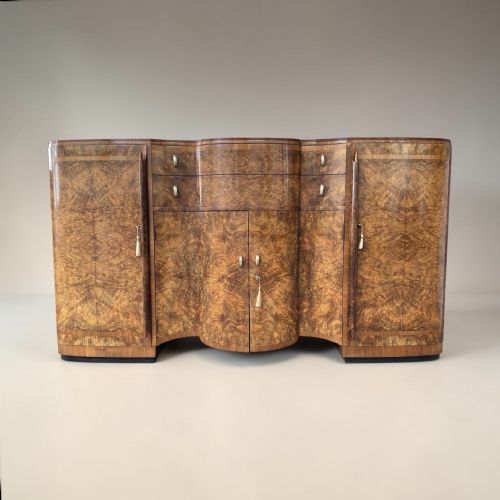
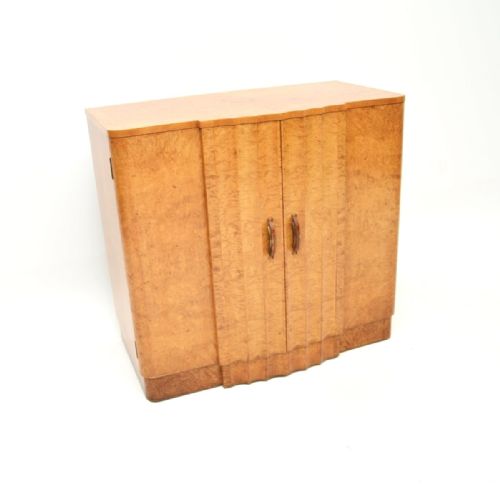
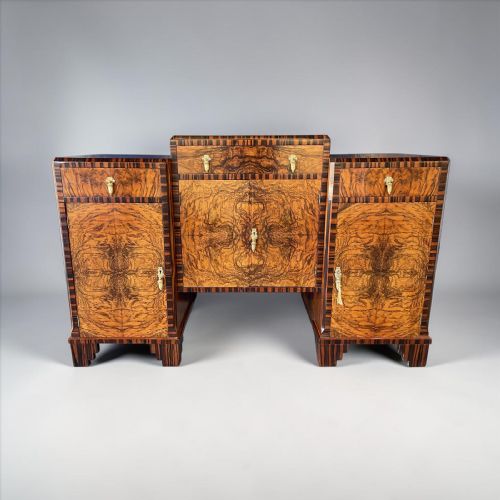
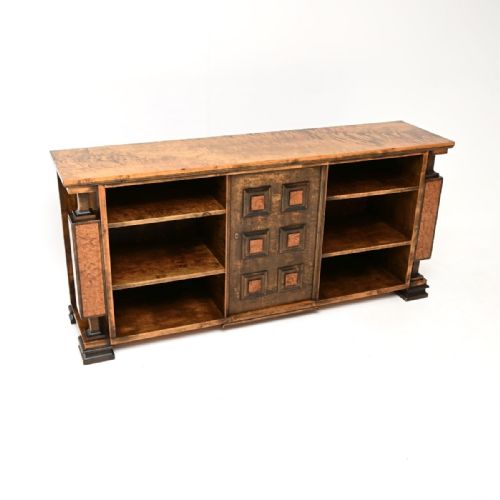
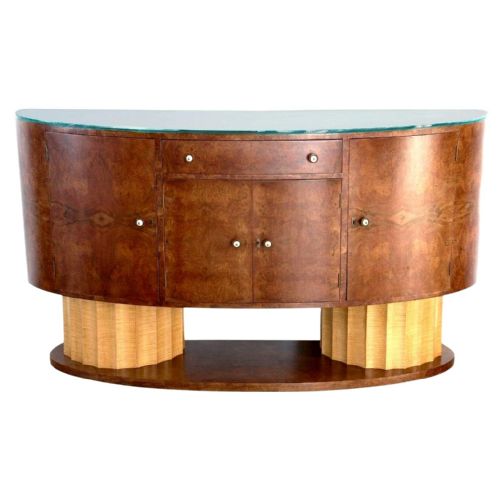


Art Deco Burr Walnut Sideboard
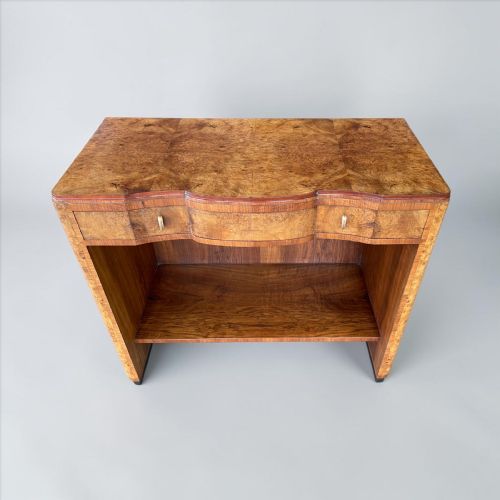
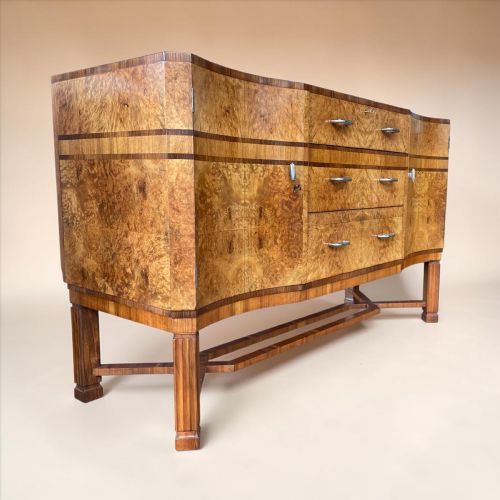
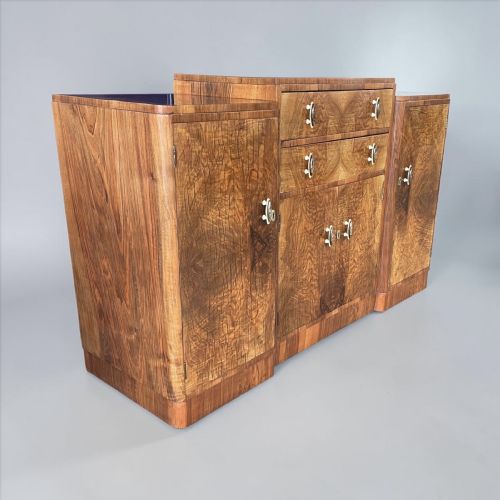
An art deco burr walnut sideboard brings striking grain patterns and geometric presence into a room, offering both generous storage and distinct period style.
Art Deco Burr Walnut Sideboard
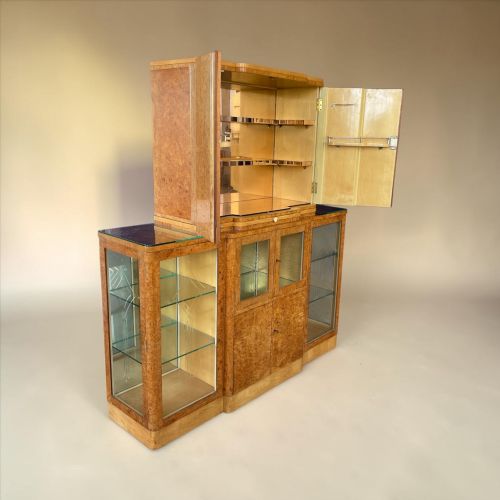
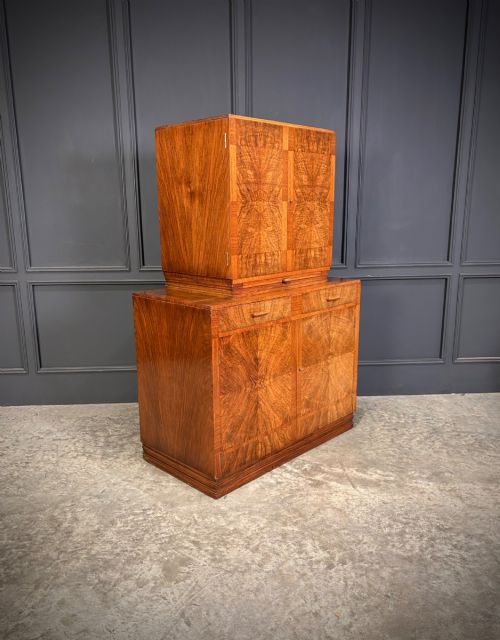
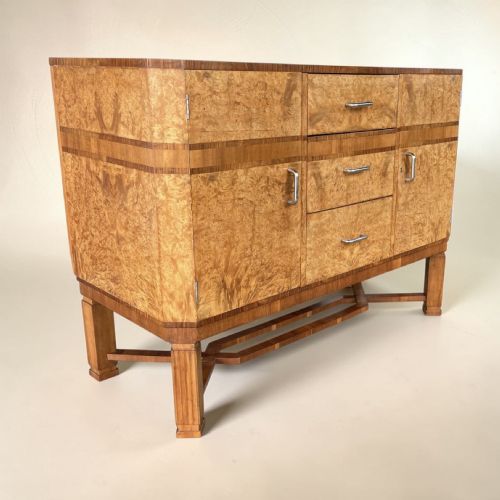
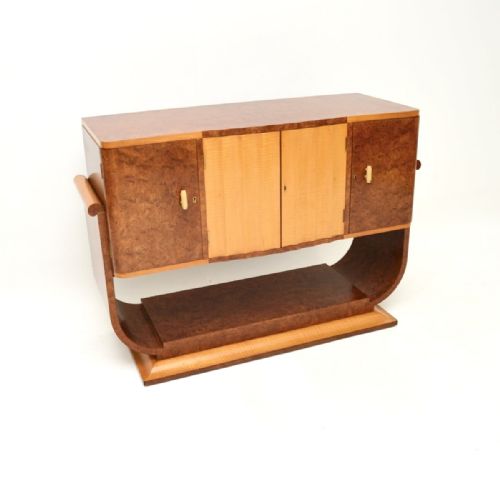
An art deco burr walnut sideboard sits at the intersection of bold modernist design and rich, natural wood figuring. These pieces take various forms, including serving tables, drinks cabinets, and cocktail cabinets, predominantly dating from the nineteen-thirties.
The version most commonly encountered on this page pairs a substantial wooden carcase with striking veneers, often incorporating brass or glass details. Makers from London workshops and continental houses alike produced these storage items during the interwar decades.
Materials and construction methods
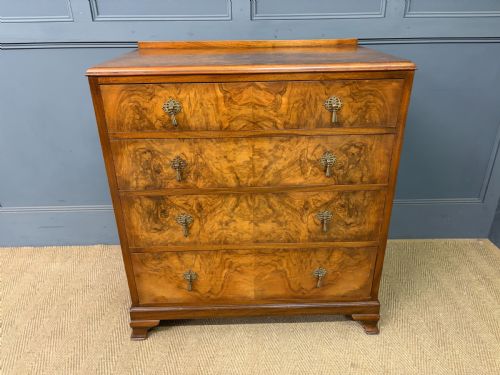
Cabinet makers applied burr walnut and plain walnut veneers over solid secondary timbers, arranging the grain patterns to create symmetrical, geometric effects across the front of each piece. Sycamore and satin birch sometimes appear as contrasting interior or accent timbers.
Metal elements such as brass handles and hardware complement the polished wooden surfaces, while glass components frequently appear in the upper sections of drinks cabinets. Traditional joinery underpins the heavy carcases, ensuring stability for the sweeping curves of double bow fronts.
Art Deco Burr Walnut Sideboard Retail Price Guide 2026
Typical asking prices for art deco burr walnut sideboard among the pieces listed under this phrase on Sellingantiques today, from the lower quarter to the upper quarter. They describe what is for sale here now, not the wider market.
Several cabinets feature secret internal compartments designed specifically to hide cocktail shakers from temperamental guests.
Distinguishing quality in period furniture
The standard of a piece depends heavily on the selection and matching of the veneer. Highly figured burr walnut with symmetrical grain alignment across multiple doors represents superior workshop execution.
Attribution to documented makers and retailers elevates a piece significantly. Construction weight, the integrity of internal fittings such as pull-out slides or mirrored cocktail compartments, and the crispness of brass detailing separate standard production items from top-tier commissions.
Maurice Adams·Harry and Lou Epstein·Hille·Hamptons of Pall Mall London·Waring and Gillow
The Art Deco Burr Walnut Sideboard Glossary
- Burr walnut
- A wood harvested from the wart-like growth on a walnut tree, yielding highly complex and swirling grain patterns. Cabinet makers prized this timber for its decorative impact on prominent door panels.
- Veneer
- A thin slice of superior wood applied over a more stable base timber. This technique allowed craftsmen to utilise dramatic grain patterns without relying entirely on solid scarce woods.
- Art deco
- A design movement spanning the interwar period, characterised by streamlined shapes, geometric ornamentation, and modern materials. It replaced heavy Victorian forms with dynamic, clean lines.
- Cocktail cabinet
- A specialised storage unit designed for home entertaining, usually featuring a mirrored interior, glass shelves, and pull-out mixing surfaces. These drinks cabinets became popular in domestic interiors during the nineteen-thirties.
- Bow front
- A convex, outwardly curving cabinet facade. This shape required precise carpentry to fit doors and drawers to a curved perimeter.
Art Deco Burr Walnut Sideboard: Frequently Asked Questions
What is an art deco burr walnut sideboard?
It is a large storage furniture piece from the interwar period, defined by its curved or geometric silhouette and decorative wood veneer.
These items functioned as dining room servers or general storage furniture in homes of the era.
How do I identify a cocktail cabinet version?
Cocktail cabinets typically include specialised internal fittings like mirrored drop-down flaps, glass shelves, and space for glassware.
They often combine the same burr walnut exterior with contrasting light interior woods such as sycamore.
Where were these sideboards made?
Production centred in notable London workshops, alongside examples originating from continental European makers.
Prominent firms retailed these items through major urban department stores and specialist cabinet makers.
How do I care for burr walnut furniture?
Keep the wood away from direct heat sources and strong sunlight to prevent the veneer from drying or cracking.
Polish the surface gently with traditional wax to maintain the depth and shine of the grain.