
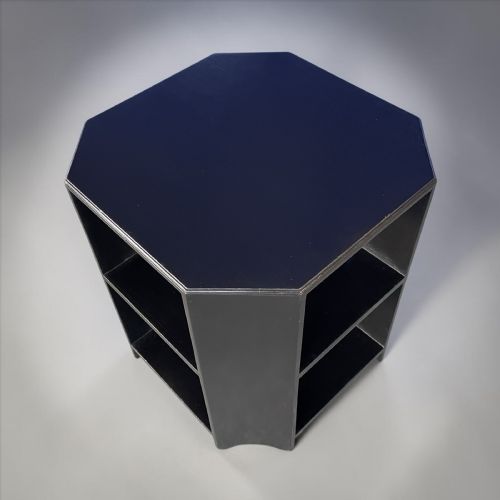
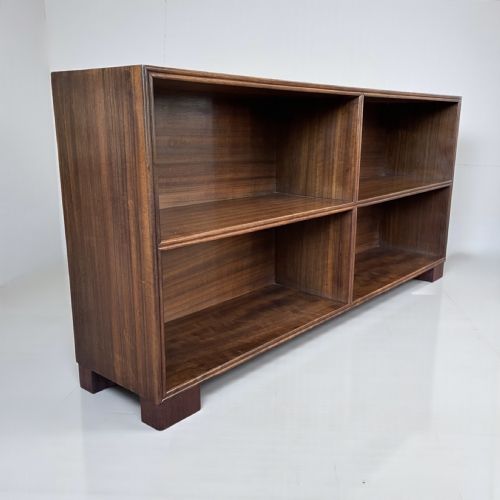


Art Deco Bookshelf
An art deco bookshelf brings architectural geometry and striking timber grain directly into a room, serving as a functional centrepiece for serious libraries.
Art Deco Bookshelf
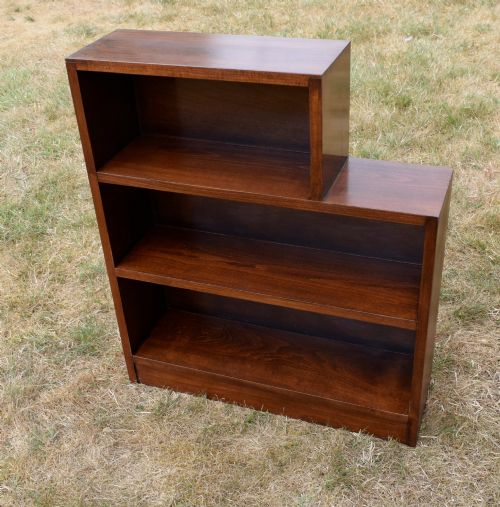
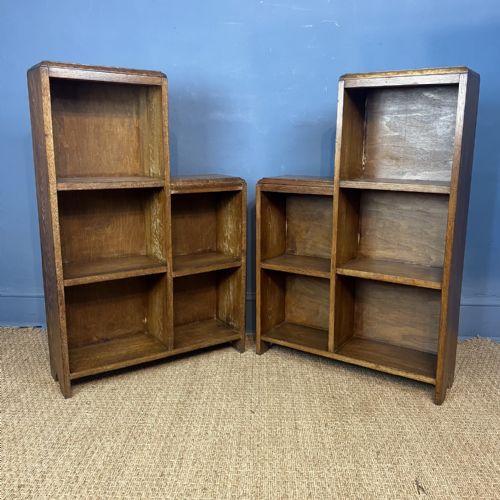
An art deco bookshelf combines the practical storage of books with the distinct geometric lines and bold forms characteristic of twentieth-century design. These pieces often feature stepped silhouettes, clean vertical tiers, and occasional display cabinets that elevate simple shelving into statement furniture.
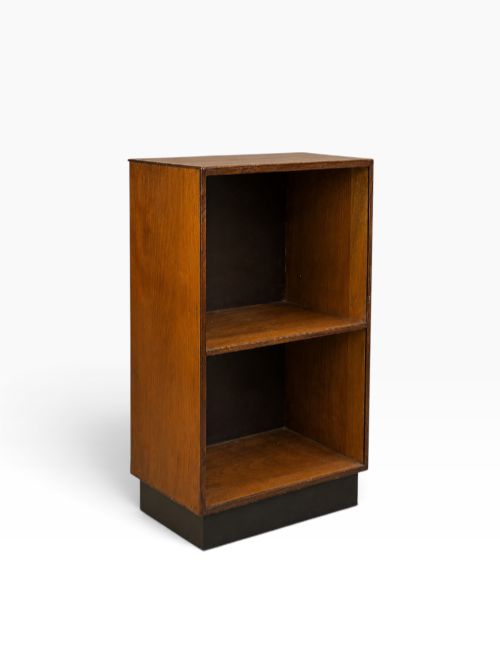
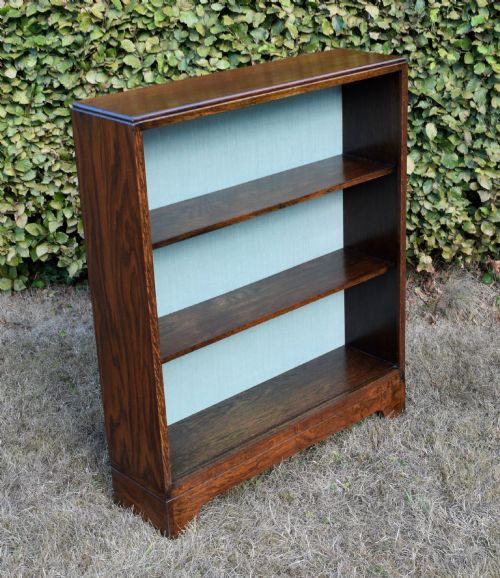
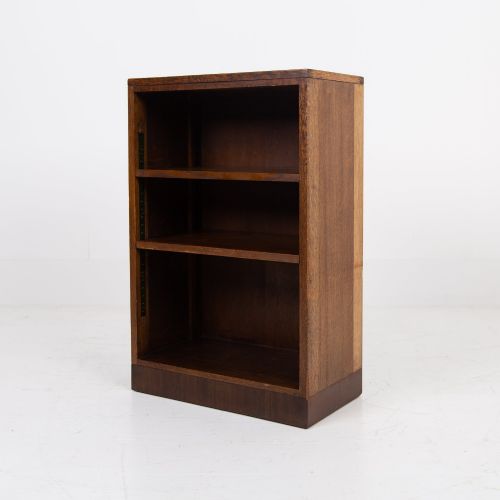
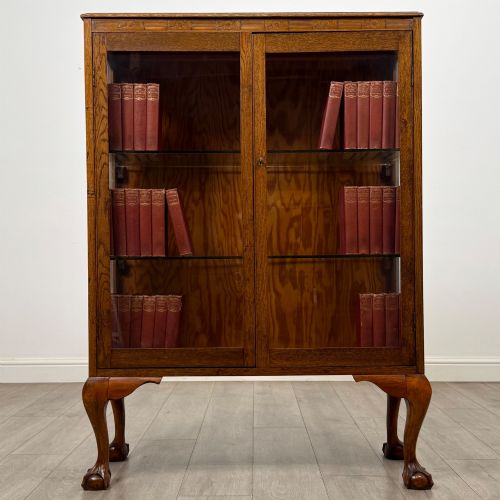
Most examples found in these listings date from the 1930s or draw directly on Edwardian and early twentieth-century traditions. Buyers encounter variations ranging from low open oak bookcases to taller walnut and mahogany cabinets fitted with glass doors or leather tops.
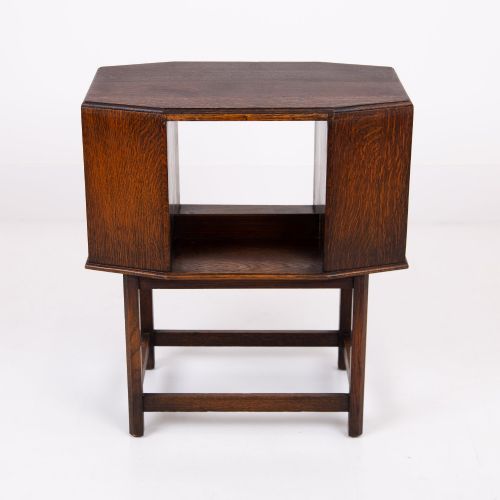
Formats extend beyond standard upright shelving to include low book tables, side tables with integrated storage, and compact book troughs. The stylistic influence ranges from straightforward British interpretations to Swedish Grace and broader Scandinavian designs.
How they were made
Cabinet makers utilised a rich palette of timbers, relying most frequently on oak, walnut, and mahogany for structural stability and surface presence. Ebonised wood and ash appear alongside burr elm, providing striking contrasts in colour and grain pattern across the front mouldings and panels.
Construction techniques balanced traditional joinery with modern decorative treatments, incorporating glass doors and subtle metal fixtures. Limed finishes and polished surfaces were carefully applied to highlight the natural figuration of the timber without obscuring the grain.
Listings feature oak as the most common timber, followed by walnut, mahogany, and ebonised wood.
What varies in quality
The distinction between standard production and exceptional work lies in the selection and matching of wood veneers, particularly on prominent surfaces like burr elm and walnut. Superior pieces display continuous grain flow across doors and drawers, demonstrating careful planning by the workshop.
Structural integrity depends on the precision of the joinery and the treatment of complex forms, such as waterfall tiers and stepped cornices. Finer examples balance heavy geometric mass with proportion, while lesser pieces rely on heavyhanded proportions or plain secondary timbers.
Maurice Adams·Betty Joel·Sandberg & Co
The Art Deco Bookshelf Glossary
- Waterfall bookcase
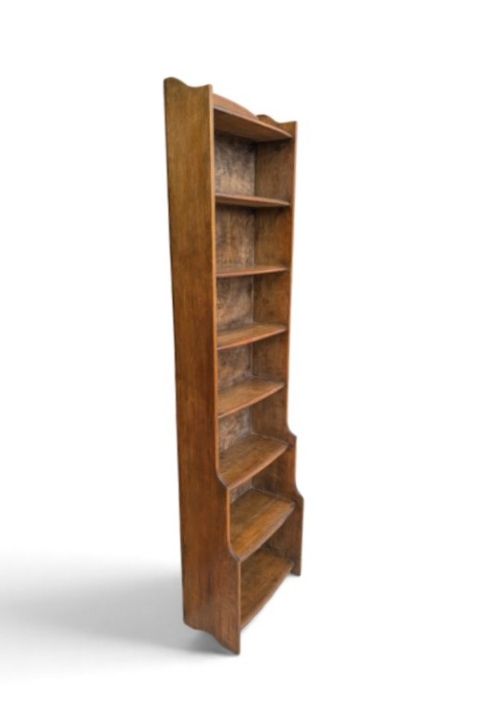
- A tiered shelving unit where each lower shelf extends further out than the one above it, creating a cascading silhouette.
- Ebonised wood
- Timber treated with a dark stain or finish to imitate the dense, black appearance of ebony.
- Swedish Grace
- An elegant neoclassical design movement preceding strict functionalism, characterised by refined proportions and understated classical detail.
- Burr elm
- Wood harvested from the knotted growths of an elm tree, prized by cabinet makers for its swirling, highly figured grain patterns.
- Book trough
- A small, open-topped container designed to hold a selection of books upright on a table or desk surface.
Art Deco Bookshelf: Frequently Asked Questions
How do I style an art deco bookshelf?
Keep the surrounding decor relatively simple to let the geometric lines of the cabinet stand out. Balance stacks of books with ceramic objects or metal bookends that reflect the period aesthetic.
Avoid overcrowding the shelves, as art deco design relies on clean negative space and clear architectural silhouettes to make an impact.
Where should I place an art deco bookshelf?
Position the piece against a plain wall where its vertical tiers or stepped mouldings can be viewed without visual clutter. Low open bookcases work well beneath windows or as room dividers in larger spaces.
Taller display cabinets benefit from placement in studies or living rooms where natural light can catch the polished walnut or mahogany surfaces.
Are these bookcases suitable for heavy books?
Most solid oak and mahogany versions offer sturdy support for standard volumes and art monographs. Open shelf configurations built during the 1930s generally handle substantial weight.
Check the thickness of the individual shelves and the integrity of their supports before loading them with dense encyclopaedias or large collections.