





Art Deco Book Supports
Art deco book supports hold a shelf together with geometric punch and sculptural weight.
Art Deco Book Supports
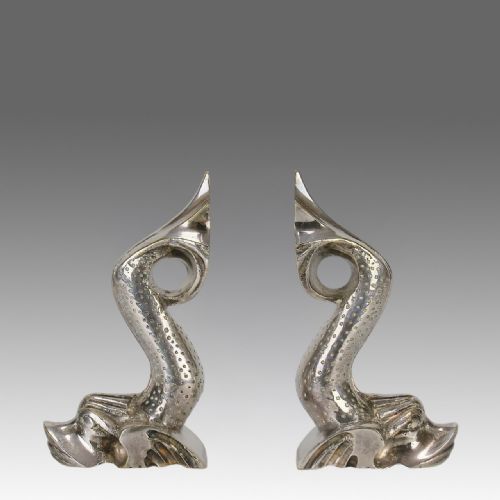
Art deco book supports arrive as matching pairs designed to keep volumes upright on a shelf while serving as miniature sculptures in their own right. When you search for art deco book supports, you encounter items shaped like animals, figures, and architectural forms that span the early twentieth century. The pieces you meet most often on this page date from the interwar period, particularly around nineteen thirty, and showcase the distinct geometry and streamlined profiles of the era.
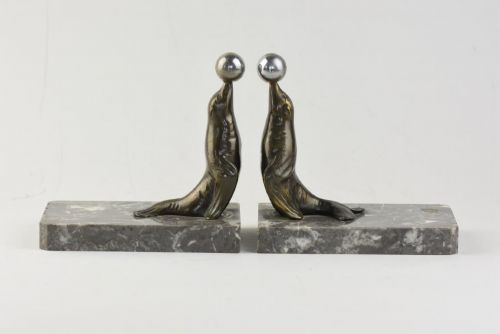
Makers from this period turned functional library objects into canvases for artistic expression, using subjects ranging from Scottish terriers and sea lions to classical archers and literary figures like William Shakespeare. These objects reflect a shift in interior taste towards decorative metalwork, carved stone, and sculptural ceramics that could anchor a row of books with authority.
What varies in quality
Quality reveals itself in the crispness of the casting and the depth of the chasing on metal figures, where superior examples retain sharp facial expressions and clean feather or fur textures. Lesser pieces exhibit softened details and rough casting seams that betray hurried production.
The choice of materials also divides the range, as solid bronze and dense marble command greater presence than lightweight spelter or thin plated metal. Signed works by known makers carry a distinct level of execution that distinguishes studio output from anonymous commercial manufacture.
Listings feature items dated from nineteen hundred through nineteen thirty, spanning the arts and crafts and art deco periods.
F Abella & Sons·Franz Gruber·C Omin·V Ramirez Bolivia·Compton Potters Art Guild·Herzig
The Art Deco Book Supports Glossary
- Spelter
- A zinc alloy commonly used as a less expensive alternative to bronze during the early twentieth century. It takes patination well but requires careful handling due to its brittle nature.
- Cold-painted
- A finishing technique where paint is applied to metal objects without being fired in a kiln. This method allows for delicate polychrome details on bronze and spelter sculptures.
- Alabaster
- A fine-grained, translucent stone often carved into smooth geometric or figurative blocks. Its natural veining gives each book support a unique pattern.
- Patina
- The surface sheen or colour acquired by metal through age and handling. A stable patination indicates natural oxidation over decades.
Art Deco Book Supports: Frequently Asked Questions
Are these book supports heavy enough for large books?
These pieces use dense materials like marble, alabaster, and cast metals designed to bear the weight of heavy volumes. Their substantial bases anchor rows of books securely without slipping.
Heavier examples typically incorporate solid bronze or stone plinths, while lighter spelter models suit smaller collections of novels and poetry.
How do I identify the period of a pair?
Dating relies on stylistic markers such as geometric lines, streamlined animal forms, and the specific material combinations popular during the interwar decades. Examining the construction of the base and the wear on the metal helps confirm the era.
Pieces from the nineteen thirties often embrace more abstract forms, whereas earlier items lean towards arts and crafts or classical motifs.
Can I polish the metal parts?
Cleaning metal surfaces requires caution to preserve the original patina and finish, particularly on cold-painted or silvered items. Aggressive polishing can strip away historic coatings and diminish the character of the object.
Gentle dusting with a dry cloth is usually sufficient for day-to-day maintenance, avoiding chemical cleaners that might react with the metal.
What subjects are most common?
Animal studies including dogs, sea lions, elephants, and squirrels appear frequently alongside human figures, dancers, and literary characters. These subjects reflect the decorative priorities of domestic interiors during the early twentieth century.
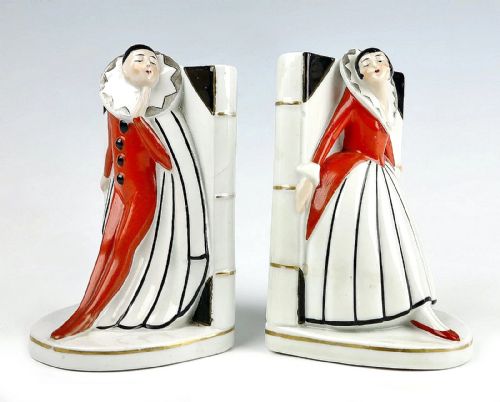
Figurative designs often pair characters like Pierrot and Pierrette or dramatic figures to create a balanced composition on the shelf.