





Art Deco Big Cat
Art deco big cat sculptures capture the sleek predatory energy of the period in bronze, marble, spelter, and wood.
Art Deco Big Cat
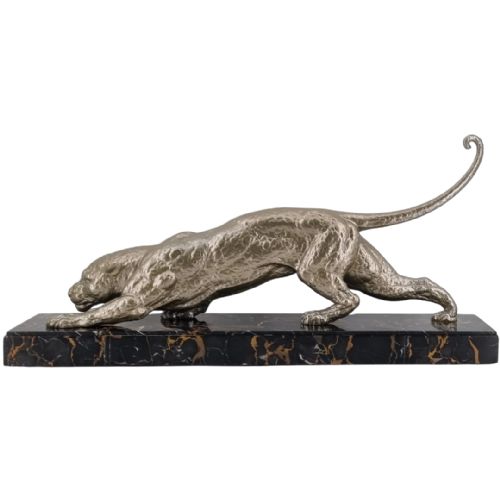
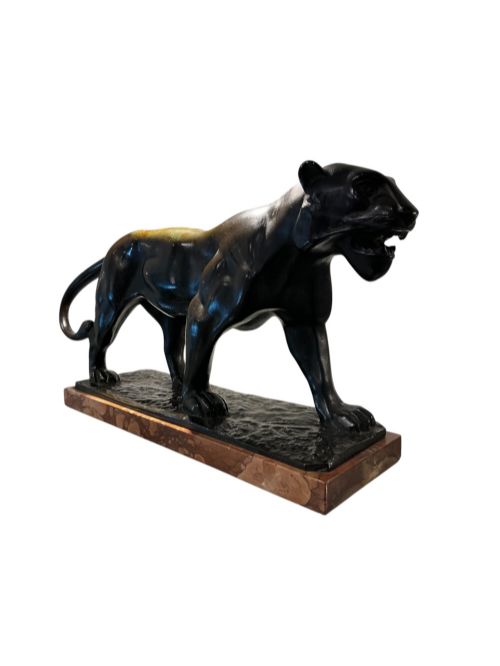
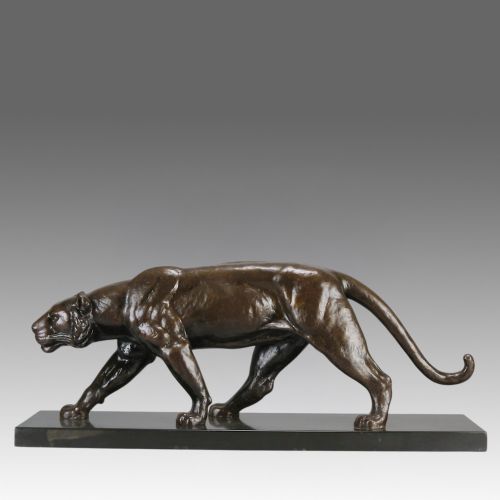
When you search for art deco big cat, you are looking at twentieth century animalier sculptures depicting panthers, leopards, lions, and lionesses. These figures encapsulate the modernist dynamism and stylized geometry of the interwar years.
The versions you are most likely to meet on this page originate predominantly from the nineteen twenties and nineteen thirties, alongside later twentieth century interpretations. They range from naturalistic prowling beasts to sharp cubist interpretations.
Makers often mounted these predators on contrasting plinths of Portoro marble, onyx, or standard black marble. The combinations of heavy stone bases and crouching feline forms define the classic silhouette of the genre.
How they were made
Foundries produced these sculptures using traditional hot cast bronze techniques, applying patinated finishes to create deep tonal variations on the metal surface. Spelter served as an accessible alternative metal for figures cast during the nineteen thirties.
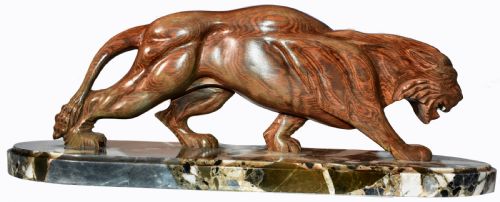
Carvers utilised hard hardwoods and alabaster to shape organic feline forms directly from block materials. Artisans paired these carved wooden and stone big cats with heavy marble bases to achieve structural stability.
Art Deco Big Cat Retail Price Guide 2026
Typical asking prices for art deco big cat among the pieces listed under this phrase on Sellingantiques today, from the lower quarter to the upper quarter. They describe what is for sale here now, not the wider market.
Listings feature periods spanning from nineteen twenty through the nineteen forties, alongside pieces created later than nineteen sixty.
What varies in quality
The sophistication of the animal's musculature and the sharpness of the casting detail separate top tier sculptures from simpler commercial output. Greater precision in the chiselling of the bronze or the carving of the wood reveals the hand of a skilled sculptor.
The selection and finish of the mounting base contribute significantly to the overall presence of the piece. High grade Portoro and polished black marble plinths display superior veining and smoother edges than basic stone cuts.
D. H. Chiparus·Notari·Alexandre Ouline·Eugene Emile Borga·Michel Decoux
The Art Deco Big Cat Glossary
- Animalier
- Art that realistically portrays animals, particularly popular among nineteenth and twentieth century sculptors. This tradition informs the fierce postures seen in feline figures.
- Spelter
- A zinc alloy frequently utilised as a cost effective substitute for bronze during the interwar period. It accepts patination well but possesses a lighter weight than bronze.
- Portoro
- A distinctive type of black Italian marble with golden yellow veins. It frequently forms the base material for high end sculptures.
- Patina
- The surface sheen or colour change developed naturally through age or applied artificially by chemical treatment. It accentuates the texture of the metal.
- Cubist
- An avant-garde style characterised by fragmented forms and geometric planes. Applied to big cats, it reduces the feline anatomy to sharp angles and simplified blocks.
Art Deco Big Cat: Frequently Asked Questions
What metals were used for art deco big cats?
Foundries cast these feline sculptures primarily in bronze and spelter, often finishing the metal with a dark patination.
Bronze examples generally exhibit heavier weight and crisper detail, while spelter offers a lighter alternative from the interwar period.
Why are marble bases common on these sculptures?
Sculptors mounted crouching panthers and lionesses on heavy marble or onyx plinths to provide structural balance.
These contrasting stone bases also enhance the architectural quality typical of twentieth century design.
How do I identify a 1930s cast?
Nineteen thirties pieces often feature stylistic traits such as cubist geometric reductions or exaggerated prowling postures.
Materials like spelter and specific types of polished black marble frequently align with manufacturing practices of that decade.
Are wooden big cat sculptures common?
Carved wooden big cats appear less frequently than cast metal versions on the market.
Artisans shaped these pieces from hardwoods, occasionally mounting them on contrasting stone bases to emphasise the grain.