


Art Deco Bedside Lockers
Art deco bedside lockers are compact bedroom cabinets that bring streamlined geometry and rich veneer figures to the bedside.
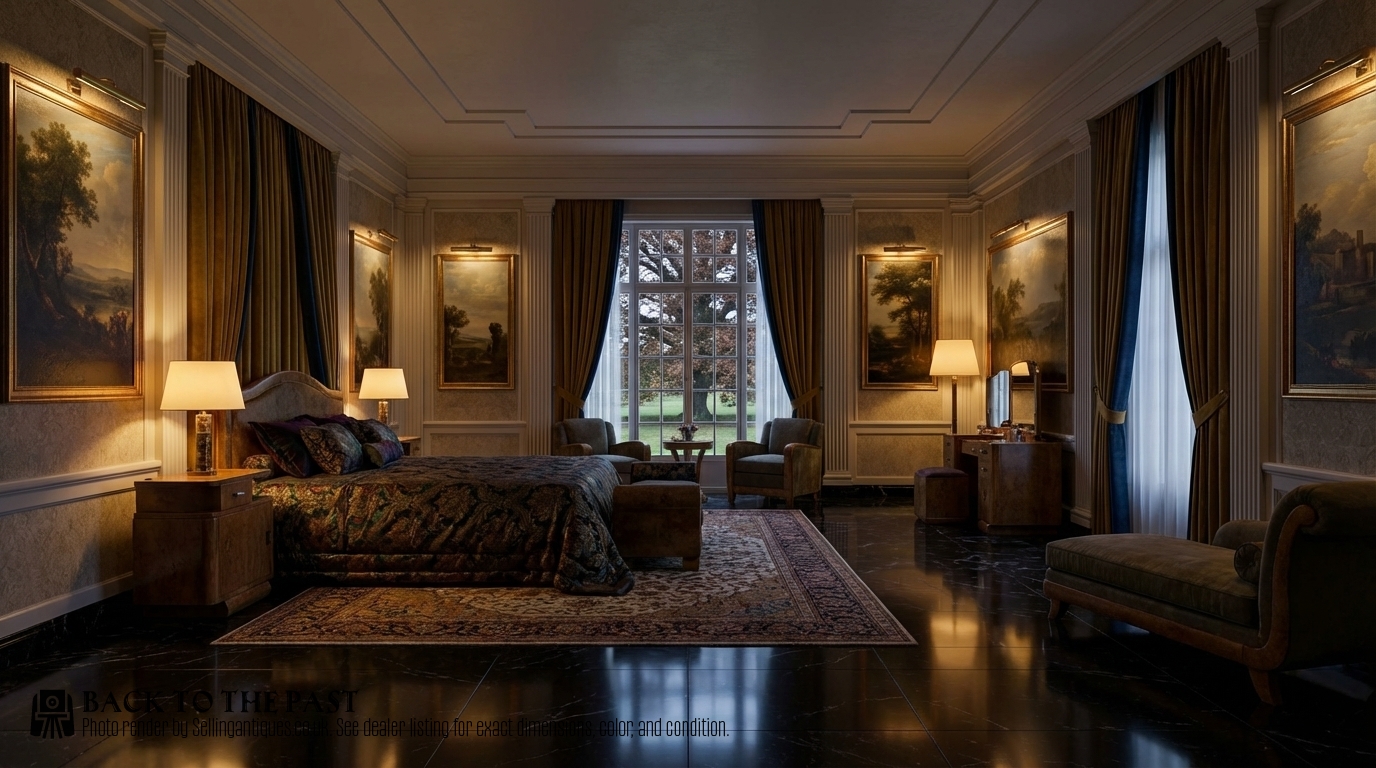
Art Deco Bedside Lockers
Art deco bedside lockers are practical bedside storage units designed during the interwar decades. The selection here spans the 1920s, 1930s, and 1940s, originating from workshops across France, Scandinavia, Italy, and Britain.
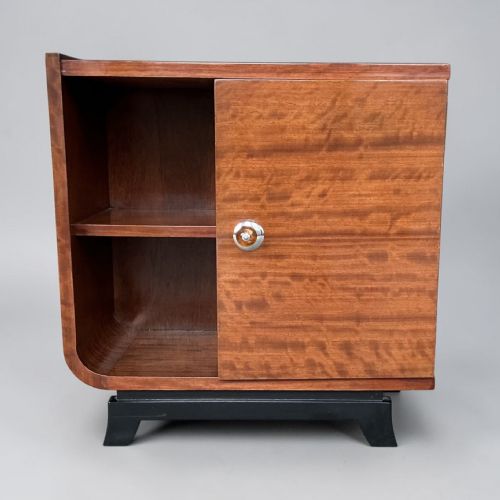
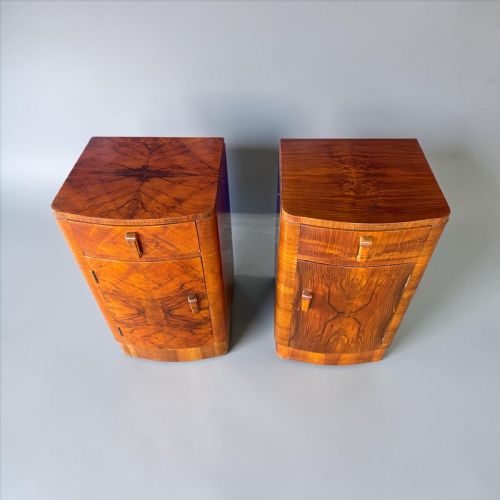
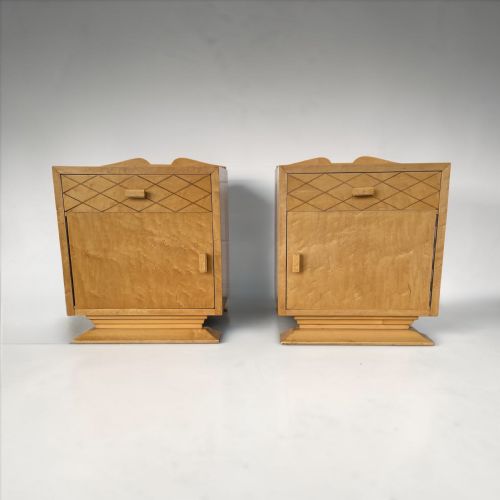
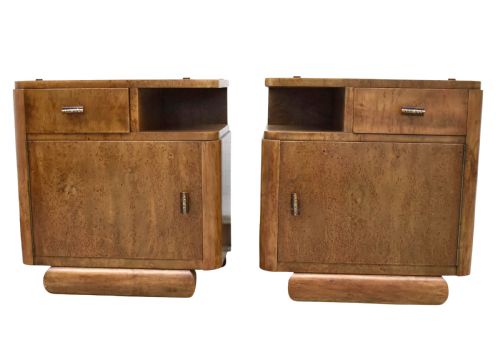
Most examples appear as matched pairs, though single tables also occur. Forms range from drum-shaped cabinets to rectilinear cupboards fitted with doors and interior shelves.
Makers utilised specific regional traits, pairing French marble tops with rich carcases or employing Scandinavian restraint in lighter woods. Buyers encounter bedside tables, bedside cabinets, side cabinets, and side tables serving the same function.
How they were made
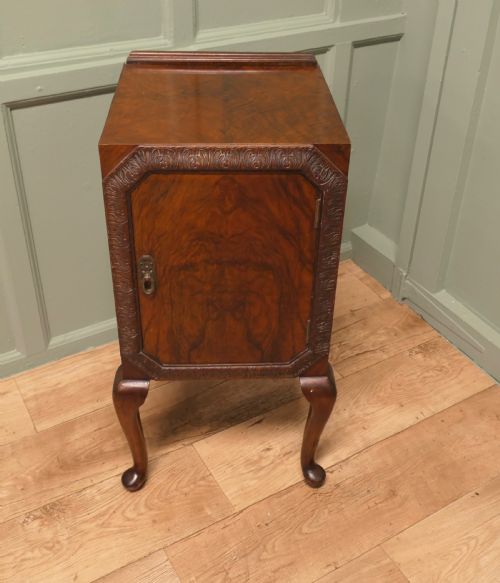
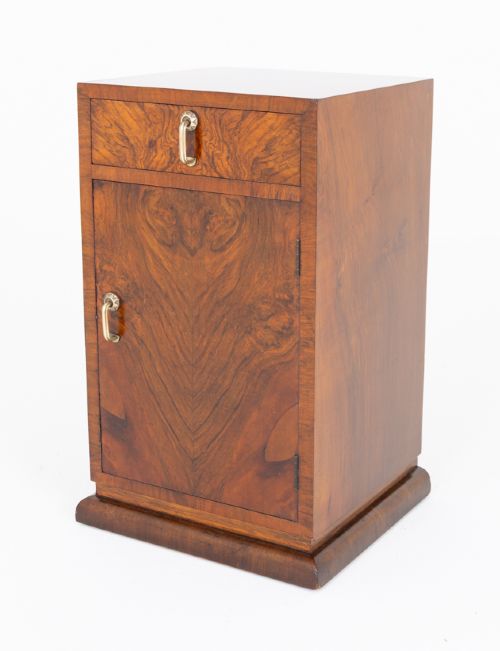
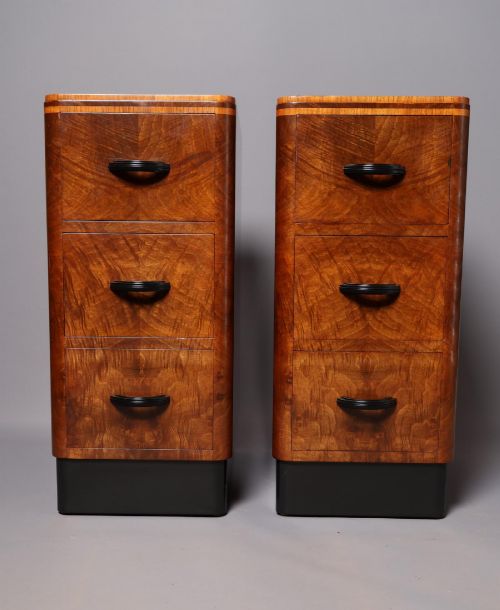
Cabinetmakers built these pieces using solid timbers such as mahogany, oak, and ebonised wood for structural integrity. Over these carcases, they applied decorative veneers, notably walnut and burr walnut veneer, to create striking grain patterns across the exterior surfaces.
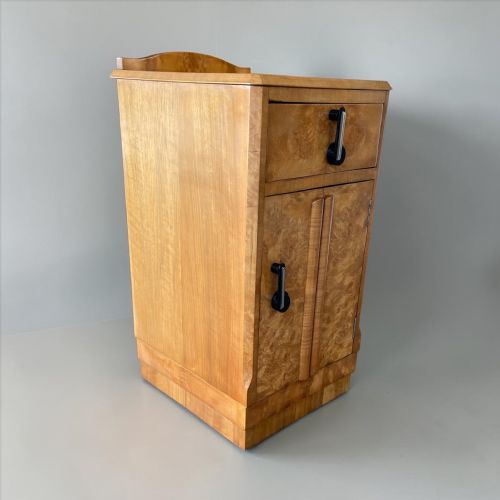
Detailing often incorporates contrasting materials such as brass fittings and moulded bakelite handles. French examples frequently integrate fitted marble tops into the upper surface for durability and visual contrast.
Art Deco Bedside Lockers Retail Price Guide 2026
Typical asking prices for art deco bedside lockers among the pieces listed under this phrase on Sellingantiques today, from the lower quarter to the upper quarter. They describe what is for sale here now, not the wider market.
Listings span three decades from 1920 to 1940, incorporating walnut, mahogany, oak, and burr walnut veneer.
What varies in quality
Quality rests primarily on the selection and matching of veneer figures across the doors and drawers. Finer pieces demonstrate careful book-matching where grain patterns mirror each other symmetrically.
Construction methods also divide the standard range from superior work, seen in the solidity of internal carcases and the integration of original hardware like brass trim and bakelite pulls. Matching pairs naturally hold greater cohesion than assembled groups.
Betty Joel
The Art Deco Bedside Lockers Glossary
- Veneer
- A thin layer of figured wood applied to a stable secondary timber. This technique allows cabinetmakers to display decorative grains without risking the splits common in solid boards.
- Bakelite
- An early synthetic thermosetting plastic utilised for handles and decorative mounts. It provides distinctive tactile and visual accents characteristic of the period.
- Marble top
- A stone slab fitted to the upper surface of a cabinet. It offers a smooth, water-resistant plateau often seen on continental pieces.
- Book-matching
- A method of arranging veneer sheets adjacent to each other so that facing surfaces mirror the grain pattern. This creates symmetrical, decorative designs across cabinet doors.
Art Deco Bedside Lockers: Frequently Asked Questions
What are art deco bedside lockers?
Art deco bedside lockers are compact storage cabinets produced during the 1920s, 1930s, and 1940s. They combine utilitarian storage with the distinctive geometric lines and luxurious materials of the movement.
These pieces typically feature enclosed cupboards or drawers tailored for night-time essentials, functioning as both practical furniture and decorative focal points.
Were these cabinets made in pairs?
Many examples are constructed and sold as matched pairs to flank a double bed symmetrically. Single cabinets also appear frequently depending on original domestic setups.
Pairs often share identical timber selection, hardware, and dimensions, though slight variations can occur in hand-finished items.
How do I identify the period?
Dating relies on stylistic markers such as stepped profiles, curved corners, and the use of specific veneers like walnut and mahogany. Hardware fashioned from brass and bakelite also helps anchor pieces to the interwar decades.
Construction details and regional traits, such as French marble tops or Scandinavian minimalism, further clarify the era and origin.
How do I care for wood veneers?
Protect veneered surfaces by keeping cabinets away from direct sunlight and steady heat sources to prevent fading and veneer lifting. Regular dusting with a soft, dry cloth maintains the finish without moisture damage.
Avoid chemical polishes that can degrade historical lacquers or waxes applied to walnut and mahogany.