








Art Deco Bar Shaker
An art deco bar shaker brings geometric elegance and period cocktail culture directly to a modern drinks trolley.
Art Deco Bar Shaker
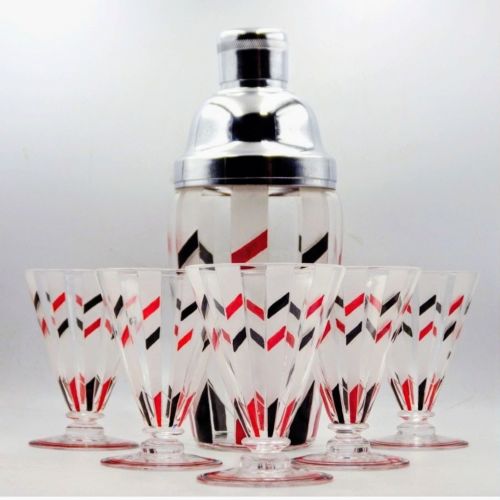
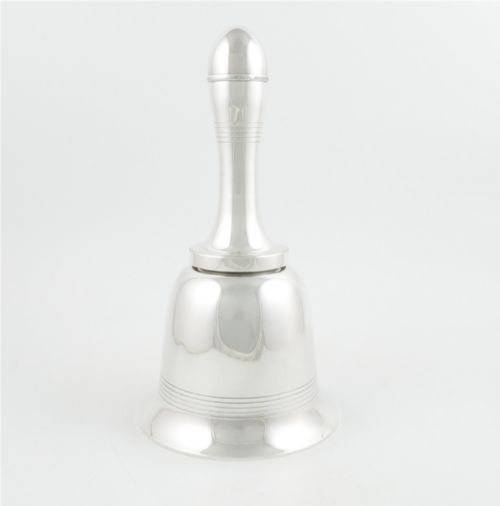
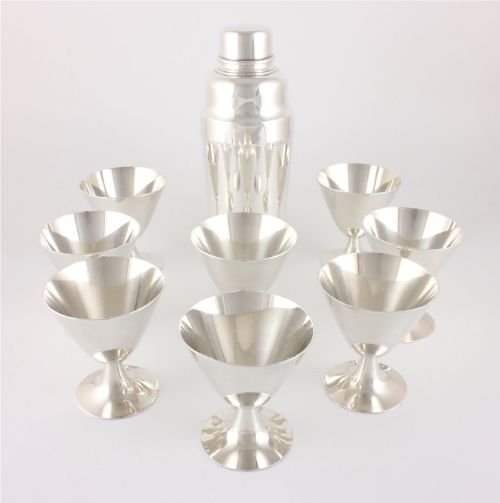
An art deco bar shaker is a sophisticated drinking vessel designed for mixing cocktails during the interwar decades. The pieces gathered here predominantly date from the 1920s, 1930s, and 1940s, originating from workshops across England, Italy, France, Switzerland, Germany, and America.
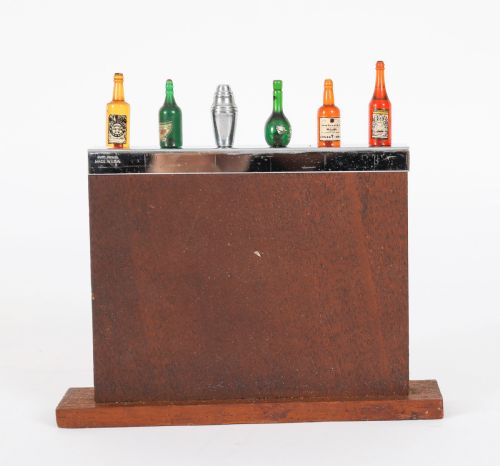
Beyond standard vessels, the category encompasses broader barware accessories and sets shaped by the distinctive geometric vocabulary of the era. These domestic objects reflect the broader international spread of modernist design principles into everyday home entertaining.
Materials and Construction
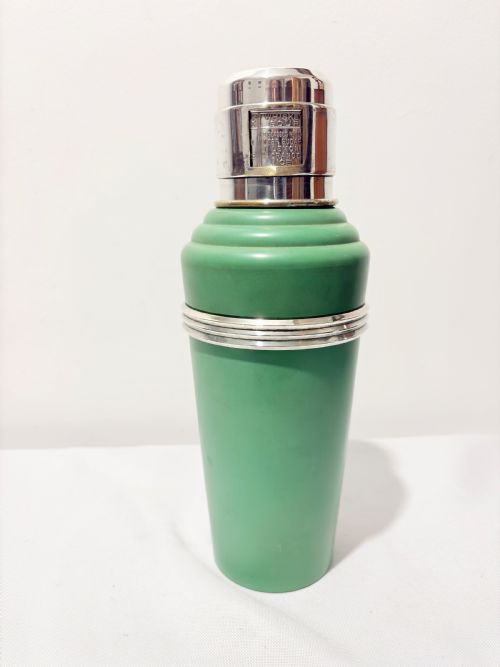
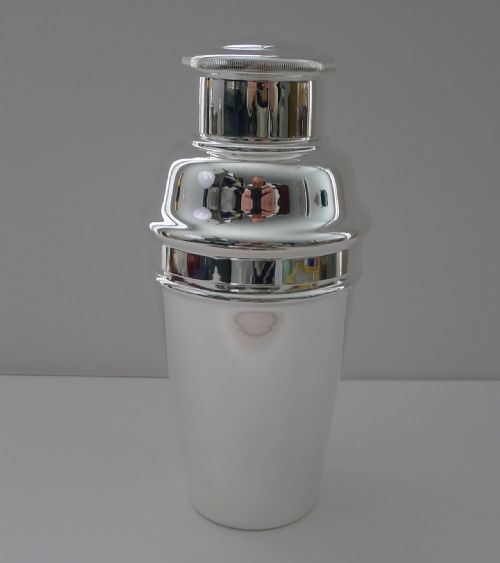
Makers utilised silver plate and electroplated nickel silver as the primary metallic substrates for shaping these vessels. This metallic base was often combined with contrasting elements such as green Bakelite, plastic, cork, wood, and glass to create tactile handles, stoppers, and decorative accents.
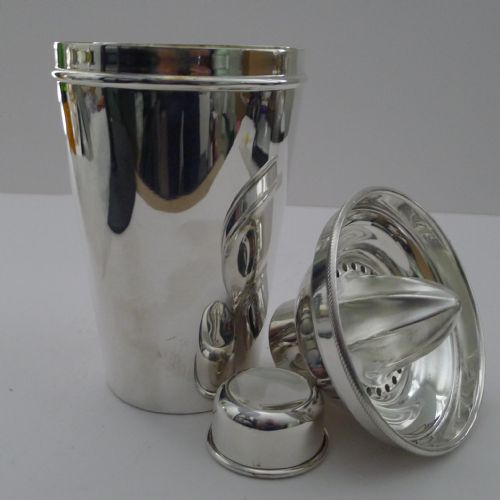
Techniques ranged from smooth polished finishes to hammered silver plate surfaces that catch the ambient light. Functional details like built-in juicers and internal mixers required precise engineering within the metal body to ensure smooth operation.
Art Deco Bar Shaker Retail Price Guide 2026
Typical asking prices for art deco bar shaker among the pieces listed under this phrase on Sellingantiques today, from the lower quarter to the upper quarter. They describe what is for sale here now, not the wider market.
Listings feature pieces spanning the 1920s to the 1940s, utilising silver plate, chrome, Bakelite, and glass across various cocktail shakers and barware accessories.
Distinguishing Quality in Period Barware
Quality rests upon the weight of the metal and the precision of the manufacturing execution. Heavier vessels with well-balanced proportions and secure, tightly fitting lids demonstrate superior construction from established silversmiths.
The integration of secondary materials such as Bakelite or glass elements also marks the distinction between standard commercial output and exceptional design. Pieces bearing specific maker marks or distinct functional innovations display a higher level of craftsmanship.
Keith Murray·J. B. Chatterley & Sons·James Dixon & Sons·Asprey·William Suckling·C S Green & Co·Gaskell & Chambers·Carl Deffner·Tuttle
The Art Deco Bar Shaker Glossary
- Electroplated Nickel Silver
- A base metal alloy of copper, nickel, and zinc coated with a layer of pure silver. This material provided a durable and lustrous surface for interwar barware.
- Bakelite
- An early form of synthetic plastic utilised for decorative handles, knobs, and coloured accents on cocktail equipment. Its heat resistance and rich colour added vibrant contrast to polished metal.
- Barware
- Utilitarian and decorative accessories designed for the preparation and service of alcoholic drinks. This category includes shakers, cocktail sticks, and juicers.
- Integral Lemon Squeezer
- A built-in juicing attachment fitted into the top section of a cocktail shaker. It allowed users to extract citrus juice directly into the mixing chamber.
Art Deco Bar Shaker: Frequently Asked Questions
How do I use a vintage shaker?
These vessels function similarly to modern cocktail shakers, though interior seals rely on period metal-on-metal fits. Ensure the lid is held firmly while mixing to prevent leaks.
Hand washing is essential to preserve the silver plate and any delicate secondary materials like cork or Bakelite. Avoid abrasive scourers that might damage the historic finish.
Are recipe shakers functional?
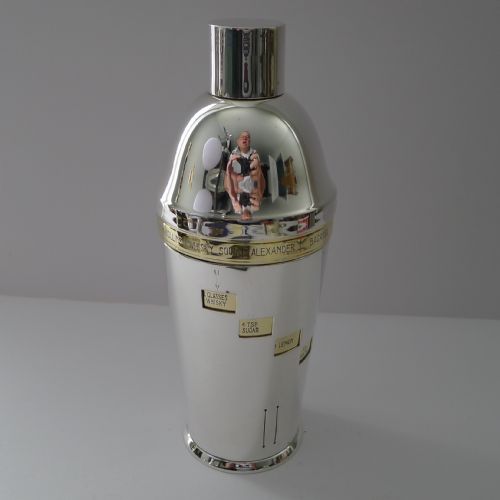
Many examples feature engraved or rolling recipes directly onto the outer metal body. These inscriptions list classic proportions for period mixed drinks.
While fully usable for mixing cocktails today, the primary appeal often lies in the decorative novelty of reading the historic recipes.
What materials were used?
Silver plate and electroplated nickel silver dominate the construction of these drinking vessels. Accents frequently incorporate green Bakelite, standard plastics, wood, cork, and glass.
These mixed media combinations defined the modern industrial aesthetic of the interwar domestic interior.