


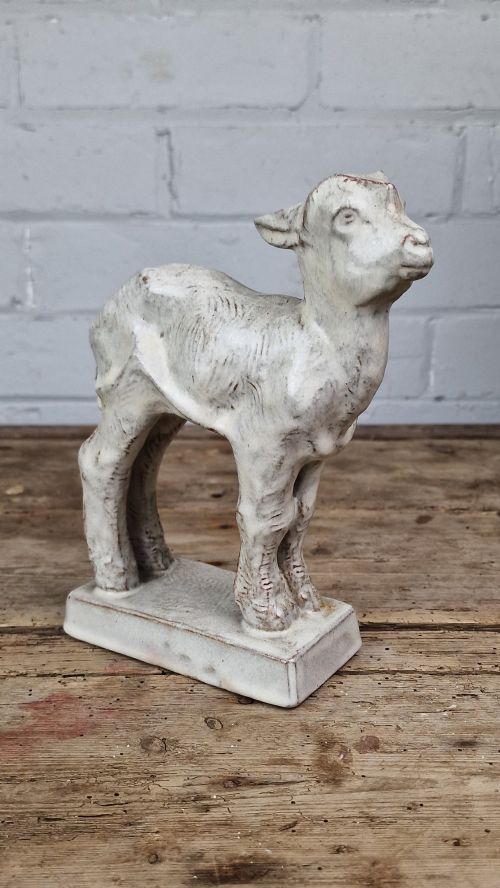
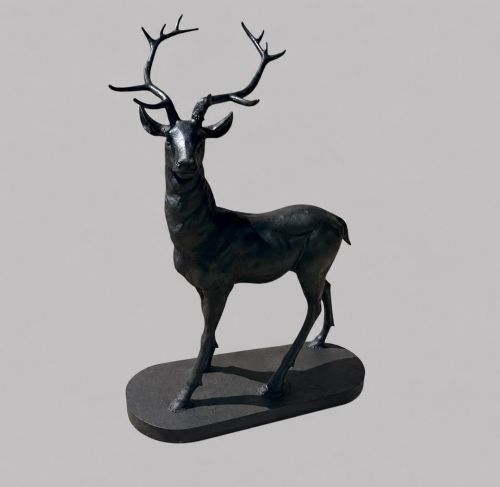


Art Deco Animal Statue
An art deco animal statue brings the kinetic energy and stylised forms of the interwar period straight onto a mantelpiece or desk.
Art Deco Animal Statue
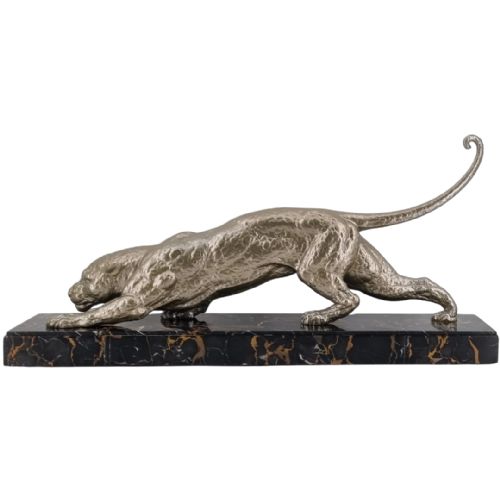
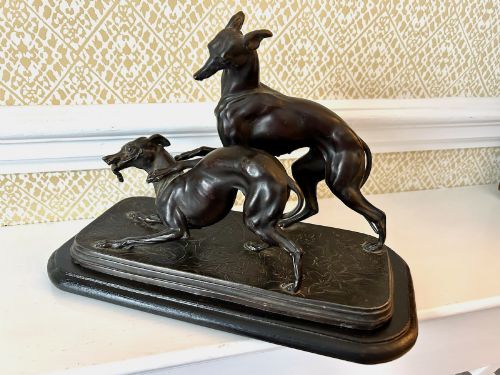
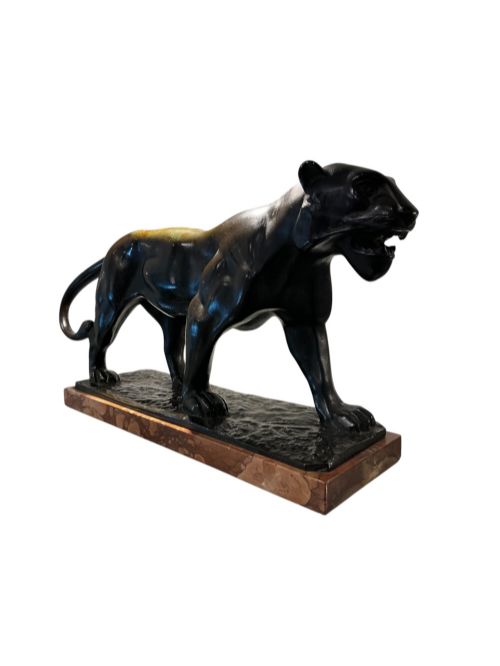
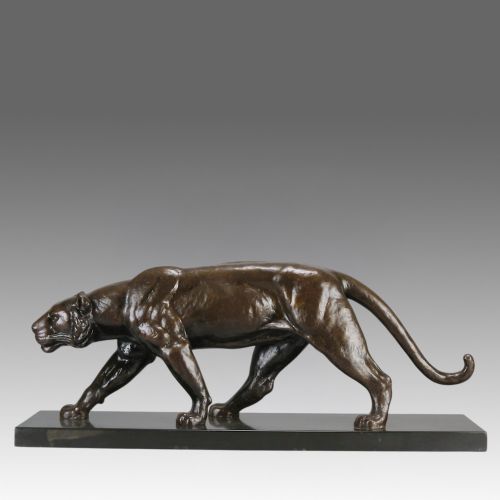
An art deco animal statue captures the sleek lines and dynamic movement favoured by sculptors during the 1920s, 1930s, and 1940s. These pieces take the form of big cats, hounds, stags, and birds, often posed in mid-stride or rest.
You will most frequently encounter depictions of panthers, dogs, and deer executed in bronze, spelter, or ceramic. Many of these sculptures combine metal figures with heavy stone bases made of marble or onyx.
The objects serve various domestic functions beyond pure display, appearing as bookends, table lamps, and decorative mantel ornaments. Their origins trace largely to French and European workshops operating during the height of the modernist design movement.
Materials and construction methods
Foundry work relied on casting hot bronze or spelter to shape metallic panthers, stags, and hounds with sharp anatomical precision. Artisans applied patinas, silvering, or nickel finishes to the metal surfaces to alter their tone and texture.
Potters and ceramicists utilised terracotta, porcelain, and glazed earthenware to model birds and domestic animals, often highlighting details with gilding or vibrant colour. Carvers shaped solid blocks of wood and alabaster into stylised wildlife.
Heavy bases of black marble or onyx provided structural stability for cantilevered metal figures like leaping dogs and prowling cats. Other examples integrated glass eyes or mounted wooden elements with brass fittings.
Art Deco Animal Statue Retail Price Guide 2026
Typical asking prices for art deco animal statue among the pieces listed under this phrase on Sellingantiques today, from the lower quarter to the upper quarter. They describe what is for sale here now, not the wider market.
Materials span cast metals like bronze and spelter alongside ceramics, carved wood, alabaster, marble, and onyx.
Distinctions in execution and finish
Material pairing influences the overall harmony of a piece, particularly in how well a metal animal integrates with its marble or onyx base. Finishes such as hand-applied patinas and original silvering show greater artistic investment than plain painted surfaces.
Signed examples bearing the marks of recognised sculptors or specialised ceramic houses demonstrate an adherence to higher atelier standards. The weight and density of the chosen base stone also reflect the original manufacturing ambition.
Alexandre Ouline·Eugene Emile Borga·Laszlo Hoenig·Karl Hagenaur·Guido Cacciapuoti·Albert Hussmann·Michel Decoux·I. Rochard
The Art Deco Animal Statue Glossary
- Spelter
- A zinc alloy commonly utilised as a less expensive alternative to bronze during the interwar period. It accepts patination well to simulate heavier metals.
- Patina
- The surface sheen or chemical coloration applied to bronze and metal sculptures over time. It defines contours and protects the underlying material.
- Animalier
- A nineteenth and twentieth century artistic tradition focused on the realistic or stylised representation of animals. Practitioners specialised almost exclusively in wildlife subjects.
- Onyx
- A banded variety of chalcedony frequently paired with marble as a contrasting plinth for decorative figures. It adds a translucent, layered quality to the base.
- Alabaster
- A fine-grained, soft stone used for carving statues and architectural ornaments. Its pale translucence allows light to pass slightly beneath the surface.
Art Deco Animal Statue: Frequently Asked Questions
How do I clean bronze and marble statues?
Dust the metal surface gently with a dry, soft cloth to remove everyday particles. Avoid using abrasive cleaning agents or harsh chemical polishes that might strip the original patina.
For the marble base, wipe with a damp cloth and dry immediately. Keep moisture away from any exposed joins between the stone and the metal figure.
Were these animals meant to be bookends?
Many sculptures were manufactured specifically in matched pairs to function as sturdy bookends on a shelf or desk. Heavy stone bases provided the necessary weight to hold volumes upright.
Single figures were typically designed as standalone mantel ornaments or paired with clocks and garniture sets.
How can I tell spelter from bronze?
Spelter is significantly lighter than bronze and tends to feel softer to the touch. If an older surface chip reveals a silvery-grey metal underneath rather than a warm golden-brown, the material is spelter.
Bronze also rings with a clearer tone when lightly tapped, whereas spelter produces a duller sound.
Where were these ceramic animals made?
European ceramic factories and individual studios across France, Italy, and Germany produced glazed earthenware figures. Regional potteries stamped their marks directly onto the unglazed undersides before firing.
Some models feature painted signatures or impressed numbers indicating the specific batch and designer.