




Architectural Watercolour Illustration
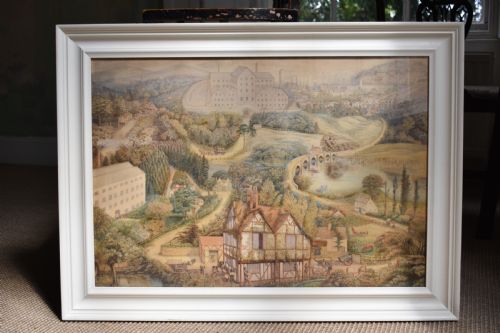
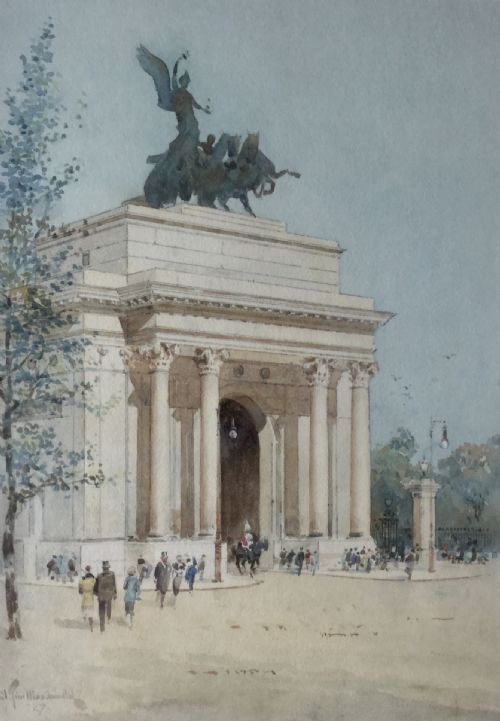
These architectural watercolour illustration works capture built structures and grand spaces through delicate washes and precise ink lines, offering a glimpse into past design.
Architectural Watercolour Illustration
An architectural watercolour illustration brings buildings, monuments and interiors to life on paper, ranging from detailed studies of specific structures to imaginative design concepts. Buyers seek these pieces to add historic depth and graphic elegance to an interior space.
The selections available span from the nineteenth century through to the mid-twentieth century, capturing diverse subjects such as English country houses, continental streetscapes and classical monuments. Works appear in various formats including standalone paintings, framed drawings and detailed ink studies.
Many examples originate from British hands, though continental subjects and Indian temples also feature within the selection. These pieces serve as both historical records of architecture and accomplished works of fine art.
Materials and technique
Artists typically laid down fine pencil lines to establish perspective before applying watercolour pigment over paper. Ink was frequently utilised alongside watercolour to sharpen outlines and define masonry or decorative details.
Finished works are commonly housed behind glass within wooden frames, occasionally accented with gilt wood. The interplay of ink and transparent washes allowed creators to render stone, foliage and ornamentation with remarkable precision.
Judging quality in illustration
Quality rests upon the sureness of the draftsmanship and the control of the pigment wash. Masterful works demonstrate precise architectural perspective combined with a sensitive handling of light and shadow.
The distinction between a standard topographical record and a superior piece lies in the atmosphere created on the paper. Stronger examples command attention through confident ink lines and a harmonious balance of colour.
J W Hogley·Fred Lawson·J.TIM MACDONALD·George De Paris
The Architectural Watercolour Illustration Glossary
- Wash
- A technique where diluted watercolour pigment is swept across paper to create smooth areas of colour or tone. This method forms the atmospheric background and soft shading in many architectural views.
- Perspective
- The representation of three-dimensional objects on a two-dimensional surface to give a realistic impression of depth and height. Correct perspective is essential for convincing architectural draftsmanship.
- Monochrome
- A work executed in a single colour or shades of a single tone, such as black ink or sepia washes. Early nineteenth-century examples often rely on this restrained palette.
- Gilt wood
- Wood that has been thinly coated with gold leaf or gold paint, frequently used for traditional picture framing. It adds a warm metallic border to the artwork.
Architectural Watercolour Illustration: Frequently Asked Questions
What is an architectural watercolour?
An architectural watercolour is a hand-painted artwork on paper that depicts buildings, interiors, or monuments using pigment and often ink.
These works range from precise technical designs for cabinets or buildings to artistic impressions of famous landmarks and country houses.
How old are these watercolours?
The pieces available span from the early nineteenth century through to the mid-twentieth century.
Victorian and late nineteenth-century examples appear frequently alongside works from the 1920s, 1930s and 1940s.
How should I frame these drawings?
These works on paper require protection behind glass to prevent moisture and light damage from degrading the delicate pigments and paper.
Traditional wood or gilt wood frames complement the historic nature of nineteenth and early twentieth-century illustrations.