



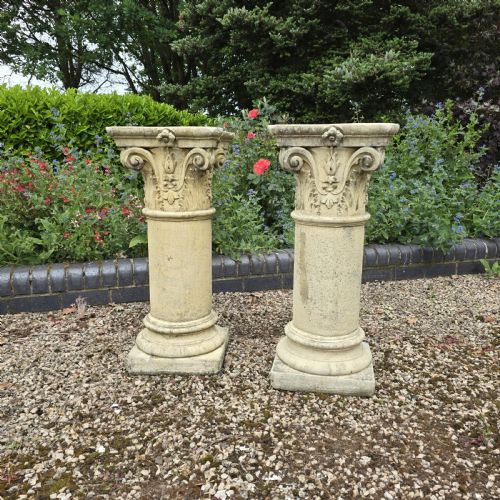


Architectural Stone Plinths
Architectural stone plinths raise sculpture and garden urns above the ground, bringing classical order to lawns and interiors.
Architectural Stone Plinths
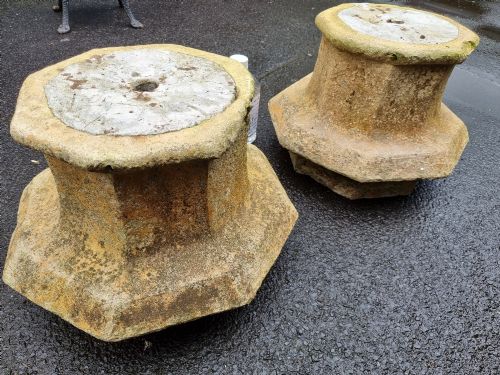
Architectural stone plinths serve as sturdy pedestals and columns for statuary, urns, and architectural fragments. Buyers searching for architectural stone plinths encounter items ranging from garden pedestals to interior display columns.
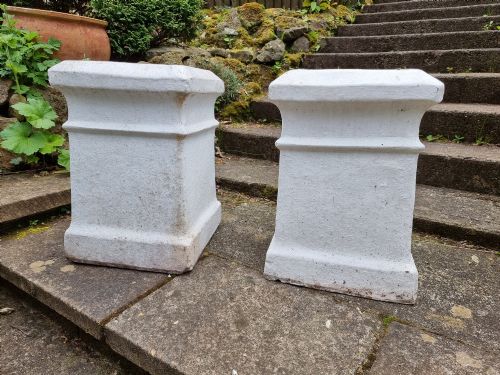
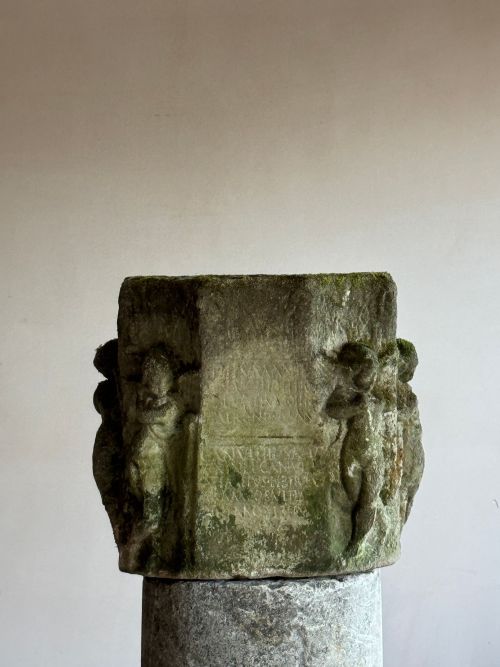
The pieces on this page span the nineteenth century, Edwardian era, and mid-twentieth century. Forms include chimney pot pedestals, Gothic style garden plinths, Roman funerary altars, and neoclassical statuary pedestals.
Origins and styles draw heavily on classical and Gothic traditions, featuring items such as Corinthian capitals, lions paw mounts, and carved red stone columns. Materials vary from durable outdoor cast stone to refined interior marble and alabaster.
How they were made
Masons and artisans carved structural supports from natural materials including limestone, marble, alabaster, and solid red stone. These carved pieces display hand-chiselled details like Corinthian foliage and architectural capitals.
Moulded alternatives utilised composite stone, cast stone, and reconstituted stone poured into forms to replicate carved masonry for garden settings. Terracotta and stoneware provided durable fired alternatives suited to external display.
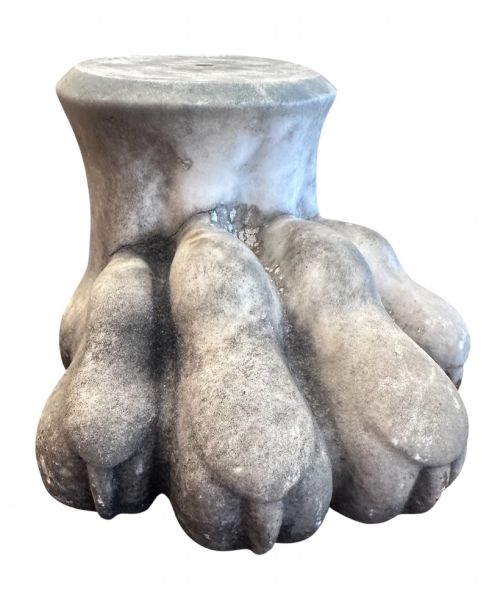
Surface treatments range from natural unsealed stone to historical paint applications. Some elements incorporate specialised components like marble lions paw feet joined to structural columns.
Architectural Stone Plinths Retail Price Guide 2026
Typical asking prices for architectural stone plinths among the pieces listed under this phrase on Sellingantiques today, from the lower quarter to the upper quarter. They describe what is for sale here now, not the wider market.
Carved stone lions paws give heavy architectural columns the amusing appearance of standing on tiptoe.
What varies in quality
The definition and depth of hand carving separate utilitarian masonry from sculptural works of art. Crisp acanthus leaves on Corinthian capitals and sharply rendered classical reliefs indicate superior stonemasonry.
Material selection dictates both resilience and appearance, with high-grade Carrara marble and dense limestones offering longevity and refined grain. Reconstituted and cast stone quality depends on the aggregate mix and the precision of the original mould.
Proportion and architectural integrity govern the visual balance of columns and plinths. Pieces that maintain correct classical ratios command stronger presence in a garden or room.
The Architectural Stone Plinths Glossary
- Capital
- The uppermost member of a column, typically decorated with carved foliage such as acanthus leaves in the Corinthian order. It supports the weight of the entablature above.
- Reconstituted Stone
- A composite material made from crushed natural stone and cement binder, moulded to resemble quarried block. It offers weather resistance for outdoor garden architecture.
- Neoclassical
- A style drawing inspiration from the classical art and architecture of ancient Greece and Rome. It emphasises symmetry, proportion, and restrained architectural ornament.
- Alabaster
- A fine-grained, translucent mineral often carved into decorative interior columns and vases. Its softness allows for delicate internal illumination when polished thin.
- Funerary Altar
- A stone block or monument originally placed in a tomb setting to receive offerings. In later periods, these forms were adapted as decorative garden pedestals.
Architectural Stone Plinths: Frequently Asked Questions
Where should I place a stone plinth?
Heavy garden pedestals and cast stone plinths suit outdoor lawns, patios, and formal garden vistas beneath statuary or urns.
Interior spaces accommodate refined marble and alabaster columns used to elevate busts and small decorative sculptures.
How do I clean stone pedestals?
Natural stone surfaces tolerate gentle washing with water and soft brushes to remove biological growth without damaging the patina.
Harsh chemical cleaners and pressure washers should be avoided on porous limestone, alabaster, and terracotta.
Are these pieces suitable for outdoor use?
Materials like reconstituted stone, cast stone, terracotta, and hard limestone withstand external weathering across decades.
Softer interior materials such as alabaster and certain marbles remain vulnerable to frost and moisture damage if left outside.
How do I date a stone plinth?
Stylistic indicators such as Neoclassical revival motifs or Gothic Revival pointed arches provide initial chronological markers.
Tool marks, weathering patterns, and material composition further help distinguish nineteenth-century examples from later twentieth-century reproductions.