





Architectural Revival Table
These architectural revival table forms and mantel clocks channel classical and gothic masonry into domestic settings for the discerning collector.
Architectural Revival Table
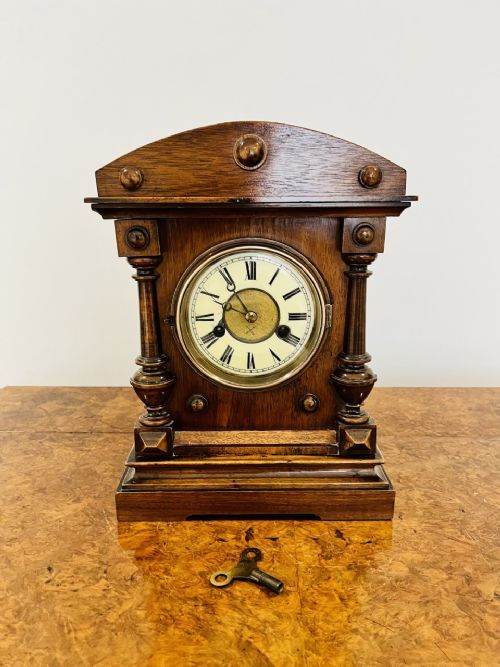
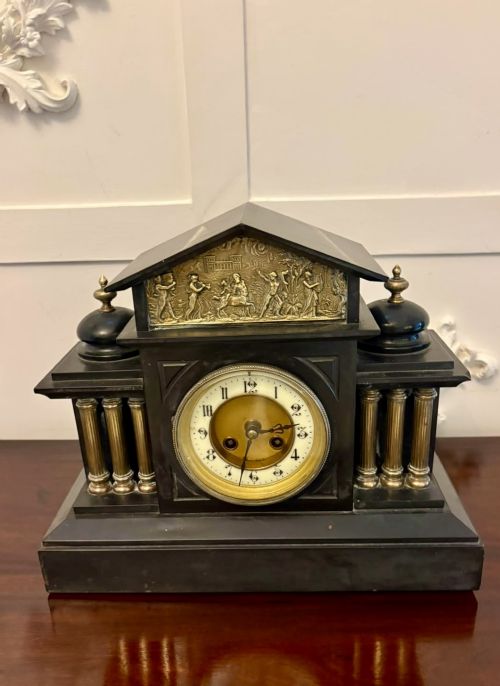
An architectural revival table or mantel clock brings monumental design principles into rooms through miniature temples, columns, and gables.
The versions most commonly met here span Victorian console and serving tables alongside slate and marble mantel clocks from the nineteenth century.
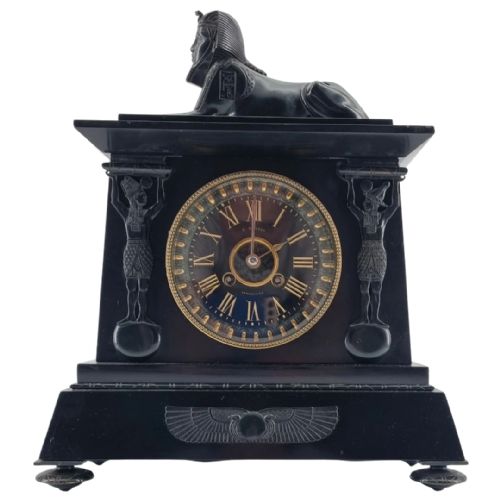
Makers drew directly on ancient Egyptian, Gothic, and neoclassical building traditions to construct these functional household objects.
How they were made
Heavy stone bodies utilise black marble, slate, and glass, often combined with gilt brass mounts and bronze details.
Carpenters constructed tables from English pine and pitch pine, frequently finishing the wood with ebonisation.
Clockmakers housed complex eight-day movements within these structural stone and metal housings.
Architectural Revival Table Retail Price Guide 2026
Typical asking prices for architectural revival table among the pieces listed under this phrase on Sellingantiques today, from the lower quarter to the upper quarter. They describe what is for sale here now, not the wider market.
A memorial skeleton clock lets you watch every tiny gear turn behind its glass dome like a tiny Victorian city.
What varies in quality
The refinement of the stonework and the crispness of cast bronze or brass elements define the superior examples.
Proportion and architectural accuracy separate ambitious works from simpler domestic pieces.
Signed movements by known makers elevate the standing of a clock within this field.
Philippes Paris·D. Munsey of Cambridge
The Architectural Revival Table Glossary
- Console table
- A table fixed to a wall with legs at the front, often supporting a heavy marble top.
- Gothic Revival
- A nineteenth-century style drawing on medieval ecclesiastical architecture, featuring pointed arches and heavy masonry forms.
- Egyptian Revival
- A design movement incorporating motifs from ancient Egyptian temples, such as obelisks and sphinxes.
- Fusee
- A conical pulley used in clock movements to maintain equal tension as the mainspring unwinds.
Architectural Revival Table: Frequently Asked Questions
What is an architectural revival table?
An architectural revival table is a piece of nineteenth-century furniture that adopts classical building forms, such as columns and cornices, into domestic console and serving tables.
These tables frequently incorporate heavy stone tops paired with pine or ebonised woodwork.
How do I identify a Victorian mantel clock?
Victorian mantel clocks often employ heavy materials like black marble, slate, and bronze, styled after neoclassical or Gothic architecture.
Many house eight-day movements and feature detailed metal mounts reflecting historical revival periods.
Where were these clocks placed?
These clocks sat on mantelpieces in nineteenth-century reception rooms and parlours, serving as both timekeepers and miniature architectural statements.
Their substantial stone housings provided a stable base for complex mechanical movements.
What materials are typical?
Typical materials include black marble, slate, glass, and pitch pine, enhanced by gilt brass and bronze decoration.
These durable substances allowed makers to replicate the permanence of ancient stone structures on a domestic scale.