






Arched Cheval Mirror
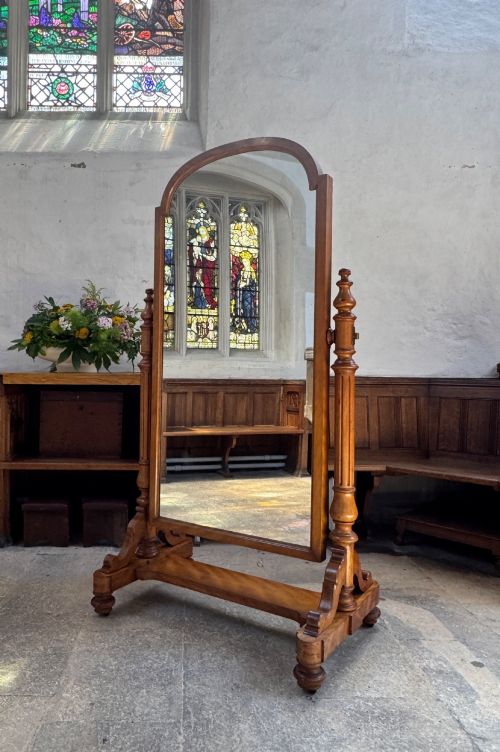
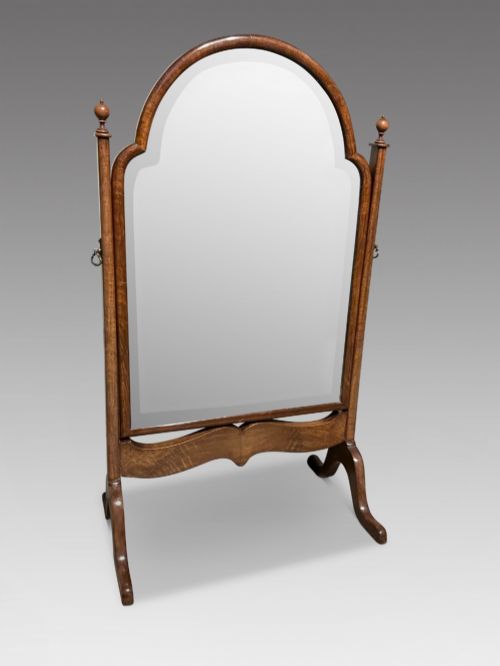
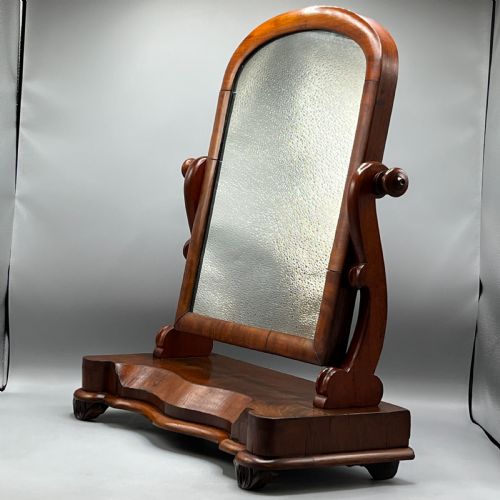
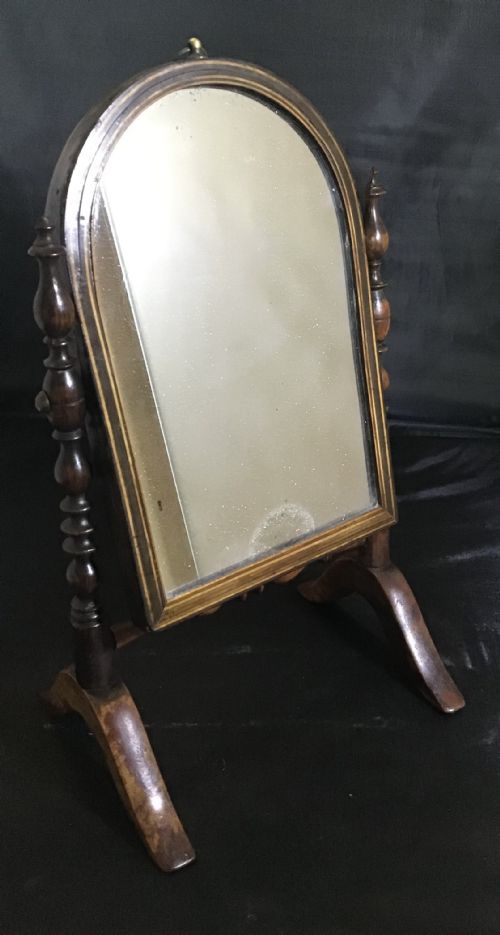
An arched cheval mirror brings full-length reflection and fluid pivot movement to a room, captured here across Victorian, Regency, and 1920 examples.
Arched Cheval Mirror
An arched cheval mirror stands on its own frame, designed to pivot so the glass angle shifts as needed. When you search for an arched cheval mirror, you encounter floor-standing cheval mirrors alongside dressing table versions, wall mirrors, and table mirrors.
The pieces listed here span the 19th Century, Regency, Victorian era, and 1920, with forms ranging from grand mahogany floor frames to compact satin birch or walnut dressing mirrors.
Makers and makers of the past produced these with curved tops, combining utility with decorative presence in mahogany, walnut, satin birch, and giltwood.
How they were made
Cabinet makers constructed these frames using solid timbers and veneers such as mahogany, walnut, and satin birch, often incorporating brass for pivots, mounts, and articulated candle holders.
Surfaces received carved details, gesso, and giltwood finishes, supporting heavy mirror glass and glass plates that pivot within sturdy upright supports and feet.
Arched Cheval Mirror Retail Price Guide 2026
Typical asking prices for arched cheval mirror among the pieces listed under this phrase on Sellingantiques today, from the lower quarter to the upper quarter. They describe what is for sale here now, not the wider market.
The site listings feature wood varieties including mahogany, walnut, satin birch, and giltwood, paired with brass fittings and mirror glass across multiple 19th Century and 1920 styles.
What varies in quality
The depth of figure in the mahogany or walnut veneer dictates the visual weight of the frame, alongside the crispness of carved mouldings and gesso work.
Hardware execution marks finer examples, particularly where brass candle holders, hinges, and pivot mechanisms remain original and robust.
The Arched Cheval Mirror Glossary
- Cheval mirror
- A freestanding full-length mirror mounted on a frame that allows it to swing or tilt. The word derives from the French for horse, referring to the four-legged frame.
- Swing mirror
- A smaller glass plate hung on pivots between upright supports, commonly placed on a dressing table or chest.
- Gesso
- A plaster-like mixture applied to wood surfaces as a base for gilding or painting, often moulded into decorative relief patterns.
- Satin birch
- A pale, highly figured timber with a lustrous sheen, utilised for fine 19th Century dressing furniture.
- Pier glass
- A tall mirror designed to hang on the wall between windows, frequently placed above a console or pier table.
Arched Cheval Mirror: Frequently Asked Questions
Where should a cheval mirror go?
A floor-standing cheval mirror requires adequate clearance to pivot fully without striking surrounding furniture or walls. Placing it near a natural light source maximises its ability to brighten a room.
Smaller dressing table versions sit comfortably on chests of drawers or vanity tables, offering a functional surface reflection.
How do pivots work on these mirrors?
Metal pins or screw-adjusters set into the side uprights allow the frame to tilt forward and back. Tightening the hardware holds the glass firmly at the chosen angle.
Original brass fittings move smoothly when lubricated with care, while retaining their historic patina.
What is the difference between a cheval and dressing mirror?
A cheval mirror stands independently on the floor, providing a full-length view from head to toe. Its height necessitates a sturdy four-legged or trestle-style base.
A dressing mirror sits on a tabletop, bureau, or dressing chest, focusing on upper-body reflection for grooming.
How do I identify a Victorian piece?
Victorian examples frequently employ dense mahogany or figured walnut, often featuring rich dark tones and substantial proportions. Stylistic cues include Gothic Revival arches or heavy serpentine drawer bases.
Construction methods inside the frame, such as hand-cut joinery and older mirror glass backing, support the period attribution.
Can these mirrors be dismantled?
Many floor-standing examples separate into the outer frame, side uprights, and base stretcher for transport. Disassembly requires careful handling of the heavy glass and delicate wood tenons.
Keeping original screws and wooden pegs safe during any move preserves the structural integrity of the frame.