

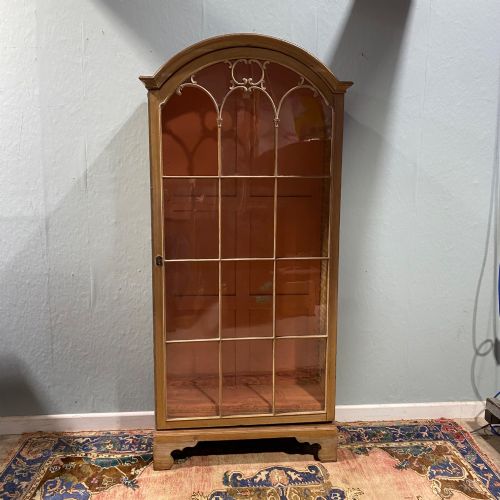
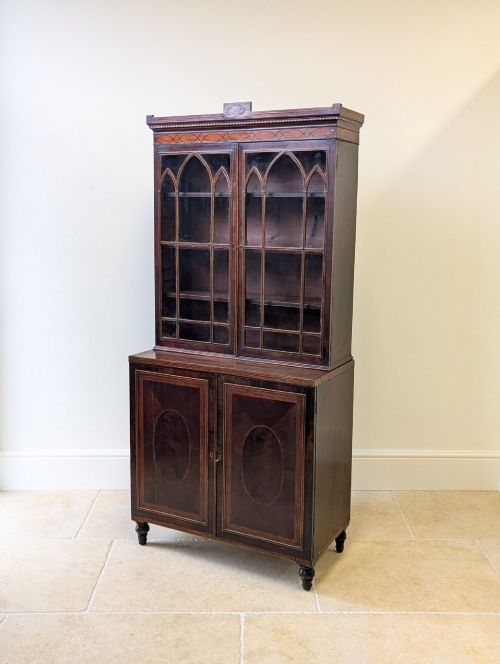


Arched Astragal Glazed Cabinet
These arched astragal glazed cabinet examples bring refined timber framing and clear glass display to any room.
Arched Astragal Glazed Cabinet
An arched astragal glazed cabinet unites architectural glazing bars with enclosed timber storage, forming a distinct piece of historic furniture. When you search for an arched astragal glazed cabinet, you encounter formats ranging from tall breakfront libraries to corner cupboards and bookcases. Most examples on this page date from the Georgian, Regency, and Victorian periods, constructed primarily in mahogany or walnut.
The defining characteristic of an arched astragal glazed cabinet is the curved framework holding the glass panes in the upper doors. These pieces often combine open display shelving above with solid cupboards or secretaire drawers below. Buyers find them utilised for books, china, and curated collections within domestic interiors.
How they were made
Makers of an arched astragal glazed cabinet relied on dense hardwoods like mahogany and walnut, frequently enhanced with satinwood inlay or burr walnut veneers. Timber sections were joined using traditional cabinet-making methods to support heavy glazed doors and book collections.
The characteristic arched glazing bars, or astragals, required precise carpentry to divide the glass panes securely within the door frames. Brass hardware and leather details appear on specific secretaire variants, while secondary woods line the interior compartments.
Arched Astragal Glazed Cabinet Retail Price Guide 2026
Typical asking prices for arched astragal glazed cabinet among the pieces listed under this phrase on Sellingantiques today, from the lower quarter to the upper quarter. They describe what is for sale here now, not the wider market.
The listings span from Georgian and Regency eras through to the Edwardian period, predominantly rendered in mahogany and walnut with glass elements.
What varies in quality
The quality of an arched astragal glazed cabinet depends on the selection of timber figures, such as figured mahogany or burr walnut, and the finesse of the inlay work. Finer examples display meticulous joinery in the arched glazing bars and well-proportioned breakfront or corner forms.
Internal fittings, original brass hardware, and the condition of the glass panes further distinguish exceptional pieces from standard production. The integration of functional secretaire drawers or specialised library compartments marks a higher grade of design and execution.
The Arched Astragal Glazed Cabinet Glossary
- Astragal
- The moulding profile used to divide glass panes within a door frame. In these cabinets, they form the distinctive curved arches.
- Breakfront
- A piece of furniture where the central section projects forward from the flanking wings. This format provides architectural depth.
- Secretaire
- A cabinet or bookcase incorporating a pull-down writing drawer fitted with small pigeonholes and drawers. It combines a desk with storage.
- Burr walnut
- Timber taken from walnut tree growths, producing highly figured, swirling grain patterns. It is typically applied as a veneer on high-status furniture.
- Marquetry
- Decorative veneer work arranged in pictorial or geometric patterns using various woods. It appears on select Edwardian and Georgian examples.
Arched Astragal Glazed Cabinet: Frequently Asked Questions
How do I date an arched astragal glazed cabinet?
Dating relies on timber choices, construction methods, and stylistic cues present in the cornices and base cupboards. Georgian and Regency pieces show different proportioning and handle styles compared to later Victorian or Edwardian interpretations.
Examining secondary timbers inside the drawers and the style of the glazing bar joints helps confirm the period of manufacture.
Were these cabinets meant for books or display?
Many examples served as library bookcases to protect valuable volumes behind locked glass doors. Others were built specifically as display cabinets for ceramics and curiosities.
The inclusion of adjustable shelving and lower cupboard storage determined whether the piece functioned primarily for reading material or decorative presentation.
How do I care for the mahogany and walnut surfaces?
Maintenance involves keeping the timber away from direct heat sources and sudden humidity changes to prevent veneer cracking. Regular dusting with a soft, dry cloth preserves the polished finish.
Applying appropriate wax sparingly helps nourish the historic wood without building up heavy residues on the grain.