

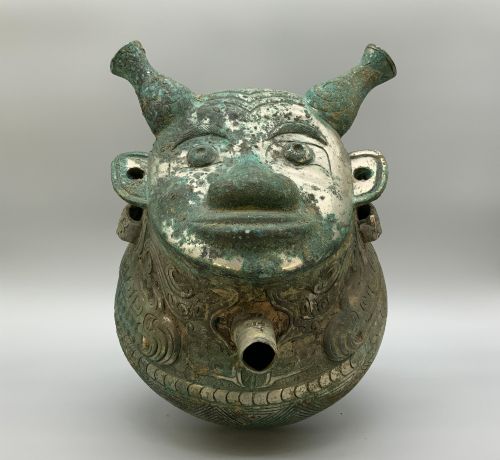


Archaic Bronze Vessel
These archaic bronze vessel examples bring ritual forms and patinas into rooms, offering heavy bronze and copper alloy pieces from centuries past.
Archaic Bronze Vessel
When buyers search for an archaic bronze vessel, they look at ritual forms originating from ancient traditions, brought down through later interpretations including Shang dynasty style, Qing dynasty archaistic pieces, and Edo period Japanese works. The most common versions met on this page are later adaptations and revivals dating from the eighteenth century, the nineteenth century, and early twentieth century periods up to 1930.
The assortment includes ritual vessels, vases and urns, table lamps, decorative objects, and food bowls. Forms such as the he wine vessel, hu vase, gu ritual vessel, jue tripod wine vessel, and fangding sacrificial vessel appear alongside converted lamps and cloisonne decorated vases.
Materials and construction
These items are constructed from bronze and copper alloy, often finished with a verdigris patina that mimics ancient burial effects. Selected pieces incorporate additional elements like enamel work, mounted fabric, and hardwood bases.
Manufacturing methods rely on traditional metal casting techniques designed to replicate ancient ritual bronzes. Later makers also adapted these heavy metal forms for domestic illumination by converting vessels into table lamps.
Archaic Bronze Vessel Retail Price Guide 2026
Typical asking prices for archaic bronze vessel among the pieces listed under this phrase on Sellingantiques today, from the lower quarter to the upper quarter. They describe what is for sale here now, not the wider market.
Listings feature items spanning the eighteenth century, nineteenth century, Victorian era, and the 1920 to 1930 period.
Judging quality in metalwork
Quality rests upon the crispness of the cast decoration and the stability of the form. Pieces with well-defined ritual motifs and intentional patination sit above simpler utilitarian adaptations.
The integrity of the material and the execution of surface details dictate the overall standard. Original ritual forms carry more weight in design than later domestic conversions.
The Archaic Bronze Vessel Glossary
- Gu
- A tall, slender ritual beaker form with a flared mouth and central knop. This shape derives from ancient Chinese ritual bronzes used in wine ceremonies.
- Jue
- A tripod ritual wine vessel featuring an asymmetrical spout and two small upright posts. It represents one of the earliest bronze shapes produced in China.
- Fangding
- A four-legged rectangular ritual food vessel. These pieces are characterised by sturdy corner posts and cast decorative panels.
- Verdigris patina
- A green crust or coating formed naturally on copper and bronze through age or chemical treatment. Makers often replicate this finish to emulate antiquity.
- Cloisonne
- An enamelling technique where decorative compartments are created by soldering metal wires to the metal body before filling them with paste.
Archaic Bronze Vessel: Frequently Asked Questions
What is an archaic bronze vessel?
These are metal objects cast in the styles of ancient ritual bronzes from early dynasties. They replicate shapes originally used for ceremonial food, wine, and offerings.
Most examples available are later revivals and interpretations produced in the eighteenth, nineteenth, and early twentieth centuries rather than ancient antiquities.
How were ritual vessels used?
Ancient versions held wine, grain, and meat offerings during ancestral ceremonies and court rituals in early societies. Their designs held symbolic meaning for the participants.
Later Victorian and early twentieth-century examples served decorative display purposes, or were adapted into table lamps and flower holders for domestic interiors.
How do I identify different vessel shapes?
Shape names follow traditional Chinese classifications based on their original ceremonial functions. A gu is a tall beaker, a jue has three legs and a spout, and a fangding is a square four-legged container.
Reference guides and specific vessel profiles help distinguish wine containers from food bowls and ceremonial vases.
How do I live with antique bronze?
These heavy metal pieces suit placement on sturdy tables, sideboards, or mantels where their dark patinas and sculptural forms stand out. They mix well with wood and fabric furnishings.
Care involves gentle dusting and avoiding harsh cleaning agents that might disturb the historical verdigris surface finishes.