
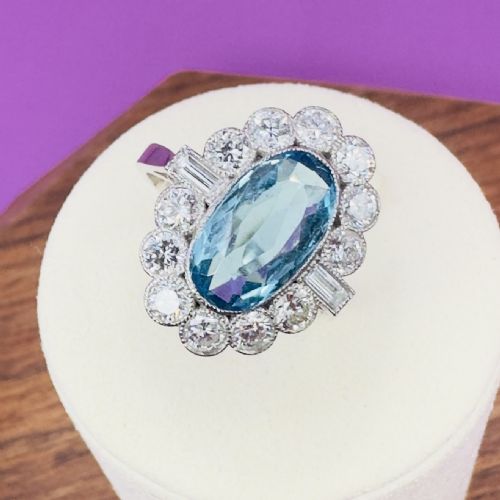


Aquamarine and Diamond Ring
An aquamarine and diamond ring brings together cool pale beryl and crisp brilliant stones, offering an understated presence that sits easily on the hand.
Aquamarine and Diamond Ring
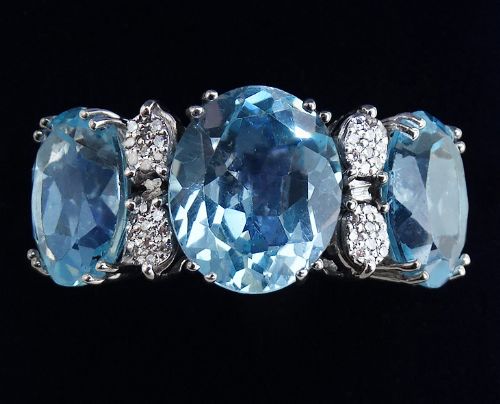
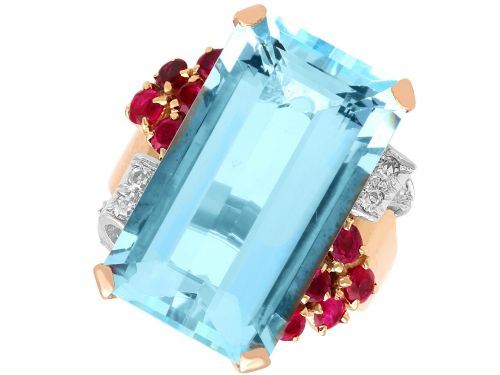
An aquamarine and diamond ring combines icy blue beryl with sparkling diamonds, appearing in forms ranging from neat clusters to substantial cocktail pieces. Buyers seeking this combination find stones set in platinum and various golds across the twentieth century.
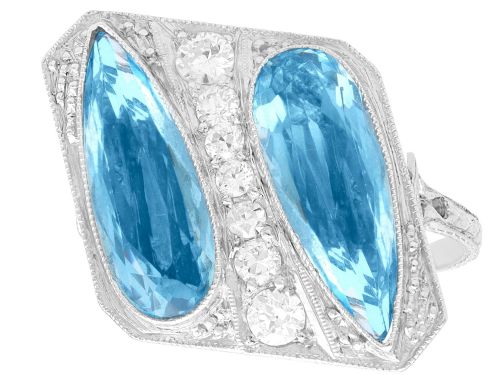
The selection on this page centres heavily on mid-century cocktail rings and geometric Art Deco cluster designs. Pieces from the 1950s and 1930s dominate, alongside earlier examples from the 1900s and 1920s.
Makers utilised platinum alongside yellow, white, and 18ct gold to frame the stones. Styles span the fluid lines of Art Nouveau through to the bold geometric shapes of Retro Modern and Art Deco Revival.
How they were made
Platinum and 18ct gold form the primary mountings for these stones, providing the necessary strength to hold large beryls securely. Metalsmiths worked the platinum into fine millegrain edges and pierced galleries during the 1930s.
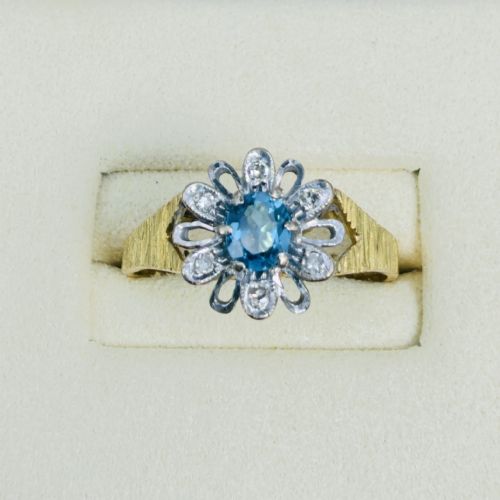
Cut stones include emerald cuts, oval cuts, and old cuts, complemented by baguette diamonds in geometric arrangements. Goldsmiths constructed heavy tank rings in the 1940s and delicate floral clusters in the 1950s.
Listings span the 19th Century through to the 1960s, featuring platinum, 18ct gold, and white gold alongside diamond and aquamarine.
What varies in quality
Quality rests on the depth of colour in the aquamarine and the precision of the metalwork surrounding it. Substantial central stones with clean crystal structures elevate a piece significantly above smaller, paler varieties.
The integration of the diamonds relative to the central beryl dictates the overall harmony of the design. Heavier mountings, such as those seen in Retro tank styles, demonstrate substantial material weight and robust engineering.
The Aquamarine and Diamond Ring Glossary
- Cluster ring
- A ring featuring a central stone surrounded by a border of smaller stones. This arrangement maximises visual impact and was favoured across multiple decades.
- Cocktail ring
- A large, statement ring designed to catch the eye at evening events. These pieces often feature oversized aquamarines flanked by diamonds.
- Millegrain
- A decorative technique involving a line of tiny metal beads along the edge of a setting. It creates a soft, textured finish typical of antique platinum work.
- Baguette cut
- A step-cut diamond with a rectangular shape and parallel facets. They provide sharp geometric contrasts to softer oval or emerald-cut aquamarines.
Aquamarine and Diamond Ring: Frequently Asked Questions
How do I care for an aquamarine and diamond ring?
Beryl is a durable gemstone, but it benefits from gentle cleaning with warm soapy water and a soft brush to maintain its brilliance.
Avoid exposing the ring to harsh household chemicals or sudden temperature changes to protect both the centre stone and the metal setting.
Can I wear my aquamarine ring daily?
Aquamarine rates well on the Mohs scale of hardness, making it suitable for regular wear when handled with reasonable care. Platinum and 18ct gold mountings provide a sturdy foundation for everyday use.
Removal during heavy manual work or gardening will help preserve the claw settings and prevent unnecessary scratching.
What defines an Art Deco aquamarine ring?
Art Deco pieces rely on symmetrical geometry, clean lines, and platinum settings. Baguette diamonds often flank emerald-cut aquamarines to emphasise the architectural structure.
Makers during this period prioritised stark contrasts and structured layouts over organic or flowing motifs.
How do I identify a Retro period ring?
Retro modern rings typically feature bold, heavy gold construction, often in yellow or rose shades, reflecting the wartime and post-war constraints on platinum. Designs lean towards oversized cocktail proportions and chunky tank styles.
Stones are set securely within substantial metal frameworks rather than delicate, pierced galleries.