





Apothecary Counter
When you need an apothecary counter, you are looking at utilitarian shop furniture and scientific equipment built for daily dispensary trade.
Apothecary Counter
An apothecary counter brings heavy commercial utility into domestic spaces through banks of drawers, display cabinets, and brass scales.
You meet Victorian and Edwardian examples most often, spanning pine shop fittings, mahogany cabinets, and heavy brass beam scales.
The material record includes painted Hungarian pine, industrial iron, and polished wood built for pharmacies and drysalters.
How they were made
Makers utilised solid pine and mahogany for heavy cabinetry, pairing timber frames with brass, copper, and iron for mechanical balance scales.
Surfaces often show original paint finishes in white, cream, light green, or indigo, applied to protect utility furniture in busy commercial environments.
Apothecary Counter Retail Price Guide 2026
Typical asking prices for apothecary counter among the pieces listed under this phrase on Sellingantiques today, from the lower quarter to the upper quarter. They describe what is for sale here now, not the wider market.
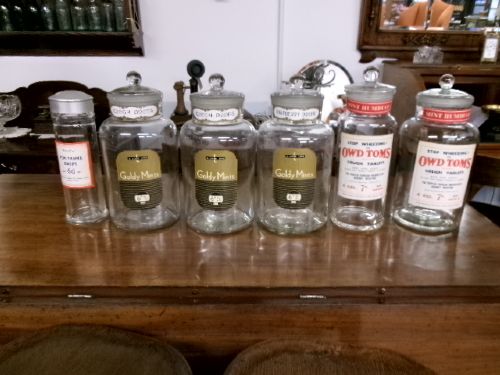
The inventory records commercial equipment including seed chests, haberdashery cabinets, and apothecary jars.
What varies in quality
Quality rests in the scale of the piece, from large multi-drawer shop fittings down to countertop display boxes and intact sets of weights.
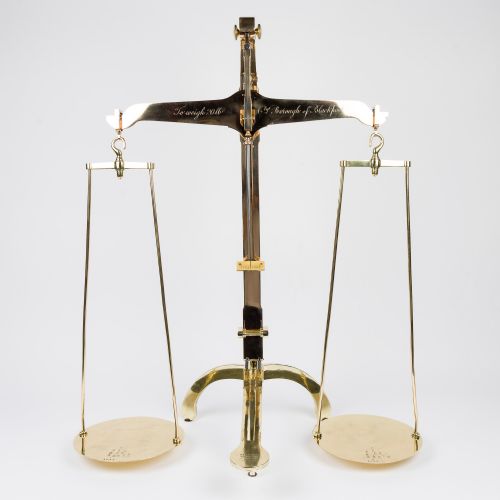
The presence of original maker signatures on brass beams or authentic painted finishes separates standard utility items from notable commercial survivals.
Day & Millward·Parnall & Sons of Bristol·Fairbanks·Bartlett & Sons
The Apothecary Counter Glossary
- Shop fitting
- Fixtures and furniture built specifically for retail interiors. These items include large banks of drawers and display counters.
- Beam scales
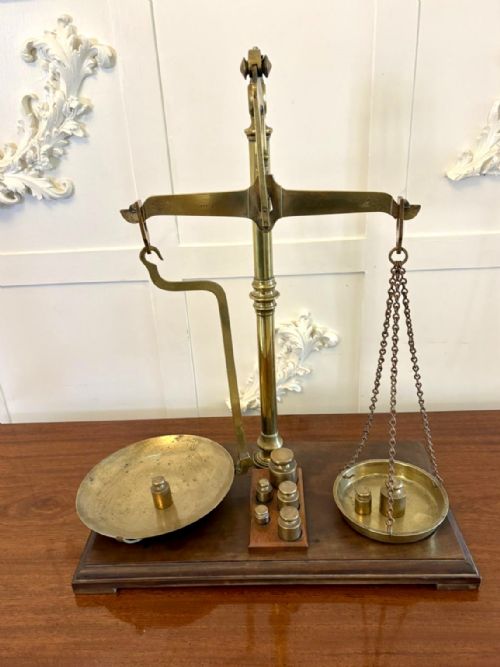
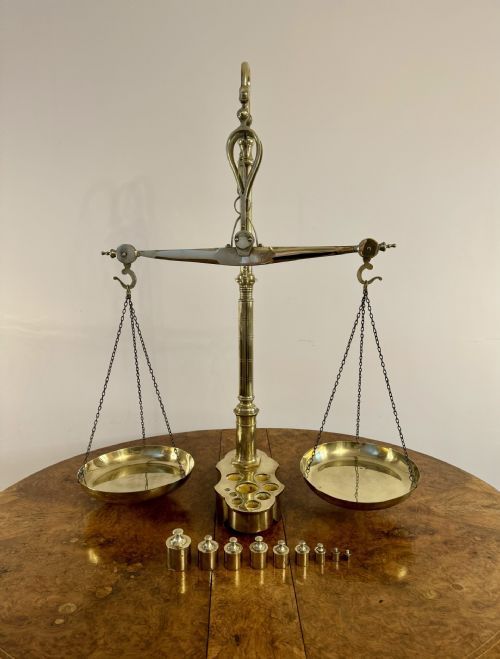
- Weighing apparatus utilising a central fulcrum and balanced pans. They measure mass using matching brass weights.
- Bank of drawers
- Multiple small storage compartments arranged in a grid. They held dry goods, seeds, or medicinal ingredients.
- Display cabinet
- Glass-fronted case designed for retail counters. They protected merchandise while keeping goods visible to customers.
Apothecary Counter: Frequently Asked Questions
What is an apothecary counter?
An apothecary counter is heavy commercial shop furniture designed for nineteenth and early twentieth-century chemists and drysalters.
These pieces typically combine banks of small drawers for ingredients with display cabinets and precise brass scales for measuring medicines.
How do I date an apothecary counter?
Dating relies on material combinations, construction methods, and hardware styles recorded across Victorian and Edwardian periods.
Earlier pieces from the nineteenth century often utilise heavy pine and mahogany frames alongside stamped brass beams and maker plaques.
Where were these counters used?
These items originated in retail shops, pharmacies, and seed merchants during the nineteenth and early twentieth centuries.
They served as functional workspace furniture where shopkeepers stored stock and weighed goods for customers.
Are brass scales accurate?
Victorian and Edwardian brass beam scales were manufactured for precise commercial and pharmaceutical measurements.
Many survive with their original matching weights and balanced arms, though modern calibration is necessary for exact weighing.