






Antique Yomut Weaving
Antique yomut weaving comprises tribal carpets, horse covers, and utilitarian bags originating from nomadic groups across the Trans-Caspian steppes, offering buyers tactile connections to Central Asian heritage.
Antique Yomut Weaving
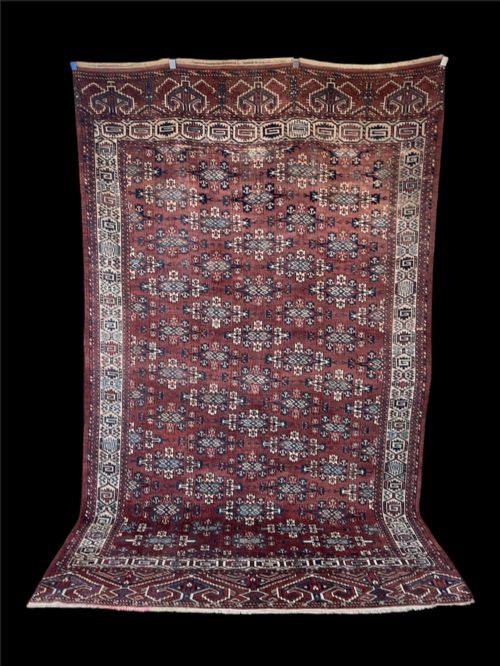
When a buyer searches for antique yomut weaving, they encounter a specialised range of Turkmen tribal textiles originating from the Trans-Caspian steppes. These works include large main carpets, wall hangings, and functional items designed for nomadic life.
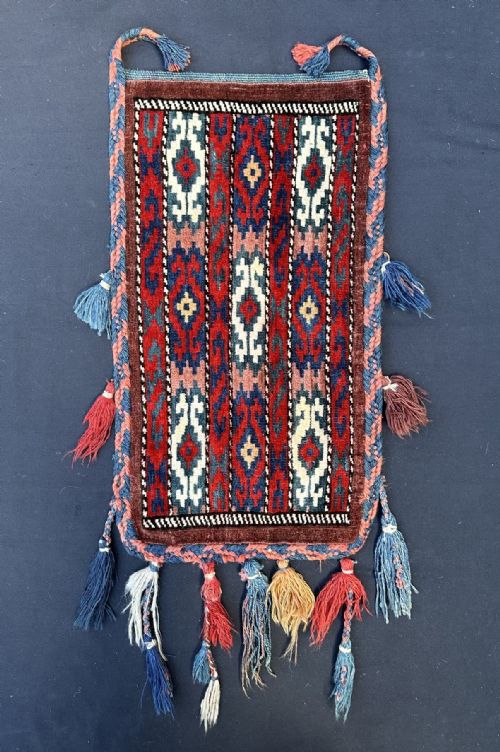
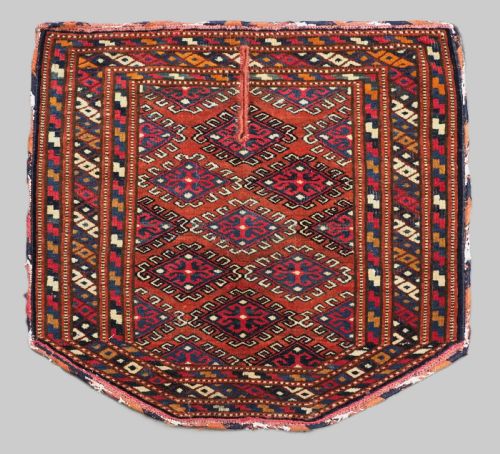
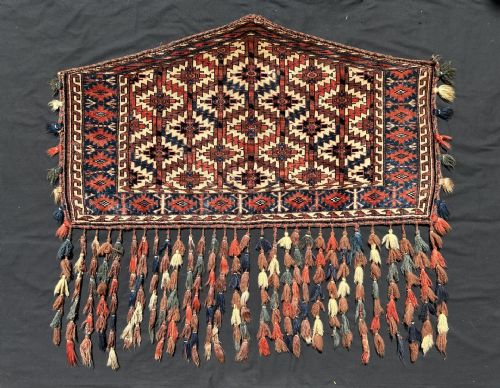
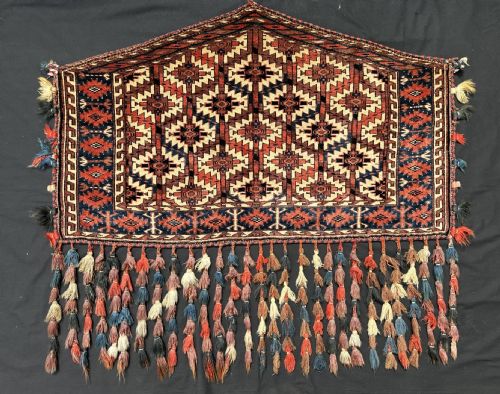
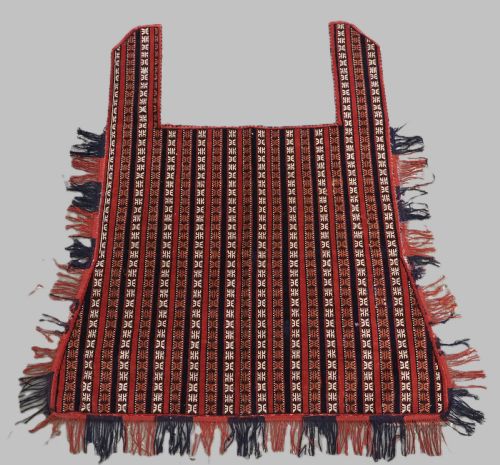
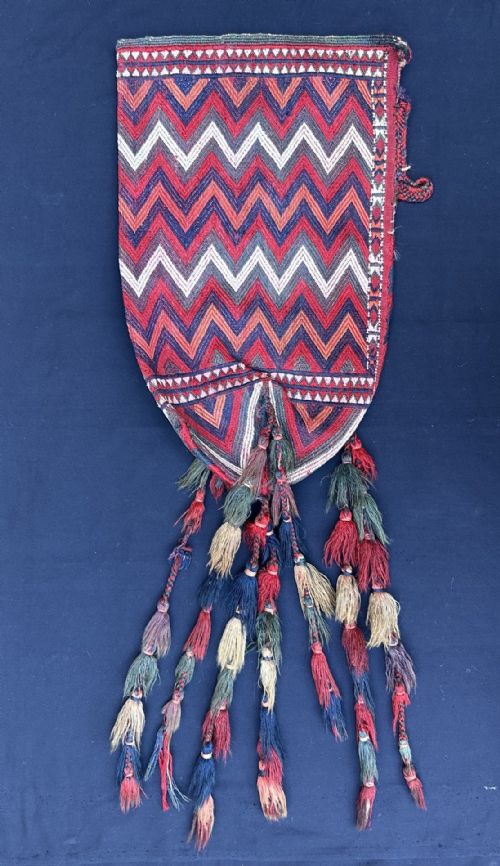
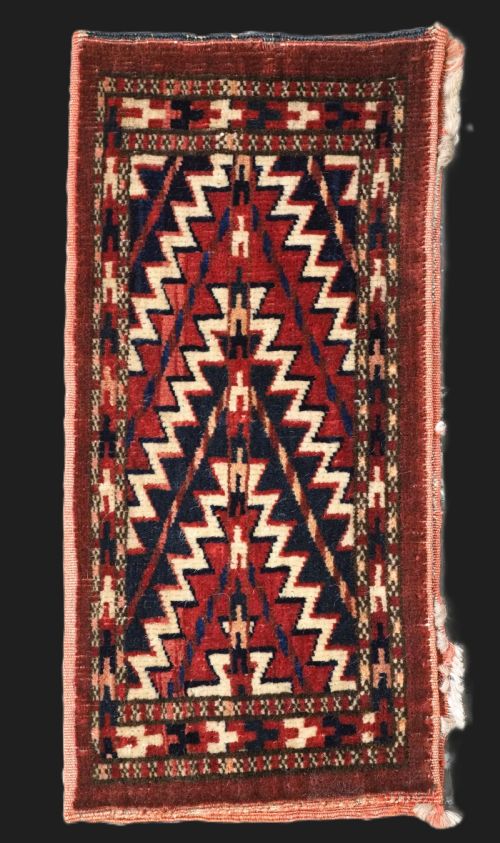
The objects on this page frequently manifest as domestic containers and ceremonial trappings. Common forms include storage bags like chuvals and torbas, spindle bags, and triangular tent-band ornaments known as asmalyks.
Most examples date from the nineteenth century into the early twentieth century, reflecting traditional tribal patterns. Buyers are most likely to meet small utilitarian bags and rugs displaying characteristic octagonal motifs and banded flatweaves.
How they were made
Weavers constructed these textiles primarily using hand-spun wool and cotton foundations, relying on natural dyes to achieve deep reds, browns, and contrasting hues. Dyed yarn formed the dense pile carpets as well as flatwoven surfaces.
Production techniques combined pile knotting with various flatweave methods, such as soumak wrapping and banded tapestry weaves. Artisans utilised durable materials to withstand daily nomadic use while executing precise geometric structures.
Antique Yomut Weaving Retail Price Guide 2026
Typical asking prices for yomut weaving among the pieces listed under this phrase on Sellingantiques today, from the lower quarter to the upper quarter. They describe what is for sale here now, not the wider market.
Tent-pole bags kept wooden tent components organised on the move, proving that nomads managed domestic clutter with exceptional woolwork.
What varies in quality
The standard of an antique yomut weaving depends on the clarity of the primary motifs, such as guls and kepse designs, and the precision of the wool spinning. Tighter knot density and supple handling distinguish superior tribal examples from heavier, coarser productions.
Colour saturation and the preservation of original plain weave backs or long kilim ends heavily influence desirability. Pieces retaining complete utilitarian components, such as original closures or tassels, demonstrate higher integrity.
The Antique Yomut Weaving Glossary
- Gul
- A primary octagonal or repeating medallion motif used across Turkmen tribal rugs to identify specific clans or design traditions.
- Asmalyk
- A large, pentagonal or stepped horse trapping used during wedding processions and later hung within the nomadic yurt.
- Torba
- A small utility bag utilised within the tent for household storage, often displaying a distinct face design and flatweave back.
- Chuval
- A large tent storage bag traditionally employed for bedding and clothing, frequently decorated with rows of guls.
- Soumak
- A flatweaving technique where coloured weft threads wrap over and under warp threads to produce a durable, textured surface.
- Uk bash
- A specialised container designed for storing tent-pole rings or structural timber parts within nomadic dwellings.
Antique Yomut Weaving: Frequently Asked Questions
What is an asmalyk used for?
Asmalyks were decorative trappings placed on the flanks of ceremonial horses during traditional Turkmen wedding processions. Families later displayed these pentagonal textiles inside their yurts as wall ornaments.
Their distinct shape and detailed motifs separate them from standard storage sacks. Today, collectors mount them as textile art.
How do you identify a yomut weaving?
Yomut textiles are identified by specific geometric motifs, including the diamond-shaped kepse gul and the hooked dyrnak gul. These patterns appear alongside distinctive hooked borders and diagonal latch-hook elements.
Colour palettes also offer clues, leaning heavily on rich madder reds set against deep browns and ivory.
How should I display a textile?
Wall hangings and smaller bags suit domestic display when mounted using non-invasive methods that distribute weight evenly. Avoid hanging textiles in direct sunlight to protect natural dye pigments from fading.
Allowing the wool fibres to breathe prevents moisture accumulation in indoor environments.