


Antique Yew Box
These antique yew box pieces are timber containers fashioned from figured wood, prized for their rich grain and warm tone.
Antique Yew Box
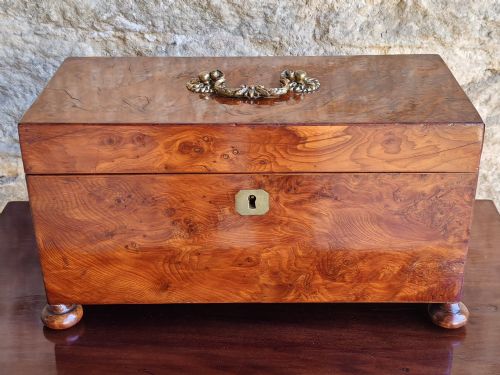
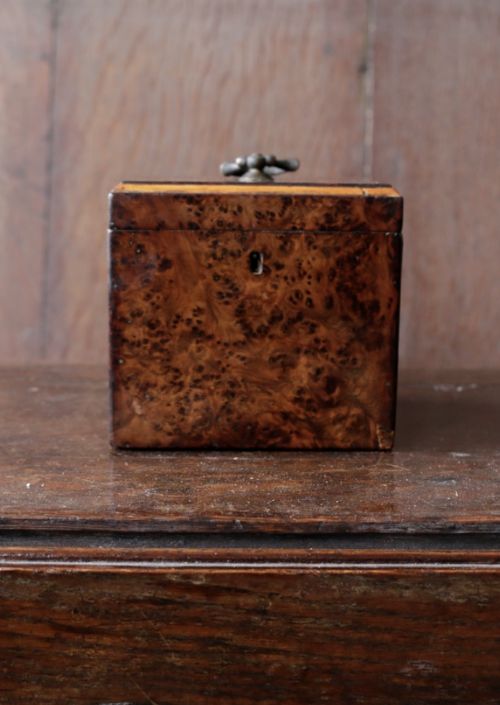
An antique yew box encompasses a variety of timber containers fashioned from burr yew and straight-grained yew wood. The selections on this page appear most frequently in the form of tea caddies, jewellery boxes, and small decorative caskets dating from the eighteenth and nineteenth centuries.
Makers utilised the dense, distinctively patterned timber for functional desktop items and personal accessories. Examples range from Georgian tea chests and Regency writing slopes to Victorian stereoscopes and treen snuff boxes.
Buyers encounter distinct regional types within these listings, including Irish Killarney ware and Tunbridge ware with geometric inlay. These pieces demonstrate the versatility of yew across different periods of British and European cabinet making.
How they were made
Cabinet makers selected burr yew and yew wood for its knotty, undulating grain, often cutting veneers to display the complex patterns across the lid and panels. They combined the primary timber with contrasting woods such as boxwood and ebony for stringing and geometric inlay.
Construction involved solid timber carcasses or veneered panels joined with precision, fitted with brass hinges, locks, and occasional bone or silver details. Specialised objects such as treen puzzle balls and barrels required lathe turning from solid sections of yew.
The listings on this page span the 18th century, the Regency and Victorian periods, and into the early 20th century, incorporating brass, bone, and glass alongside yew wood.
What varies in quality
The visual impact of an antique yew box rests primarily on the density and symmetry of the burr figure in the wood. Richly mottled grain patterns paired with crisp, intact boxwood and ebony inlay distinguish superior specimens from plain timber examples.
Originality of internal fittings, such as tea caddy canisters, glass lenses in optical instruments, or velvet-lined compartments, elevates a piece. The survival of period brass hardware and functioning locks also marks the distinction between standard and exceptional survivals.
The Antique Yew Box Glossary
- Burr yew
- A growth deformity in the yew tree that produces a highly figured, swirling wood grain filled with tiny knots. Cabinet makers prized this timber for veneering the exterior surfaces of high-status boxes.
- Tea caddy
- A small container designed to store loose tea leaves securely under lock and key. Georgian and Regency examples often feature internal compartments and mixing bowls.
- Treen
- Small handmade wooden household objects and personal items produced by turning on a lathe or carving. The evidence includes snuff boxes, puzzle balls, and carpet bowls made in this tradition.
- Writing slope
- A portable slant-topped box that opens to reveal a sloping writing surface, inkwell compartments, and storage for stationery. These pieces reflect the travel habits of the nineteenth century.
- Tunbridge ware
- Woodwork decorated with tiny mosaic tiles assembled from different coloured woods to form geometric patterns. Makers applied these pictorial veneers to small boxes and desk accessories.
Antique Yew Box: Frequently Asked Questions
What is an antique yew box used for?
These boxes served practical domestic functions such as storing dry tea leaves, holding jewellery, containing sewing equipment, or housing writing materials.
Today, collectors utilise them as decorative objects on tabletops or for storing small personal items while displaying the figured timber grain.
How do I date an antique yew box?
Dating relies on observing the overall form, construction methods, and decorative styles associated with periods such as the Georgian, Regency, and Victorian eras.
Secondary woods, hinge types, and inlay motifs like boxwood stringing provide further clues to the decade of manufacture.
What is burr yew wood?
Burr yew comes from an abnormal growth on the tree that creates a dense cluster of buds and small knots. This growth produces a swirling, highly decorative pattern when sliced into veneer.
Cabinet makers valued this figured timber for the principal display surfaces of luxury boxes and tea caddies.
Are these boxes made of solid yew?
Many examples feature timber veneers applied over a secondary wood carcass to showcase the dramatic grain of burr yew across the lid and sides.
Smaller items like treen snuff boxes, puzzle balls, and barrels were turned from solid sections of yew wood.